Monday, 13 July 2026

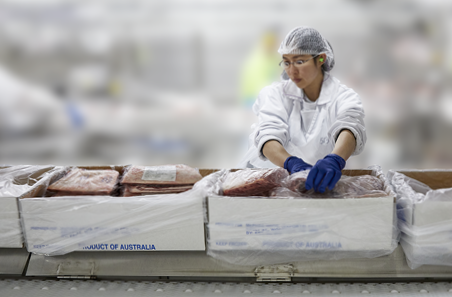
China’s beef market has undergone a dramatic transformation in recent years
China’s decision to impose safeguard measures on imported beef has sent ripples through the global meat trade, reshaping supply chains and testing relationships with some of its largest agricultural partners. Beginning January 1, 2026, and running through December 31, 2028, the measures introduce country-specific tariff-rate quotas, with imports exceeding allotted volumes facing an additional 55 per cent tariff, according to China’s Ministry of Commerce (MOFCOM).
The move follows the conclusion of a safeguard investigation into imports of bovine meat, launched in 2024 after multiple Chinese industry associations complained that a surge in imports was inflicting serious damage on domestic producers. While Beijing has emphasised that the action is meant to stabilise the local industry rather than curb normal trade, exporters from Australia to Brazil are already recalibrating strategies to limit losses and secure compensation.
Why China Acted
China’s beef market has undergone a dramatic transformation in recent years. Rising incomes and changing dietary habits have fueled robust demand, driving growth in both domestic production and imports. According to a MOFCOM survey, China’s beef imports jumped 73.2 per cent between 2019 and 2024, with imported meat often priced well below domestic products. Over the same period, imported beef’s share of the Chinese market climbed from 20 per cent to nearly 30 per cent.
“Imported beef, which initially served as a supplement, has expanded rapidly and significantly eroded the domestic industry’s market share,” said Sha Yusheng, Secretary General of the China Animal Agriculture Association, citing falling domestic prices and widespread losses across the sector.
MOFCOM said the safeguards will be applied cautiously. The three-year measures will be progressively relaxed at fixed intervals, and exemptions will apply to developing countries whose individual import share stays below 3 per cent, provided their combined share does not exceed 9 per cent. If those thresholds are breached, the safeguards would apply from the following year.
China has rarely used safeguard measures in the past, previously applying them only to steel products and sugar, underscoring what officials describe as a restrained approach consistent with World Trade Organisation (WTO) rules.
Australia: A Trusted Partner, Now Facing Headwinds
For Australia, one of China’s major beef suppliers, the decision has been met with disappointment. Meat & Livestock Australia (MLA) said the safeguard measure, which applies globally, will significantly affect Chinese customers and importers of Australian beef.
Australia has consistently argued that its exports are not responsible for the difficulties facing China’s domestic beef sector and has emphasised its status as a long-standing free trade partner. MLA said it will work closely with importers in China as the measures roll out and continue to promote Australian beef in the market, aiming to preserve its strong reputation despite higher trade barriers.
Brazil: Seeking Compensation and Alternatives
Brazil, China’s largest beef supplier, has reacted more forcefully. In 2025, China imported 1.7 million metric tonnes of Brazilian beef, about 48.3 per cent of Brazil’s total beef exports, far exceeding the newly announced quota of 1.106 million metric tonnes subject to a lower 12 per cent tariff.
Brazilian officials have signalled they will seek compensation from China, potentially through access to new markets such as beef offal and pork offal. “There is a possibility the Chinese will offer some kind of compensation,” said Luis Rua, Secretary for Trade and International Relations at Brazil’s Agriculture Ministry.
Brazil’s government says it is coordinating closely with the private sector and will pursue dialogue with China both bilaterally and at the WTO to mitigate the impact. While Agriculture Minister Carlos Fávaro publicly downplayed the fallout, industry estimates suggest Brazil could lose up to $3 billion in exports under the new regime.
Behind the scenes, some industry players are discussing whether Brazil could invoke its Economic Reciprocity Law, potentially targeting Chinese exports such as electric vehicles, though officials stress this remains speculative.
Logistical and Market Uncertainty
Practical questions loom large. Roughly 300,000 metric tonnes of Brazilian beef were already sold and in transit when the safeguards took effect, prompting Brazil to ask China to count shipments already at sea toward the quota. Exporters are also seeking clarity on how quotas will be allocated and whether the process will favour larger suppliers.
China has also set quotas for Uruguay, Australia, New Zealand, and the United States, though officials note that some countries, such as the U.S., shipped little or no beef to China last year, potentially opening room for reallocation.
Brazil, for its part, is hedging its bets. Officials point to access to more than 150 export markets and the opening of seven new destinations, including the Philippines, Indonesia, and Guatemala, that could absorb some of the volumes diverted from China.
A Test of Trade Diplomacy
Legal experts say China’s actions fall within WTO rules, which allow safeguard measures when import surges cause or threaten serious injury to domestic industries. Shi Xiaoli, Director of the WTO Law Research Centre at the China University of Political Science and Law, described the three-year duration as evidence of a “measured and prudent” approach.
Even so, the safeguards mark a pivotal moment. For China, they are an attempt to balance domestic agricultural stability with an image of openness. For exporters, they underscore the growing importance of diversification and trade diplomacy in an era where food security, geopolitics, and market access are increasingly intertwined.
As quotas tighten and negotiations unfold, the global beef trade is entering a period of adjustment, one that will test not just supply chains, but the resilience of long-standing trade partnerships.
— Shraddha Warde (shraddha.warde@mmactiv.com)