Monday, 15 June 2026

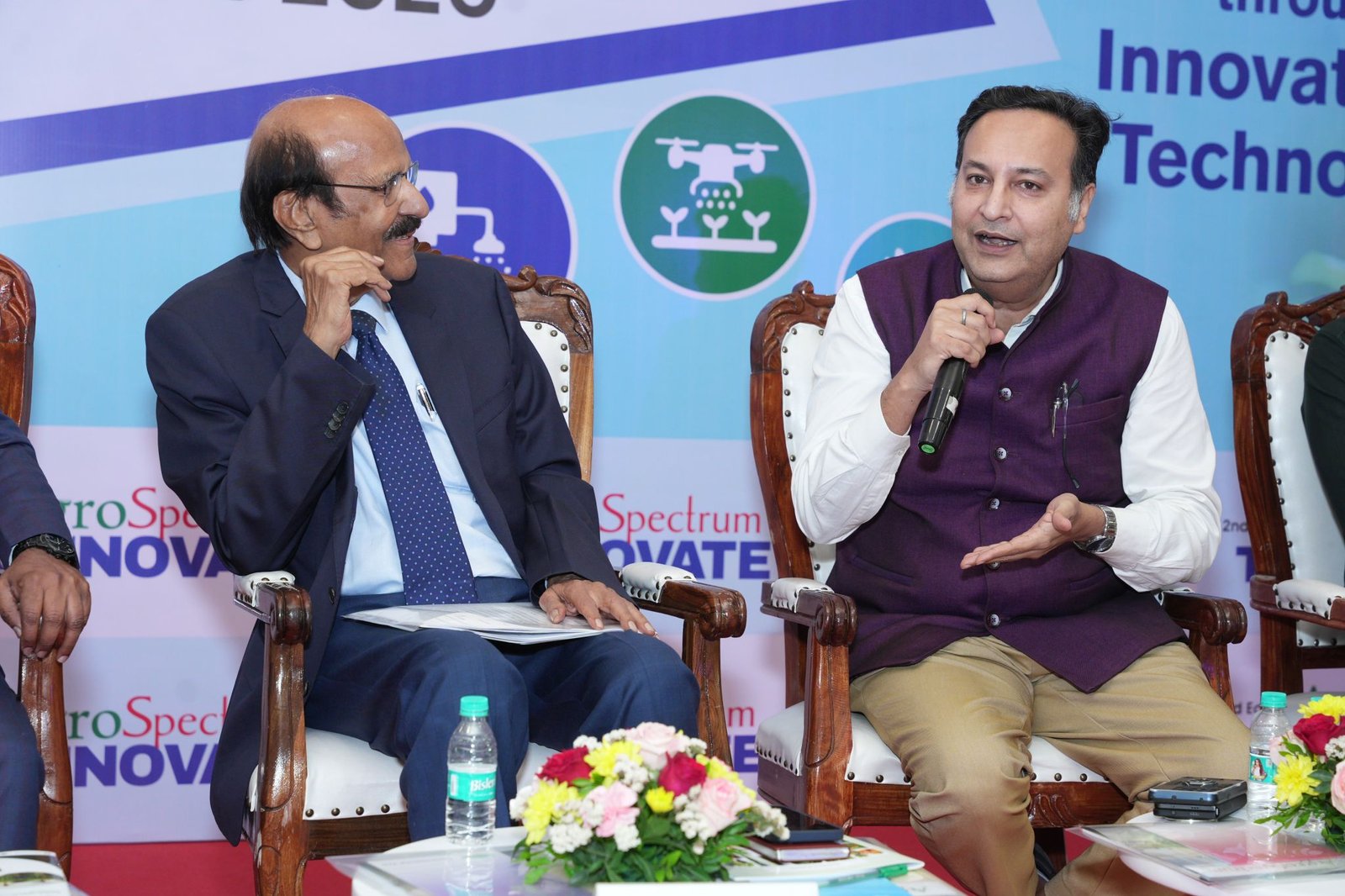
Speakers discuss AI-driven farming models emerging across Indian states and the need for climate-smart digital tools, next-generation agri talent, and farmer-centric innovation.
Digital technologies are rapidly reshaping Indian agriculture, but the key to scaling them lies in building farmer trust, fostering innovation talent, and strengthening institutional support. These themes took center stage during a compelling session titled “Digital Krishi – Technology Empowering the Indian Farmer” at AgroSpectrum Technovate 2026, where industry leaders and experts discussed the transformative potential of digital tools in agriculture.
The session featured Deepak Pareek, Founder, HnyB Tech-Incubations Pvt. Ltd, and Dr. Prataprao Pawar, President, Sakal Media Group, with Dr. Vivek Bhoite, Scientist, ADTs Krishi Vigyan Kendra, also present, offering insights from both industry and agricultural research perspectives.
Opening the discussion, Deepak Pareek highlighted the growing role of data, artificial intelligence, and digital advisory platforms in modern agriculture. He pointed to the technology-driven sugarcane initiative in Baramati as a powerful example of how integrated digital interventions can deliver measurable outcomes for farmers.
According to Pareek, the initiative has demonstrated nearly a 50 percent increase in sugarcane yield, while simultaneously improving soil fertility through better farm management practices and data-driven decision-making. He noted that such initiatives showcase how digital platforms, satellite insights, and precision advisory services can significantly improve productivity and sustainability for Indian farmers.
“Technology can transform agriculture only when it is contextual, easy to use, and trusted by farmers. Our focus must be on creating solutions that simplify decision-making at the farm level while improving long-term soil health and productivity,” said Deepak Pareek, Founder, HnyB Tech-Incubations Pvt. Ltd.
The panel also discussed the expanding footprint of AI-driven farming models across several Indian states. Early adoption is already visible in regions such as Uttar Pradesh, Karnataka, and Tamil Nadu, where digital platforms are helping farmers make more informed decisions on crop planning, irrigation management, pest control, and input optimisation.
However, the speakers acknowledged that large-scale adoption remains a challenge.
A key barrier, they noted, is the trust deficit between farmers and technology providers, which often slows the uptake of new digital solutions. Many farmers remain cautious about relying on unfamiliar platforms, particularly when technology-driven recommendations directly impact their crop yields and incomes.
Dr. Prataprao Pawar emphasised that bridging this trust gap will require stronger collaboration between technology providers, policymakers, media, and agricultural institutions.
“Technology adoption in agriculture is not just about innovation—it is about communication, credibility, and demonstration of impact on the ground. Farmers need to see tangible results before they fully embrace new systems,” said Dr. Pawar.
The discussion also highlighted the importance of next-generation agri talent to drive digital transformation across the sector. As agriculture becomes increasingly data-driven, experts stressed the need to encourage more young professionals, technologists, and agripreneurs to participate in the agricultural ecosystem.
Another critical aspect discussed during the session was the role of climate-smart digital tools. With climate variability increasingly affecting crop productivity, digital platforms that provide real-time weather insights, predictive analytics, and adaptive crop management strategies will become essential for farmers navigating unpredictable climatic conditions.
The speakers further underscored the need for stronger financial support mechanisms from the government, particularly to help farmers access advanced technologies and digital advisory services. Public-private partnerships and policy incentives could accelerate the deployment of scalable digital agriculture solutions across the country.
Dr. Vivek Bhoite, added that research institutions and extension networks must play a key role in ensuring that digital innovations translate into practical, field-level outcomes.
The session concluded with a shared consensus: the future of digital agriculture in India will depend on building farmer confidence, demonstrating measurable impact, and ensuring that technology remains accessible and relevant to farmers’ everyday needs.
As digital platforms, artificial intelligence, and precision farming tools continue to evolve, initiatives that combine technology, agronomic expertise, and farmer engagement are expected to play a crucial role in shaping a more productive and resilient agricultural ecosystem in India.
— Suchetana Choudhury (suchetana.choudhuri@agrospectrumindia.com)