Thursday, 25 June 2026

Aditya Sesh calls for sustained public investment, farmer education, and last-mile execution to fully realise post-harvest reforms
As India accelerates reforms to modernise its agricultural value chains, Aditya Sesh, Founder and Managing Director of Basiz and a Member of the Expert Committee at the Ministry of Agriculture & Farmers Welfare, has emphasised that the next phase of impact will depend on scaling adoption of post-harvest and agri-finance reforms at the farmer level.
Sesh noted that the government has laid a strong institutional and policy foundation to improve agricultural liquidity, particularly through the introduction of e-Negotiable Warehouse Receipts (e-NWRs), which enable farmers to access formal credit against stored produce rather than resorting to distress sales.
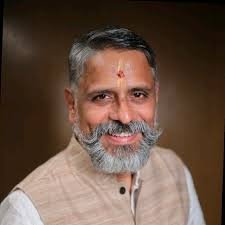
“The government has taken several positive steps to strengthen agricultural liquidity and post-harvest management, particularly through the rollout of e-Negotiable Warehouse Receipts (e-NWRs). With GST rationalisation across key agri inputs, a clear regulatory framework for warehousing, and interest subvention support, the foundation is firmly in place,” said Aditya Sesh.
However, he stressed that policy readiness must now be matched with on-ground capacity and awareness, especially for small and marginal farmers who face structural constraints in accessing storage, credit, and market information.
“The next phase should focus on scaling adoption—especially among small and marginal farmers—by expanding budgetary allocations for micro-warehouses, cold storage, and post-harvest infrastructure, while simultaneously strengthening farmer awareness and training through Farmer Producer Organisations (FPOs),” Sesh said.
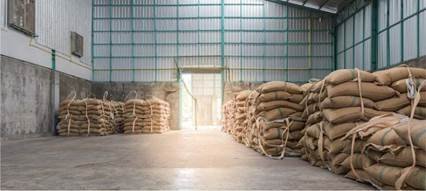
According to Sesh, micro-warehousing and decentralised storage infrastructure can play a pivotal role in democratising access to e-NWRs by reducing distance, transaction costs, and post-harvest losses. When combined with structured capacity-building through FPOs, such infrastructure can significantly improve farmers’ ability to participate in formal credit systems.
He further highlighted that unlocking the full potential of e-NWRs will require a long-term, calibrated approach to public spending, rather than one-time budgetary pushes.
“A sustained and gradual increase in allocations, coupled with education and last-mile implementation, will be critical to unlocking the full potential of e-NWRs and improving farm-level liquidity without distress sales,” he said.
Sesh added that stronger alignment between policymakers, warehousing players, banks, and farmer institutions will be essential to ensure that reforms translate into measurable outcomes such as reduced post-harvest losses, improved price realisation, and greater income stability for farmers.
Basiz, through its work across agri-finance, livelihoods, and rural infrastructure, continues to engage with stakeholders across the ecosystem to support inclusive, scalable solutions that strengthen India’s post-harvest and agricultural credit framework.
— Suchetana Choudhury (suchetana.choudhuri@agrospectrumindia.com)