Thursday, 25 June 2026

Experts emphasise diagnostics, formulation science and regulatory clarity to unlock the next phase of sustainable agriculture at Technovate 2026.
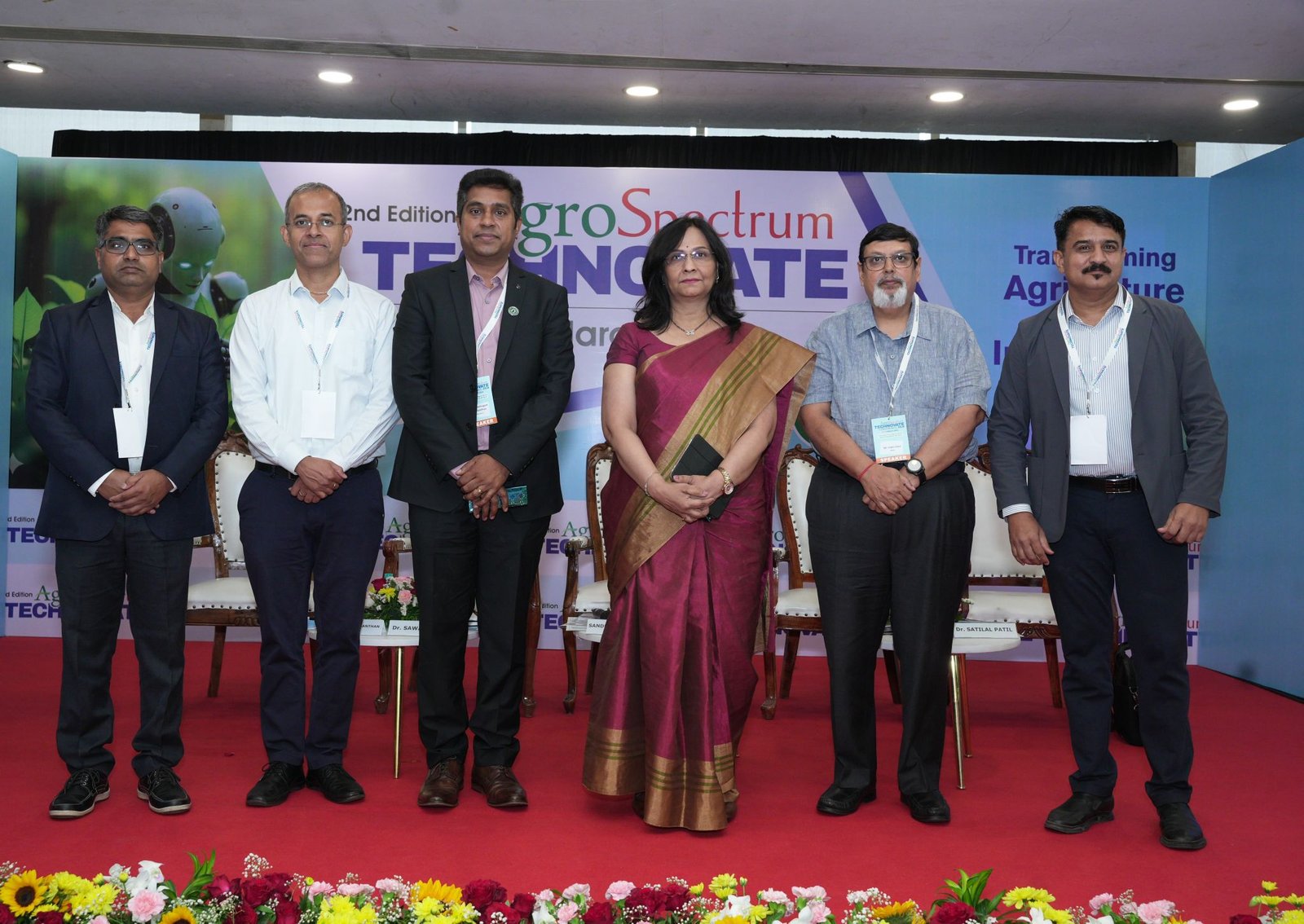
The growing importance of biological crop inputs in sustainable agriculture took centre stage at a panel discussion on “Next-Gen Biofertilizers & Biostimulants: Scaling Biologicals with Data and Diagnostics.” Industry leaders highlighted the need for stronger scientific validation, regulatory frameworks and manufacturing capabilities to accelerate the adoption of biological inputs in India’s agricultural ecosystem.
The session was moderated by Sandeepa Kanitkar, Managing Director of Kan Biosys. The panel featured Satilal Patil, Managing Director of Greenvision Life Sciences; Vipin Saini, Chief Executive Officer of the Biological Agri Solutions Association; Sawan Kumar, Deputy Director – Regulatory Affairs and Quality Assurance at Sea6 Energy Pvt. Ltd.; and Shanmugam Sambanthan, Head of Agriculture for the Middle East, South Asia and Africa region at Novonesis.
Adoption of Agricultural Biologicals Still Limited
Opening the discussion, Shanmugam Sambanthan highlighted that despite growing global momentum toward sustainable farming inputs, the adoption of agricultural biologicals remains relatively low in India.
According to Sambanthan, one of the primary reasons is the lack of trust among farmers regarding product performance. Over the years, exaggerated claims from suppliers have created scepticism within the farming community.
“Farmers often perceive agricultural biologicals as unreliable because of over-promising and under-delivery in the market,” he said. “The industry must focus on building credibility through transparency, accountability and consistent field performance.”
He emphasised that sustained investments in research and development, including innovations such as enzyme-based technologies, are critical to improving the effectiveness and reliability of biological inputs.
Understanding Biostimulants and Active Ingredients
Providing insights into the evolving biostimulants segment, Sawan Kumar explained that biostimulants currently fall under eight recognised product categories, ranging from microbial formulations to plant extracts and seaweed-derived compounds.
However, Kumar noted that a significant proportion of biostimulant products used in India are still imported, highlighting the need to strengthen domestic research and innovation.
He stressed that identifying and validating active ingredients is essential to ensure product efficacy and regulatory compliance.
“Understanding the active component within each formulation is critical. Without scientific validation of the active ingredient, it becomes difficult to establish credibility and performance consistency,” Kumar said.
Regulatory Framework and Intellectual Property Challenges
Addressing the policy landscape, Vipin Saini discussed the evolving regulatory framework governing biological inputs in India.
He noted that the formal regulation of biostimulants introduced in 2021 marked an important milestone for the sector. However, the new regulatory requirements also created compliance challenges for several companies.
“Once the regulatory framework came into force, many companies withdrew from the market because they were unable to meet the new compliance requirements,” Saini explained.
He also pointed out that investment in regulatory science remains limited, which slows the pace of innovation and product approvals.
Another major concern is the lack of robust data protection and intellectual property safeguards for biological innovations. According to Saini, companies are often hesitant to invest heavily in research when their proprietary data may not receive adequate protection.
“Industry stakeholders are often addressing intellectual property challenges individually rather than collectively, which weakens the sector’s ability to advocate for stronger policy frameworks,” he said.
Saini also noted that 14 biostimulant products were rejected during regulatory evaluation due to the use of animal-derived ingredients, reflecting stricter scrutiny of product composition.
In addition, fewer than 30 microbial biopesticides have been registered in India so far, highlighting the slow pace of regulatory approvals for biological crop protection products.
Biological Inputs Key to Export-Oriented Agriculture
Moderating the discussion, Sandeepa Kanitkar highlighted the increasing importance of biological inputs in supporting India’s horticulture export ambitions.
Global markets are increasingly demanding residue-free and sustainably produced agricultural commodities, making biopesticides and biostimulants crucial for export-oriented farming systems.
She emphasised the need to establish clear return on investment (ROI) at the farm level, which remains one of the most important factors influencing farmer adoption.
Sandeepa also pointed to successful industry collaborations, including crop research initiatives conducted in partnership with Syngenta, particularly in maize cultivation.
However, she noted that scaling the biologicals industry will require significant expansion in fermentation and microbial production infrastructure, enabling companies to manufacture high-quality biological inputs at scale.
Formulation Science and Microbial Manufacturing
Discussing the scientific challenges in developing biological products, Satilal Patil highlighted the importance of formulation technology and microbial strain development.
Developing stable microbial strains, effective formulations and robust manufacturing facilities remains one of the most critical hurdles facing the biologicals industry.
“Producing high-quality microbial inputs requires advanced fermentation infrastructure and specialised manufacturing capabilities,” Patil said.
He also noted that agriculture is inherently complex, with multiple variables such as climate, soil conditions and crop management practices influencing outcomes.
“No company can guarantee uniform results in agriculture because the field environment varies significantly. Agriculture is as much an art as it is a science,” he added.
Emerging Innovations in Biological Crop Inputs
Despite the challenges, several new technologies are emerging that could significantly strengthen the biological inputs sector.
Patil highlighted innovations in biomolecule extraction technologies that allow active compounds to be extracted without temperature shock, improving the stability and effectiveness of biostimulant products.
Another promising area is the development of sprayable pheromone-based pest management solutions, which offer environmentally sustainable alternatives to conventional chemical pesticides.
Building the Next Phase of Sustainable Agriculture
The discussion concluded that while biological inputs offer immense potential for sustainable farming, soil health improvement and residue-free crop production, their widespread adoption will depend on coordinated action across the ecosystem.
Industry leaders emphasised the need for greater investment in R&D, improved regulatory clarity, stronger intellectual property frameworks and expanded manufacturing infrastructure.
With increasing global demand for sustainable agricultural practices, biofertilizers, biostimulants and biopesticides are expected to play a central role in shaping the future of Indian agriculture.
— Suchetana Choudhury (suchetana.choudhuri@agrospectrumindia.com)