Friday, 3 July 2026

Dr. William Chen discusses NAMs, AI, and the future of risk assessment for cell-based foods

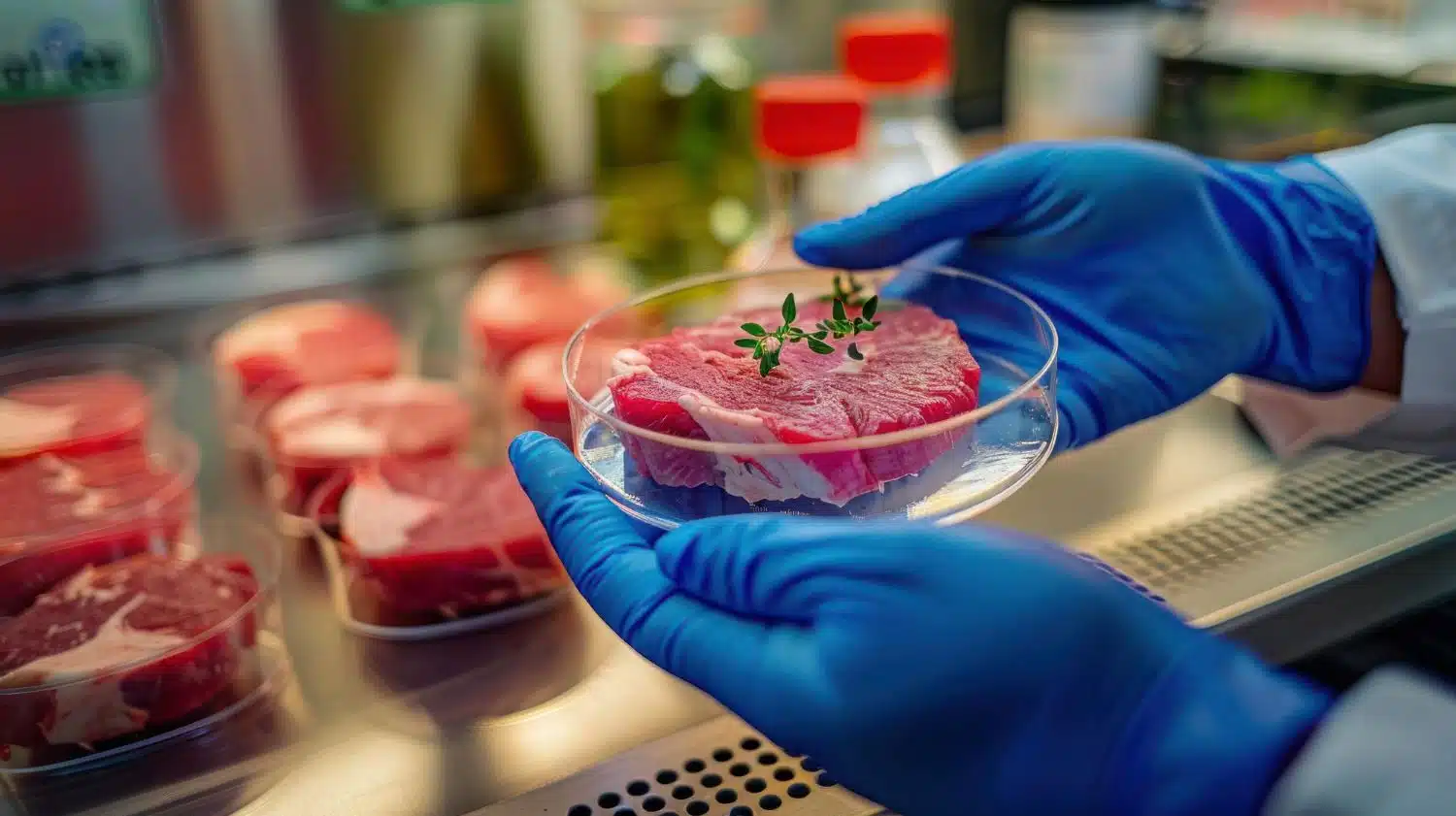
With cultivated meat emerging as one of the most promising innovations in alternative proteins, regulators and scientists worldwide are working to establish robust safety frameworks for these novel foods. Unlike conventional meat, cultivated meat is produced through cell culture and advanced bioprocessing technologies, raising new questions around safety assessment, regulatory oversight, and long-term consumer exposure.
In an exclusive interview with AgroSpectrum, Dr. William Chen, Michael Fam Endowed Professor at Nanyang Technological University, Singapore, explains much of the current discussion largely focus on hazard identification within production processes, but may not fully capture the complexities of cell-based foods. He advocates for the adoption of food-relevant New Approach Methodologies (NAMs)—combined with AI-driven predictive toxicology and systems biology—to enable more comprehensive risk assessment while supporting innovation and global regulatory harmonization.
Cultivated meat challenges decades of conventional food safety doctrine. Are existing risk assessment frameworks fundamentally fit for purpose—or do they require a regulatory reset built specifically for cell-based systems?
The main challenge for cultivated meat industry is to scale up. The scale up is not just about producing more animal cells (these are not muscle cells like in the meat) in the bioreactor, but to produce large amount of differentiated muscle cells that function like meat. Current application dossier for regulatory approval generally focuses more on the production system (bioreactor), including contaminations in culture medium from the environment (microbes) or new components from replacement of animal serum by various substances.
My sense is that this is important but it remains as providing a list of potential hazards without any proper risk assessment (importantly: Hazard May Not Be Risk). The listing of the potential hazards is currently followed by searching what has been known about their risk profile from the existing publications, rather than assessing their risk by proper technology (see NAMs in the later part of my comments).
More attention should be placed in the safety assessment of differentiated muscle cells, starting with the emerging New Approach Methodologies (NAMs). This is an animal-free in vitro testing system developed for risk assessment of cosmetics and environment pollutants.
New Approach Methodologies (NAMs) are gaining traction in pharmaceuticals and toxicology. How can NAMs—such as in vitro assays, computational modeling, and omics-based profiling—be credibly adapted for cultivated meat safety validation?
Many are trying to simply apply such NAMs (including in vitro assays, computational modeling, and omics-based profiling) to food safety risk assessment. However, there are two fundamental differences between food and cosmetics/environment pollutants: mixture (foods seldom exist as one ingredient) and digestion (enzymes in the digestive system break down food through hydrolysis which change the potential toxicity and allergenicity in foods).
For reference, risk assessment of cosmetics and environment pollutants usually deals with single molecules which do not go through our digestive system. These two differences need to be reflected in the food-relevant NAMs for the data interpretation of food safety risk assessment to be useful and meaningful.
The production process is the product. In cultivated meat, where bioprocessing conditions shape final composition, how should regulators evaluate variability across cell lines, growth media, and scaffold materials?
Proper application of food-relevant NAMs should generate differential risk assessment data based on the conditions of cultivated meat product (cell lines, growth media, and scaffold materials). Again, most of current literature and published papers on cultivated meat stays at the stage of Hazard Identification, which is the first step of flow risk assessment. NAMs application is moving the needle as we are now talking about Hazard Characterization.
There are 2 other important components involving consumers for the proper food safety assessment: Exposure Assessment and Risk Characterization. But food-relevant NAMs represents an important step forward to cultivated meat safety risk assessment.
Transparency versus proprietary protection remains a tension. How can companies safeguard intellectual property while providing regulators with sufficient data for rigorous, science-based risk assessment?
Companies may provide cultivated meat product for NAMs analysis through a neutral party (for example, Singapore Future-Ready Food Safety Hub – FRESH). Regulatory approval would now shift to analysing the risk assessment data generated from the NAMs, rather then scrutinizing the list of components in the respective cultivated meat production, as such list is still the hazard identification but means little to the safety risk assessment. This shift would then help company protect their IP to a large extent.
Global regulatory divergence is emerging. With Singapore among the first movers in approving cultivated meat, what lessons can other jurisdictions draw from its science-driven framework—and where are harmonization gaps widening?
Working with global organizations (FAO, WHO among others) would help us bridge the gap in global regulatory divergence. One example is the Joint Action Plan between WHO and NTU Singapore on NAMs application in novel foods. Through the joint action plan, there would be greater communications on work done in Singapore and provide greater transparency for discussion and collaboration among regulatory agencies. This would then contribute to the harmonization of the food safety risk assessment across different countries.
Public trust is as critical as scientific validation. What role should independent academic labs and open-data consortia play in stress-testing safety claims and avoiding regulatory capture?
Having a neutral and trusted party such as FRESH involved in the food safety risk assessment, trusted with its technology innovations and partnerships with stakeholders in both public and private sectors, would enhance public trust.
Long-term exposure data for novel proteins is inherently limited. How can predictive toxicology, AI-driven modeling, and systems biology reduce uncertainty without delaying innovation?
While food-relevant NAMs is a huge step forward to food safety risk assessment, it is not the holy grail for the novel food safety assurance. What NAMs does is more or less like a first round of fast and cost-effective profiling of potential risks in an in vitro setting.
As it is animal-free, exposure studies in consumers are needed to validate the NAMs data but much less in sample size. Once in the consumer setting, variability in consumer profile (genetic makeup, composition of gut microbiome) and the resulting data would increase dramatically. Here machine learning tools combined with systems biology approach would be extremely important for the predictive toxicology.
Looking a decade ahead, do you foresee cultivated meat safety assessments becoming more dynamic and real-time—embedded within digital bioprocess monitoring systems—rather than relying solely on static pre-market approvals?
Certainly.
Current pre-market approval processes are also evolving with the advances in technology. Through the ongoing collaboration between the Singapore Food Agency and FRESH, I see a huge potential in moving the cultivated meat safety risk assessment from the current way of hazard identification (list of potential hazards and evaluate their potential risk based on what others have done in a different context, e.g. most likely environmental pollutants) to food-relevant characterization (NAMs) to exposure assessment. More importantly, proper risk assessment of cultivated meat products should be expanded in hybrid food products where cultivated meat is an ingredient.
— Suchetana Choudhury (suchetana.choudhuri@agropsectrumindia.com)