Sunday, 12 July 2026

Industry leaders warn of global disruptions, productivity gaps and resource inefficiencies while calling for innovation-led transformation in Indian agriculture.
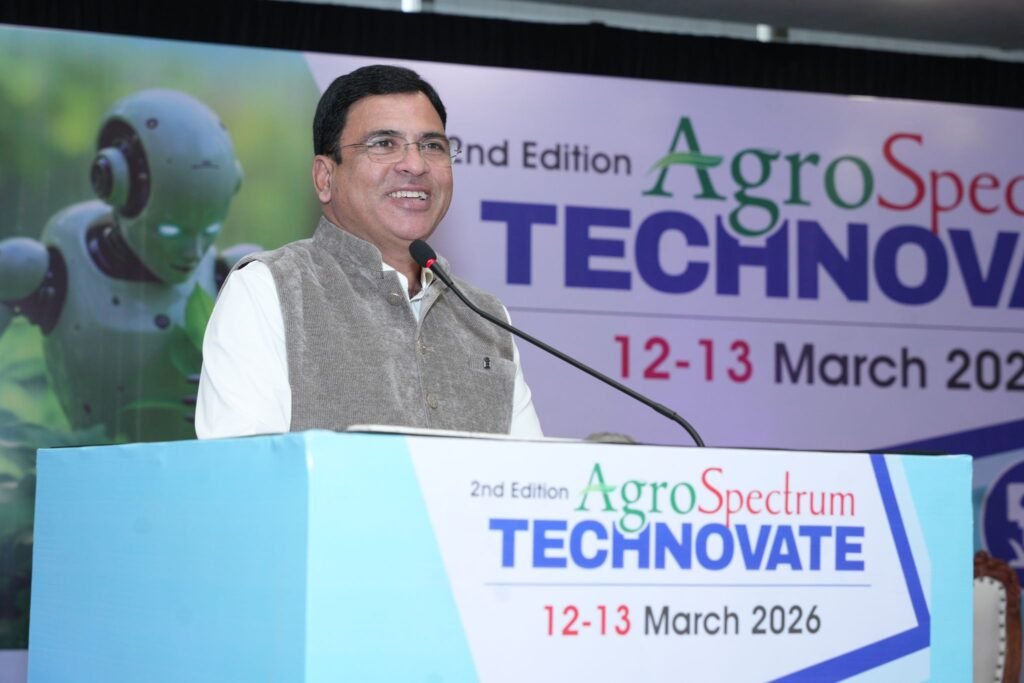
India’s agriculture sector must urgently adopt advanced technologies, improve nutrient efficiency and strengthen mechanisation to remain globally competitive, according to policymakers, scientists and industry leaders at a high-level discussion during AgroSpectrum Technovate 2026.
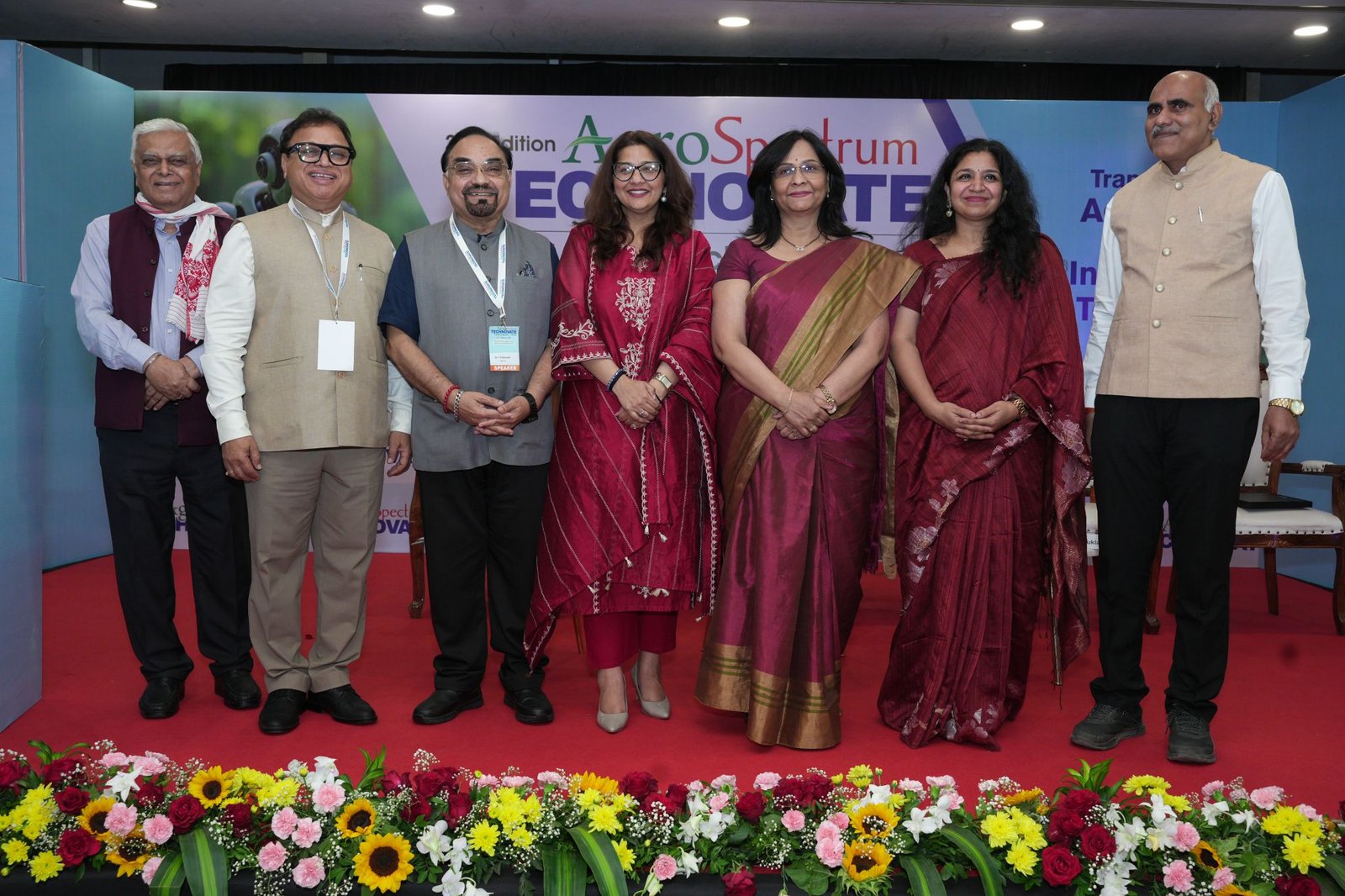
The session featured Komal Shah Bhukhanwala, Director – Research and Development at SML Limited; T. R. Kesavan, Group President – Corporate Relations & Alliances at TAFE Ltd; Dr S. K. Shukla, Director of ICAR-CIRCOT; and Sandeepa Kanitkar, Managing Director of Kan Biosys.
The session was also graced by Ashish Jaiswal, Minister of State for Agriculture, Government of Maharashtra.
Ravi Boratkar, Publisher & Managing Editor of AgroSpectrum and Managing Director of MM Activ Sci-Tech Communications Pvt Ltd, felicitated the dignitaries and addressed the gathering.
Global Supply Disruptions Highlight Agricultural Vulnerabilities
Opening the discussion, Komal Shah Bhukhanwala highlighted how geopolitical disruptions are increasingly affecting the global agricultural supply chain.
According to Bhukhanwala, nearly $11 billion worth of agricultural exports were disrupted during the Hormuz conflict, as the crisis led to significant disruptions in global natural gas supplies, a key input for fertiliser production.
“The disruption in gas supply has had a cascading impact on fertiliser availability, and the crisis coincided with the Kharif season, making the situation particularly challenging for farmers,” she noted.
She also raised concerns about the environmental consequences of excessive fertiliser use, noting that more than 50 percent of Indian districts have already exceeded permissible nitrate levels in drinking water.
Komal further pointed out that nutrient management in cotton cultivation remains inadequate in India, highlighting a critical gap in crop nutrition strategies.
Mechanisation Must Move Toward Service-Based Models
Addressing the role of farm mechanisation, T. R. Kesavan emphasised that the future of agricultural machinery lies not in larger equipment but in smaller, more specialised machines supported by technology-driven solutions.
Kesavan argued that simply integrating multiple technologies into existing systems is not sufficient.
“Integration alone is not the solution. Technology will drive the development of smaller, more efficient machines designed for specific farming operations,” he said.
He also highlighted the growing potential of the “Agriculture as a Service” model, which enables farmers to access mechanisation services without having to purchase expensive equipment.
According to Kesavan, the harvester industry provides a successful example, as it has grown rapidly without relying on direct government subsidies.
Nutrient Efficiency and Scientific Innovation Gap
Sandeepa Kanitkar emphasised the importance of improving nutrient use efficiency in Indian agriculture.
She pointed out that the efficiency of major fertilisers such as urea, phosphate and potash often remains around 30 percent, meaning a large proportion of applied nutrients is lost due to poor utilisation.
“If nutrient efficiency remains around 30 percent, it means nearly two-thirds of the input is effectively wasted,” Sandeepa explained.
She also highlighted the evolving food consumption patterns associated with economic development.
“As societies become more affluent, dietary patterns change significantly. This transformation will require new approaches to agricultural production and nutrition management,” she noted.
Kanitkar also pointed out that there is a significant gap between science-based innovation and need-based innovation in agriculture, suggesting that research must be better aligned with farmers’ practical needs.
Cotton Productivity Gap a Growing Concern
Highlighting the structural challenges in cotton production, Dr. S. K. Shukla presented a comparative perspective on global productivity trends.
India achieved its highest cotton productivity during 2013–14, but yields have stagnated or declined in recent years.
In contrast, countries such as Brazil have witnessed dramatic productivity improvements.
“Cotton productivity in Brazil has increased nearly fourfold due to technological innovations and improved farming practices,” Dr. Shukla explained.
Similarly, Australia currently records some of the highest cotton yields globally. India, however, has increasingly relied on imports, bringing in nearly 60 lakh bales of cotton annually, while production costs remain significantly higher compared to competing countries.
Dr. Shukla highlighted several technological gaps contributing to this challenge, including the lack of high-density planting systems, delayed adoption of advanced biotechnology traits such as BG3 and BG4, and limited farm mechanisation.
“Mechanised harvesting will become essential for improving efficiency and reducing labour costs in cotton cultivation,” he said. Another major issue is contamination in cotton fibre, which affects the quality and export competitiveness of Indian cotton.
Dr. Shukla also emphasised the role of biochar technology, produced by converting agricultural biomass into carbon-rich material that can enhance soil organic carbon levels and improve soil fertility.
Countries such as China are already achieving yields of around 1,600 kilograms per hectare, demonstrating the potential of advanced production systems.
Artificial Intelligence and Policy Support
Dr. C. D. Mayee, Chairperson of the Conference Committee for Technovate 2026, highlighted Maharashtra’s initiatives to promote artificial intelligence in agriculture. He noted that AI-driven solutions could help farmers overcome challenges ranging from climate variability to pest outbreaks.
Dr. Mayee also raised concerns about increasing incidents of farmers being misled or cheated in the marketplace, emphasising the need for stronger regulatory oversight and collaborative industry action.
Role of Infrastructure and Emerging Opportunities
During the discussion, speakers also highlighted the positive impact of development initiatives led by Nitin Gadkari, particularly in improving infrastructure and economic opportunities in the Nagpur region. The expansion of bamboo cultivation in the region was cited as an example of emerging agricultural opportunities linked to improved connectivity and market access.
Strengthening Soil and Crop Health
In his concluding remarks, Ravi Boratkar highlighted the increasing challenges posed by climate change and environmental degradation. He emphasised that maintaining soil health and crop health will be essential for ensuring long-term agricultural sustainability.
Boratkar also expressed his gratitude to Ashish Jaiswal for attending the event despite his demanding schedule and acknowledged his continued engagement with agricultural initiatives in the state. Looking ahead, Boratkar noted that the integration of advanced technologies such as artificial intelligence into agriculture could deliver transformative outcomes for farmers, strengthening productivity, sustainability and resilience across India’s agricultural sector.
— Suchetana Choudhury (suchetana.choudhuri@agrospectrumindia.com)