Wednesday, 8 July 2026

The real outcome of edge AI isn’t the engineering — it’s what it unlocks for the businesses that serve farmers. Farmers benefit in the end, sure, but the ones actually adopting this technology first are agribusinesses, FPOs, equipment manufacturers, drone companies, crop advisory platforms, and input suppliers working across many farms at once, opines Nikhil Goel, Senior Director of Engineering, embedUR Systems
Indian agriculture has never had it easy. El Niño swings, an increasingly unpredictable Kharif season, and mounting pest and disease pressure are making crop management harder every year. The FAO has quantified the damage like so: plant pests and diseases alone account for roughly 40 per cent of crop losses worldwide. Add to that the rising cost of fertilizers and pesticides, and blanket application simply isn’t viable anymore — not financially, and not environmentally.
Precision agriculture was supposed to fix this by making interventions targeted and data-driven instead of blanket and wasteful. It has, largely. But now that AI-powered tools have shown their mettle across the farming ecosystem, the real question isn’t whether they work — it’s whether they can be deployed cheaply and widely enough, to matter most at scale.
Precision farming goes mainstream
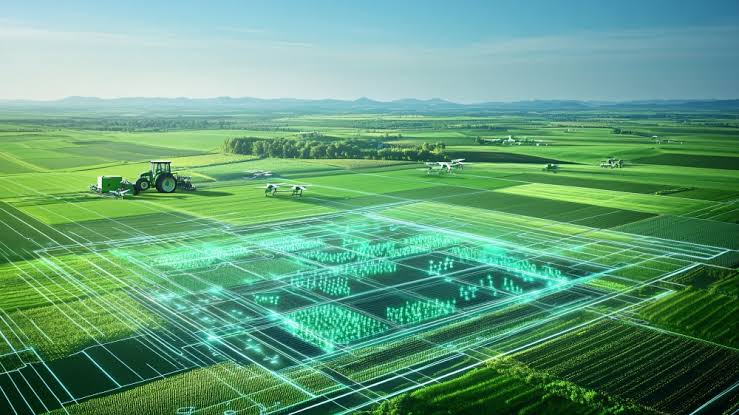
Drones, computer-vision cameras, sensors, and smart farm equipment are already known to have taken over the Indian farming ecosystem. These devices track crop health, identify disease early, fine-tune farm irrigation, and guide precise application of fertilisers or pesticides. The numbers back this up: the global precision farming market is expected to cross $16 billion in 2026, a sign that confidence in tech-enabled farming is no longer speculative. is reflected in
India’s own stance policy enforcement underscores this trend. Government initiatives such as the Autonomous Systems Policy 2026 and the Namo Drone Didi programme, actively push drone and autonomous-tech adoption into the daily operations of Indian agriculture.
So, one thing is clear – adoption isn’t the challenge anymore. And that means that the challenge now lies in showing efficiency — how do you embed AI capabilities across contrastingly different farming environments without the costs and complexity accelerating?
Where does cloud-first precision agriculture run into trouble?
Precision agriculture produces a huge amount of data. Be it the case of a smart camera scanning for crop diseases, a drone identifying which plant requires precision spraying, or a sensor monitoring the farm’s livestock — each one is generating an enormous amount of visual and sensor data that needs processing.
Most of today’s AI-powered agricultural tools handle that processing in the cloud data collected in the field gets sent off to a central server, analysed, and recommendations get sent back. That model got the first wave of precision agriculture off the ground. But it starts to buckle as deployments scale up.
Farmland is often remote, and connectivity out there is inconsistent at best — which makes continuous data transmission a genuine problem, not a minor inconvenience. Add in the sheer volume of imagery and sensor data moving back and forth, and you get latency, recurring infrastructure bills, and operational headaches, especially for agribusinesses and FPOs managing thousands of farms at once.
This is roughly the point where cloud-first architecture stops making sense, and edge AI starts to.
The changes that Edge AI can bring about
Instead of transferring every image and reading to a data centre, edge AI runs the model directly on the device that is part of the network edge: the drone, the smart camera, the handheld scanner, the machine itself. Processing happens where the data is generated, so insights arrive in real time, and the system isn’t held limited to the availability of a stable internet connection.
The upgrade isn’t just in terms of speed. Running models on-device cuts recurring cloud costs and keeps things working in places with weak or no connectivity — which, for a lot of Indian farmlands, is most of the time. And that combination, ensures that precision agriculture remains commercially sustainable, not just technically impressive.
From Intelligence to action across the value chain
The real outcome of edge AI isn’t the engineering — it’s what it unlocks for the businesses that serve farmers. Farmers benefit in the end, sure, but the ones actually adopting this technology first are agribusinesses, FPOs, equipment manufacturers, drone companies, crop advisory platforms, and input suppliers working across many farms at once.
Once intelligence is embedded into the devices themselves, these organizations can move faster without waiting on the cumbersome cloud transfer. A drone with on-device computer vision can detect pest infestations the moment it spots them. A smart sprayer can tell weeds apart from crops and apply pesticide only where it’s needed — all without any data transfer involved. The same logic extends to yield estimation for procurement planning, livestock health monitoring, and smarter input use generally.
Edge AI also provides something biggerhyperlocal advisory. Pairing on-device crop intelligence with real-time field data and local microclimate readings, then delivering it through multilingual platforms, means farmers get advice that’s hyper specific to their field and their moment —shifting from a generic regional forecast.
Maybe the biggest shift, though, is in how precision agriculture gets delivered. Farmers aren’t expected to be tech-savvy, supporting and designing AI infrastructure in their farms overnight. Instead, intelligence simply gets embedded into the equipment and services these farmers are already using. This allows agribusinesses and tech providers to scale AI deployment, cut costs, and make precision agriculture something the whole ecosystem can actually adopt and afford.
Technology alone won’t get this done
While it is true that Edge AI can solve most of the scalability problem, it is important to understand that it isn’t the golden goose. Ensuring industry-wide adoption is going to take more than good models — it requires technology providers, agribusinesses, policymakers, and researchers to come together.
Data quality is one obvious priority. A model that is trained on a specific data set of crops or controlled conditions can’t be deployed across India’s wide range of geographies, soil types, and climates, simply because of the inherent differences in the environment. Building datasets that reflect that diversity is crucial, not optional, for the collective success.
Secondly, optimising these models to suit edge hardware is equally important. Farm equipment usually operates on limited compute, patchy connectivity, and rough environmental conditions —therefore, models have the need to stay lightweight and energy-efficient without losing accuracy in the field.
And none of this works if it’s plugged in as an afterthought. Edge AI must be looked at as a business imperative and stitched into workflows farmers and agribusinesses already follow, whether that’s through drones, machinery, handheld tools, or advisory apps — not sit alongside them as something extra to learn. Adoption will ultimately track how clearly the technology shows up in lower input costs, better resource use, and stronger yields.
Beyond precision, Toward scale
Precision agriculture has already proven what AI can do — catching crop diseases earlier, using inputs more efficiently, and giving farmers improved data to act on and harvest better. The next challenge isn’t in building smarter models. It’s in making sure those models can reach the field, affordably, across every kind of farm that is spanning across our country.
Edge AI is what closes that gap by putting intelligence directly into the tools farmers and agribusinesses already rely on, it gives the entire agricultural value chain a faster, cheaper, more resilient way to act on data — without needing a reliable internet connection to do it.