Friday, 3 July 2026

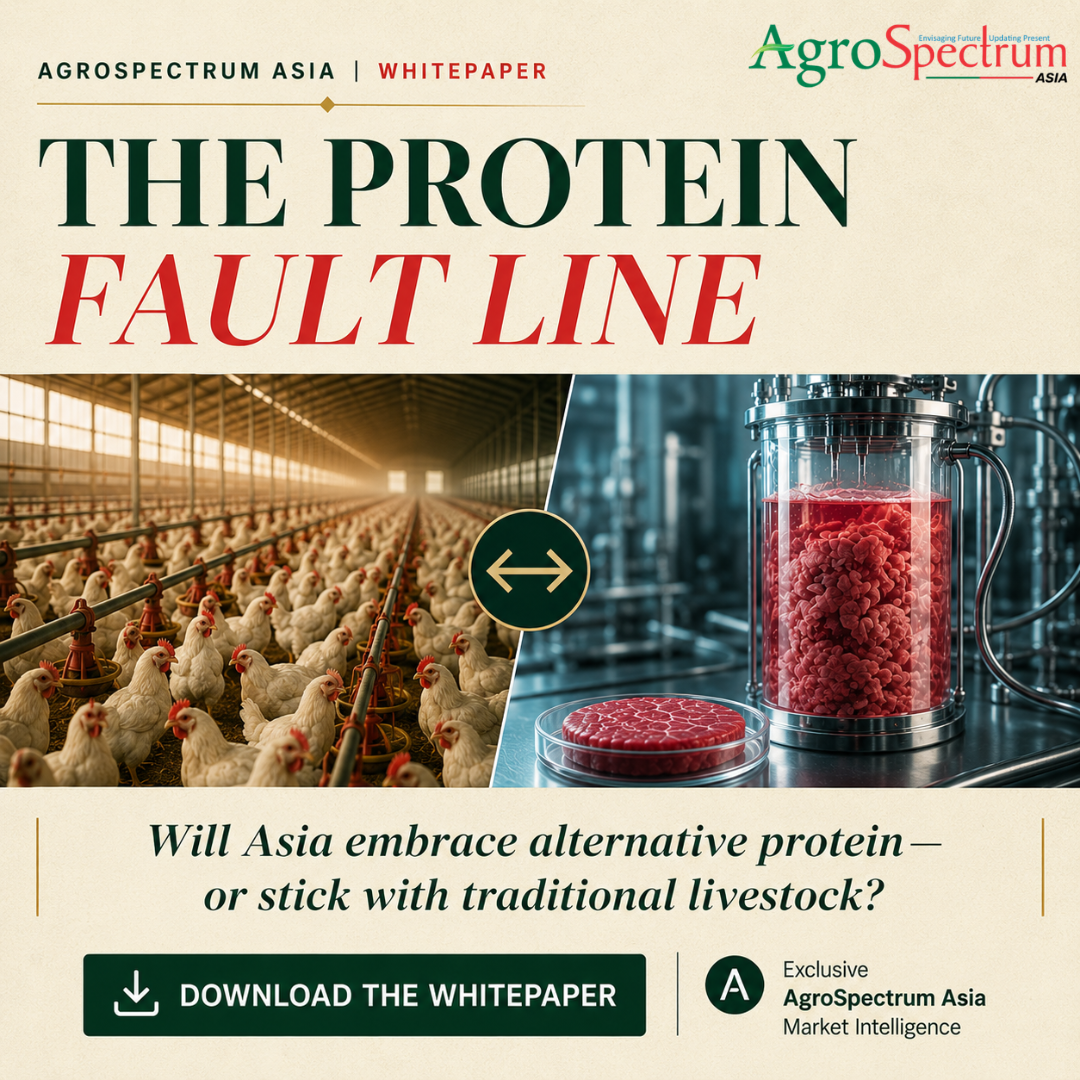
Authored by Agrospectrum Asia Chief Operating Officer, Ankit Kankar, the new white paper examines why conventional livestock systems remain central to Asia’s food future despite advances in cultivated meat and alternative protein
A new white paper is challenging prevailing assumptions about the future of protein consumption in Asia, arguing that the region’s food system will continue to be shaped primarily by conventional livestock production even as cultivated meat and alternative proteins gain regulatory and investor attention.
Titled “The Protein Fault Line: Cultivated Meat and the Asian Plate,” the report presents a data-driven examination of the forces shaping Asia’s protein economy and questions whether recent breakthroughs in cultivated meat can realistically match the scale, affordability, and livelihood impact of conventional animal agriculture across the region.
The analysis comes as Singapore continues to establish itself as a global leader in cultivated meat regulation, approving multiple novel protein products and creating one of the world’s most advanced regulatory environments for cell-cultivated foods.
However, the report argues that Singapore’s experience should not be mistaken for a preview of broader Asian consumption patterns.
According to the white paper, more than 55 percent of global meat production growth through 2034 is expected to occur in Asia, driven by rising incomes, urbanization, and increasing demand for animal protein. The region is also projected to add approximately 15 million tonnes of poultry production, while nearly 1.3 billion people remain connected to livestock value chains that support rural livelihoods and food security.
The report further highlights that approximately 475 million of the world’s 570 million farms are smallholdings, the majority of them located in Asia, underscoring the economic and political significance of traditional livestock systems.
At the same time, global investment in alternative proteins fell below $1 billion in 2025, marking the sector’s first sub-billion-dollar funding year since 2018 and raising fresh questions about commercialization timelines and scalability.
Rather than positioning alternative proteins and conventional agriculture as competing systems, the white paper explores how emerging technologies may integrate into existing food supply chains.
Among the key findings, the report examines:
Why Singapore represents a unique regulatory and food-security environment rather than a model easily replicated across Asia;
The political economy of protein production and the central role of rural livelihoods;
The economic and infrastructure challenges facing large-scale cultivated meat production;
The growing potential of precision fermentation as a supply-chain innovation;
How alternative proteins may gain traction through ingredients, feed applications, and specialized market segments rather than direct replacement of conventional meat;
Four distinct protein pathways likely to shape Asia’s food landscape over the coming decade.
The paper concludes that while cultivated meat, plant-based proteins, and fermentation technologies will continue to evolve, Asia’s expanding protein demand is likely to be met primarily through conventional livestock systems in the near term, with alternative proteins finding their strongest opportunities as complementary technologies rather than direct substitutes.
The report offers insights for agribusiness leaders, investors, policymakers, food manufacturers, sustainability professionals, and stakeholders seeking to understand the future trajectory of Asia’s food and protein economy.
The white paper is now available for download at: https://www.agrospectrumasia.com/whitepaper-cultivatedmeat