Thursday, 2 July 2026

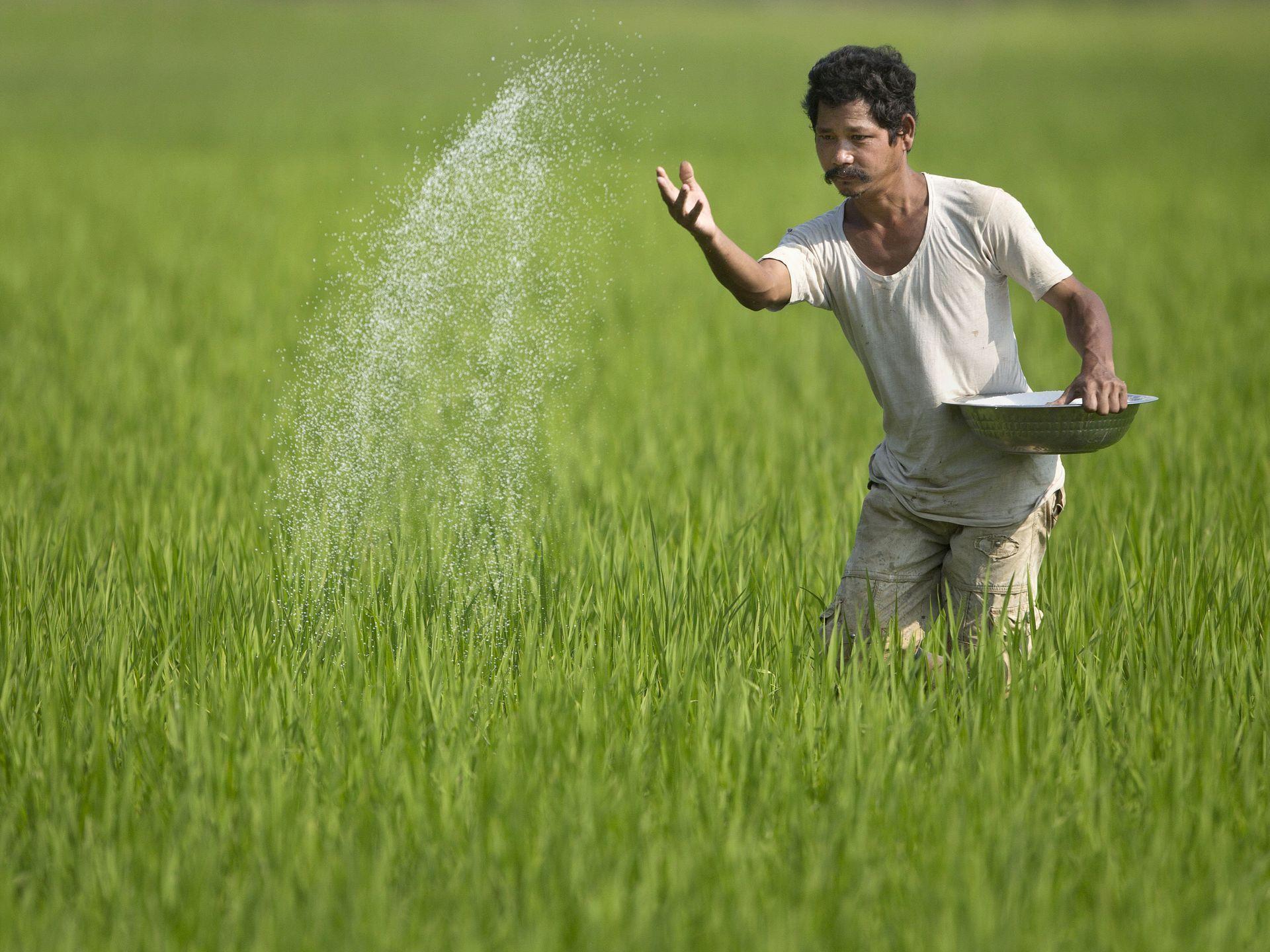
The battle against fertiliser tagging is not merely an industry dispute; it is a test of India’s commitment to competition, farmer welfare and fair markets
In the annals of India’s agricultural reforms, few interventions have been as consequential as the creation of a nationwide fertiliser distribution network that reaches the country’s most remote villages. Through an intricate web of subsidies, manufacturers and nearly 1.86 lakh retail outlets, India has succeeded in ensuring that a small farmer in Vidarbha or Bundelkhand enjoys access to essential plant nutrients at affordable prices. Yet, beneath this impressive edifice lies an insidious practice that increasingly threatens both market integrity and farmer welfare: coercive tagging, or the forced bundling of non-subsidised agricultural inputs with subsidised fertilisers, particularly urea.
What might once have been dismissed as a commercial aberration has now assumed the dimensions of a national policy challenge. It sits at the confluence of competition law, agricultural economics, subsidy governance and farmers’ rights. More importantly, it imperils the development of India’s rapidly growing speciality plant nutrition sector—a market approaching the billion-dollar threshold and increasingly indispensable to the future of sustainable agriculture. The time has come to call coercive tagging what it is: a distortion of markets, a denial of choice and a subversion of public policy.
A Billion-Dollar Market at an Inflection Point
India’s speciality plant nutrition sector is no longer a peripheral adjunct to conventional agriculture. It is emerging as one of the most dynamic segments of the agri-input economy.
The water-soluble fertiliser market alone is estimated at approximately $ 917.2 million. The biostimulants market has reached nearly $ 831.9 million, while the combined market for water-soluble fertilisers, micronutrients and biostimulants is estimated to be worth nearly $ 980 million and continues to grow at a robust pace. This growth is hardly accidental. As climate variability intensifies, soil health deteriorates and water resources become increasingly constrained, Indian agriculture is steadily moving towards precision nutrition, fertigation and sustainable input management. Water-soluble fertilisers and biostimulants are no longer niche products; they are becoming integral to the next phase of agricultural productivity.
Yet the sector remains burdened by a structural vulnerability that ought to concern policymakers. Nearly 65.5 per cent of the industry’s requirements are met through imports, rendering India susceptible to global supply disruptions, geopolitical turbulence and exchange-rate volatility. The recent disruptions in global trade routes and energy markets have demonstrated the dangers of excessive import dependence. In such circumstances, fostering a vibrant and competitive domestic speciality nutrition industry ought to be a strategic imperative. Instead, the sector finds itself constrained by fragmented distribution practices and coercive commercial arrangements.
The Curious Economics of Distortion
The persistence of tagging cannot be understood without examining the economics of fertiliser retailing. The retail margin on urea remains fixed at a mere Rs 354 per metric tonne, a figure that bears scant relation to contemporary operating realities. Costs associated with transportation, warehousing, labour, digital compliance and last-mile distribution have all risen considerably.
Margins on phosphatic and potassic fertilisers are similarly constrained, often ranging between two and four per cent. The result is a commercial ecosystem under strain, where economic distortions create incentives for forced lifting and bundled sales. In numerous instances, dealers report that access to subsidised urea allocations is made contingent upon purchasing additional products, including specialty fertilisers, biostimulants and micronutrients. The coercion then cascades down the supply chain. Farmers seeking a bag of subsidised urea often find themselves compelled to purchase products they neither require nor can afford. This is not free enterprise. It is market distortion masquerading as commercial practice.
The Assault on Farmer Choice
At its core, coercive tagging represents a profound infringement upon the agency of the Indian farmer. Agricultural inputs are not interchangeable consumer goods. Their utility depends on crop type, soil characteristics, climatic conditions and stage of cultivation. Compelling a farmer to purchase a product merely because it is attached to subsidised urea is agronomically irrational and economically unjustifiable.
It leads to inappropriate input application, unnecessary expenditure and erosion of trust in the formal distribution system. More fundamentally, it transforms a public subsidy intended to support agricultural production into an instrument of coercive commerce. The irony is striking. India’s fertiliser subsidy regime was designed to empower farmers by reducing the cost of cultivation. Yet coercive tagging effectively converts this public good into a mechanism that restricts consumer choice. No welfare architecture can justify such an outcome.
Dealers in Revolt
The discontent generated by tagging is not confined to farmers. India’s fertiliser dealers—many of them small entrepreneurs and family-run enterprises—have repeatedly voiced their opposition to mandatory bundling. The most dramatic manifestation of this unrest occurred in Punjab, where nearly 15,000 fertiliser shops reportedly shut down in protest against compulsory tagging practices.
Such a widespread shutdown was not merely an industry agitation; it was an unmistakable signal that the existing system had reached a point of unsustainability. Dealers argue, with considerable justification, that they should not be compelled to stock products they do not wish to sell, nor should access to essential commodities be conditioned upon compliance with coercive commercial arrangements. In any competitive market, such practices would be regarded as deeply problematic. Agriculture deserves no lesser standard.
The Law Is Far Clearer Than Its Critics Suggest
Defenders of tagging often advance a curious argument: that the Fertiliser (Control) Order, or FCO, does not explicitly define the term “tagging” and therefore the practice exists in a legal grey zone. This interpretation is both narrow and erroneous. The absence of a specific definition does not imply the absence of legal remedies.
India’s administrative law framework, consumer protection mechanisms and competition jurisprudence provide ample authority to address coercive tying arrangements. Indeed, the August 2025 order of the Competition Commission of India may prove to be a watershed moment. The Commission observed that tying and bundling arrangements can constitute a prima facie abuse of market power, thereby elevating the issue beyond a mere regulatory irregularity.
The implications are profound. If access to a subsidised and essential commodity such as urea is made contingent upon purchasing unrelated products, the practice potentially violates the principles of fair competition and consumer choice. The legal proposition is elegantly simple: A beneficiary cannot be compelled to purchase Product B merely to obtain Product A.
Likewise, a dealer cannot be forced to lift unrelated products as a precondition for accessing subsidised fertilisers. The law is not silent. It is merely awaiting more vigorous enforcement.
States Have Already Demonstrated the Way Forward
Encouragingly, several states have already shown that decisive administrative action is both possible and effective. Uttar Pradesh was among the earliest to initiate proceedings against coercive tagging. Gujarat reportedly recorded 41 complaints relating to forced bundling. Madhya Pradesh suspended Form A2 registrations in specific instances. Haryana imposed district-level restrictions in Ambala, demonstrating that local authorities possess sufficient powers under the FCO to curb such practices. Maharashtra has also witnessed reported administrative action and inquiries by competition authorities.
Collectively, these interventions demolish the argument that regulators are powerless. The tools already exist. What is required is consistency of enforcement and clarity of intent.
The Case for an 8,000-Series Regulatory Reset
The current regulatory architecture governing speciality plant nutrition products has become increasingly fragmented and outdated. Industry stakeholders have therefore called for an “8,000-series regulatory reset” for the combined markets of water-soluble fertilisers, biostimulants and micronutrients.
The objective is not merely bureaucratic simplification. It is the creation of a coherent and future-ready framework capable of supporting innovation, improving product quality, reducing compliance burdens and encouraging domestic manufacturing. Given India’s 65.5 per cent import vulnerability, such a reform is not simply desirable—it is strategically necessary. The speciality nutrition industry could play a pivotal role in reducing dependence on imported chemical inputs, improving nutrient-use efficiency and supporting climate-resilient agriculture. However, it cannot flourish in a marketplace distorted by coercion.
Rahul Mirchandani: “Anti-Tagging Is a National Imperative”

Rahul Mirchandani, Managing Director, Aries Agro, one of the most prominent voices advocating reform in the agri-biological sector, argues that the issue transcends commercial interests at SOMS 2026. “Anti-tagging is a national imperative. It is simultaneously a pro-farmer, pro-dealer and pro-MSME reform,” he says.
According to Mirchandani, coercive bundling undermines the very purpose of India’s fertiliser subsidy architecture. “Farmers cannot be compelled to purchase products they do not need, and dealers cannot be forced into commercial arrangements that distort competition. Protecting the integrity of India’s fertiliser reforms means ensuring that subsidised fertilisers remain accessible on their own merit and are never used as instruments of coercive sales.” He further argues that ending tagging is essential to preserve confidence in India’s distribution system. “The country’s network of nearly 1.86 lakh fertiliser retailers is one of the world’s most extensive agricultural supply chains. Safeguarding its credibility is indispensable to the future of Indian agriculture.”
A Reform Whose Time Has Come
The debate over coercive tagging is, in truth, a debate about the kind of agricultural market India wishes to build. Will it be a marketplace characterised by competition, choice and innovation? Or one distorted by compulsion, opacity and unequal bargaining power?
The answer ought to be self-evident.
As India aspires to transform its agriculture into a technologically sophisticated, climate-resilient and globally competitive enterprise, coercive tagging has become an anachronism that can no longer be tolerated. Ending it would not merely correct a commercial malpractice. It would reaffirm a foundational principle of public policy—that subsidies exist to empower beneficiaries, not to constrain them; that markets flourish through freedom, not coercion; and that the Indian farmer deserves the dignity of choice. The campaign against coercive tagging is therefore not a sectional demand of industry or trade. It is, in the truest sense, a national imperative.
— Suchetana Choudhury (suchetana.choudhuri@agrospectrumindia.com)