Thursday, 2 July 2026

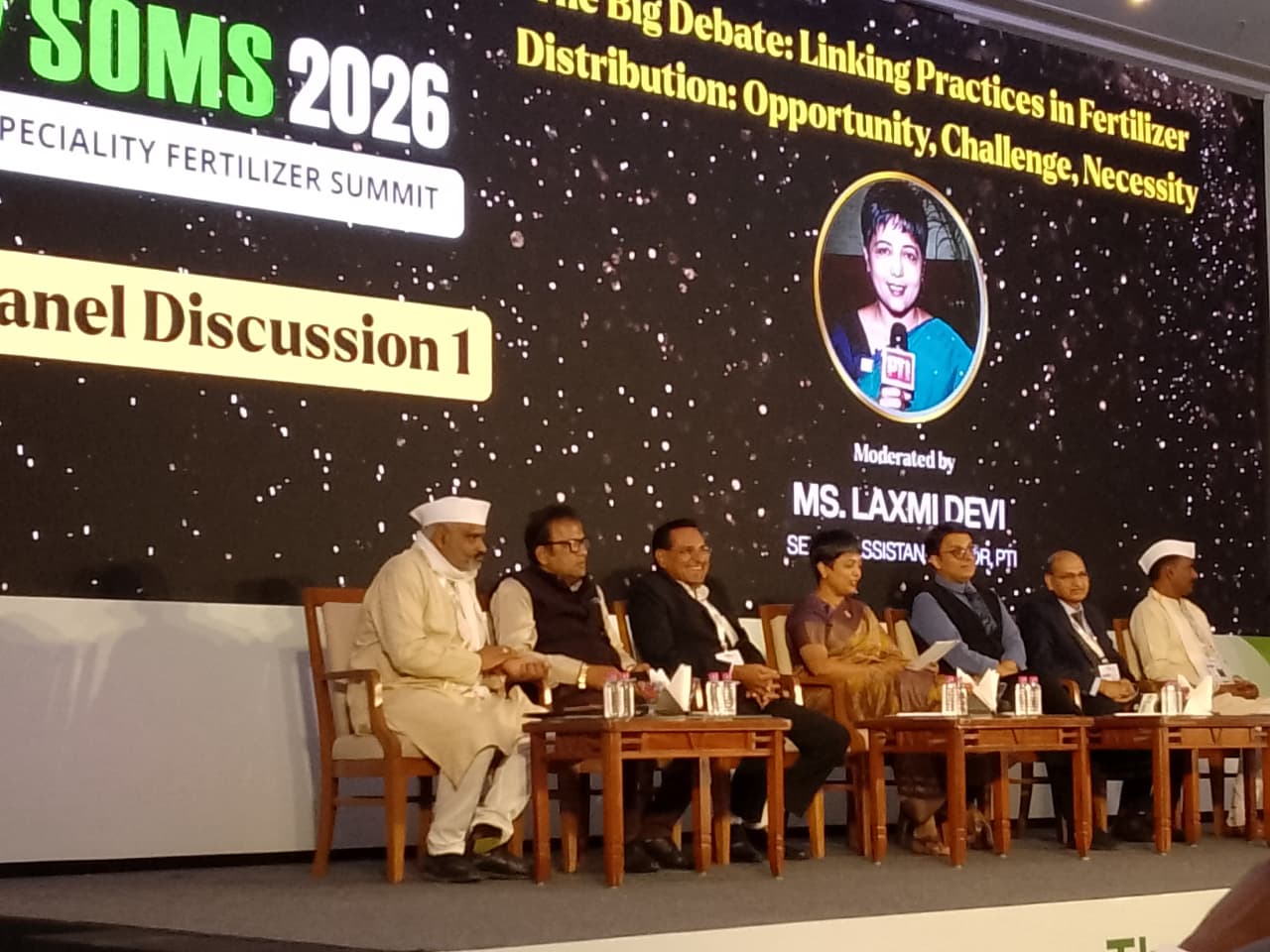
As India races to secure food for 1.6 billion people by 2050, an increasingly bitter debate over “linking” or “tagging” in fertiliser distribution has laid bare the tensions between food security, market efficiency and farmers’ freedom of choice. Is bundling a necessary instrument to promote balanced nutrition, or an anti-competitive distortion that has turned a public subsidy into a vehicle for coercive sales?
By any measure, India’s fertiliser economy is one of the world’s most consequential public policy enterprises. It underpins the production of more than 330 million tonnes of food grains, supports the livelihoods of nearly half the country’s workforce and absorbs tens of thousands of crores of rupees in annual subsidies. It is also the invisible scaffolding that sustains India’s food security architecture.
The challenge ahead is formidable. By 2050, India’s food grain requirement is expected to touch nearly 450 million metric tonnes. To meet that demand, the country’s plant nutrient requirement is projected to rise to approximately 60 million metric tonnes. The arithmetic is unforgiving: more food will have to be produced with less water, increasingly degraded soils and a shrinking environmental footprint. It is against this backdrop that a seemingly technical issue—the practice of “linking” or “tagging” fertilisers—has emerged as one of the most contentious debates in Indian agriculture.
The practice refers to the bundling of one product with another, often compelling dealers or farmers to purchase non-subsidised fertilisers, micronutrients or biostimulants as a condition for obtaining subsidised fertilisers, particularly urea. For some, linking is an instrument to promote balanced fertilisation and accelerate the adoption of next-generation plant nutrition products. For others, it is an unlawful distortion that inflates cultivation costs, undermines competition and strips farmers of the freedom to choose. The debate has now reached a critical juncture.
A recent industry discussion at SOMS 2026 brought together statisticians, policymakers, industry leaders, dealers, MSME representatives and farmers. Their interventions revealed an issue that is far more complex than a simple dispute over product bundling.
The Food Security Imperative
Kuldeep Sati, Chief (Statistics and IT) at the Fertiliser Association of India (FAI), framed the issue within the broader context of national food security. “India’s food grain requirement is likely to reach 450 million metric tonnes by 2050, while plant nutrient demand could touch nearly 60 million metric tonnes. Food security remains the government’s prime agenda,” he said.
It is a reminder that fertiliser policy cannot be divorced from the larger challenge of feeding a growing population. India has, over the years, built one of the world’s most sophisticated fertiliser distribution systems. The movement of all major subsidised fertilisers is tracked through an online, web-based monitoring system that records their journey from production facilities to the retail point.
Yet, even as fertiliser consumption has increased, the country’s soils are showing unmistakable signs of nutritional stress.
According to FAI estimates, nutrient deficiencies have reached alarming proportions:
Nitrogen deficiency affects nearly 94 per cent of Indian soils.
Phosphorus deficiency stands at 91 per cent.
Potassium deficiency affects 51 per cent of soils.
Sulphur deficiency has reached 41 per cent.
Zinc deficiency is estimated at 37 per cent.
Boron deficiency affects approximately 23 per cent of soils.
The figures tell a disturbing story. India’s fertiliser challenge is no longer one of quantity alone; it is increasingly a question of quality and balance. “Potential measures include bringing nano fertilisers, liquid fertilisers, biofertilisers, water-soluble fertilisers and chelated micronutrients into mainstream distribution channels,” Sati said. “This can improve nutrient-use efficiency and reduce nutrient losses.” There is little disagreement on the need for balanced nutrition. The question is whether the objective can justify coercive distribution practices.
The Farmer’s Complaint: Rising Costs and Forced Purchases
For farmers, the issue is considerably less abstract. Tagging, they argue, has become synonymous with higher costs and unwanted purchases. Farmer leader Shankar Rao Darekar articulated the frustration in blunt, unsparing terms. “Tagging is increasing our cost of production. Through linkage, we are often forced to buy products that are different from what we need, sometimes of poor quality and at higher prices.”
His remarks encapsulate the central grievance. A farmer’s nutrient requirement depends upon the crop, the soil and the specific deficiencies in his field. Compelling him to buy additional products merely because he seeks access to subsidised urea runs contrary to the principles of scientific nutrient management. It also raises a more fundamental question: Can a government subsidy intended to support farmers be used to create captive demand for products they may not wish to purchase?
The answer increasingly appears to be no.
Dealers Speak of a Distorted Market
If farmers complain of forced purchases, dealers speak of forced stocking. Dealer associations have described linking as one of the most serious challenges confronting fertiliser retailing. “Three bags of urea are often accompanied by four bags of another fertiliser,” a dealer representative said. “Products are sold alongside subsidised fertilisers even when farmers do not need them.”
The complaint does not end there. “Prices are decided by the companies. Every day there is a new MRP. Five companies have five different prices for similar products. How is this possible?”
The remark points to an ecosystem characterised by information asymmetry and pricing opacity. Dealers also drew attention to an institutional vacuum. “There is no ombudsman in fertiliser dealership.” The absence of an independent grievance redressal mechanism leaves retailers with little recourse when confronted with coercive practices. Several dealers also alleged that even senior company executives are often unaware of the extent of tagging occurring at the field level, suggesting that the problem may be diffused across multiple layers of the distribution chain.
The MSME Squeeze
The debate over linking has also exposed a less discussed but equally significant issue: its impact on small and medium enterprises.
Balasaheb Thombre, State President (Maharashtra), SFIA, representing the interests of MSMEs, argued that smaller manufacturers are increasingly being squeezed out of the market. “MSMEs are sandwiched,” he said.
According to Thombre, companies with access to subsidised fertiliser channels often use those networks to push other products. “In large companies, even junior officers sometimes push products linked to their own business interests.”
The economics of this arrangement, he argued, are deeply damaging. “Large companies buy products from MSMEs and then sell them through linking arrangements. The MSME gets little benefit, and farmers are compelled to purchase products they may not need.” The result is a market in which commercial success increasingly depends not on product quality or innovation but on privileged access to subsidised distribution channels. “Owing to linking, we do not get a direct share of the market,” Thombre said.
His remarks transform the debate from one of agricultural administration to one of competition policy.
The Industry’s Defence: Balanced Nutrition Cannot Be Ignored
Rahul Mirchandani, one of the leading advocates of speciality plant nutrition products, drew a sharp distinction between promoting balanced fertilisation and compelling purchases. “Compulsion is not a part of regulatory practice,” he said.
Indeed, he argued that Indian agriculture suffers from the opposite problem—an overdependence on conventional fertilisers, particularly urea. “There is overuse of regulated fertilisers.” Mirchandani pointed to industry-led trials that suggest the possibility of significantly reducing urea application without sacrificing productivity. “Aires has conducted trials showing that urea usage can be reduced by as much as 25 per cent, while farmers obtain better yields through scientifically recommended commodity-bulked fertilisers.”
The implication is profound. India’s future agricultural productivity may depend less on increasing fertiliser use and more on improving fertiliser efficiency. But, Mirchandani emphasised, such a transition cannot be built on coercion. To improve transparency, the industry has introduced voluntary QR codes that allow farmers to verify product identities and maximum retail prices. “The objective is to ensure better price discovery and greater transparency so that farmers know exactly what they are purchasing.”
It is an attempt to empower informed choice rather than replace it.
Demand Creation Cannot Be a Substitute for Compulsion
The Fertiliser Association of India acknowledged that the challenge extends beyond distribution practices. “When demand for fertilisers is created, there must first be clarity about who needs what,” Sati said. The observation may appear self-evident, but it points to a deeper policy failure. India’s nutrient deficiencies cannot be addressed merely by increasing product penetration. The country needs better soil testing, stronger extension services, improved farmer awareness and scientific recommendation systems. Without these, linking risks becoming a crude substitute for genuine demand creation.
The Case for Central Intervention
Mirchandani argued that fragmented action by individual states may not be sufficient. “Constructive but strong action directed by the Centre would be effective in combating linking, which every state faces.”
The issue, he suggested, goes to the very design of agricultural subsidies. “Subsidies, by definition, are inefficient. Therefore, shortages of fertilisers must be avoided.” The statement is both provocative and revealing. Subsidies inevitably create distortions because they alter market incentives. The challenge for policymakers is to ensure that these distortions do not become instruments of coercion. If access to subsidised fertilisers is conditioned upon the purchase of unrelated products, the subsidy ceases to be a welfare measure and begins to resemble a mechanism for creating captive markets.
The Case for Stronger Law—and Perhaps Deeper Reform
The debate concluded with a growing consensus on one issue. There should be a strong legal framework to prohibit coercive tagging. Equally significant was the call for a more fundamental reform.
“Give the subsidy directly. Fertiliser selection should remain in the hands of the farmer.”
Direct transfer of subsidies to farmers has long been discussed in policy circles as a means of reducing distortions and enhancing choice. Such a system would undoubtedly be administratively challenging. However, it would also eliminate one of the principal incentives for coercive bundling.
The Real Question
The linking debate is ultimately about more than fertiliser distribution. It is about the kind of agricultural marketplace India wishes to build. Should new-age products such as nano fertilisers, water-soluble fertilisers and biostimulants be promoted? Undoubtedly.
Should balanced nutrition become a national priority? Certainly.
But should these objectives be pursued by compelling farmers and dealers to purchase products they do not want or need? That is where the consensus begins to fracture.
India’s future food security will depend upon innovation, scientific nutrient management and efficient distribution systems. None of these objectives, however noble, can justify coercion. For in the final analysis, the most important principle in agricultural reform remains deceptively simple: A subsidy belongs to the farmer. The choice of what to buy with it must belong to him as well.
— Suchetana Choudhury (suchetana.choudhuri@agrospectrumindia.com)