Thursday, 25 June 2026

Rebrand from Polaris Energy Services marks milestone as company activates more than 200 megawatts of flexible agricultural load, including participation in PG&E’s Hourly Flex Pricing pilot
Yield Energy, formerly Polaris Energy Services, is betting that farms can become one of the grid’s most valuable—and underutilized—assets.
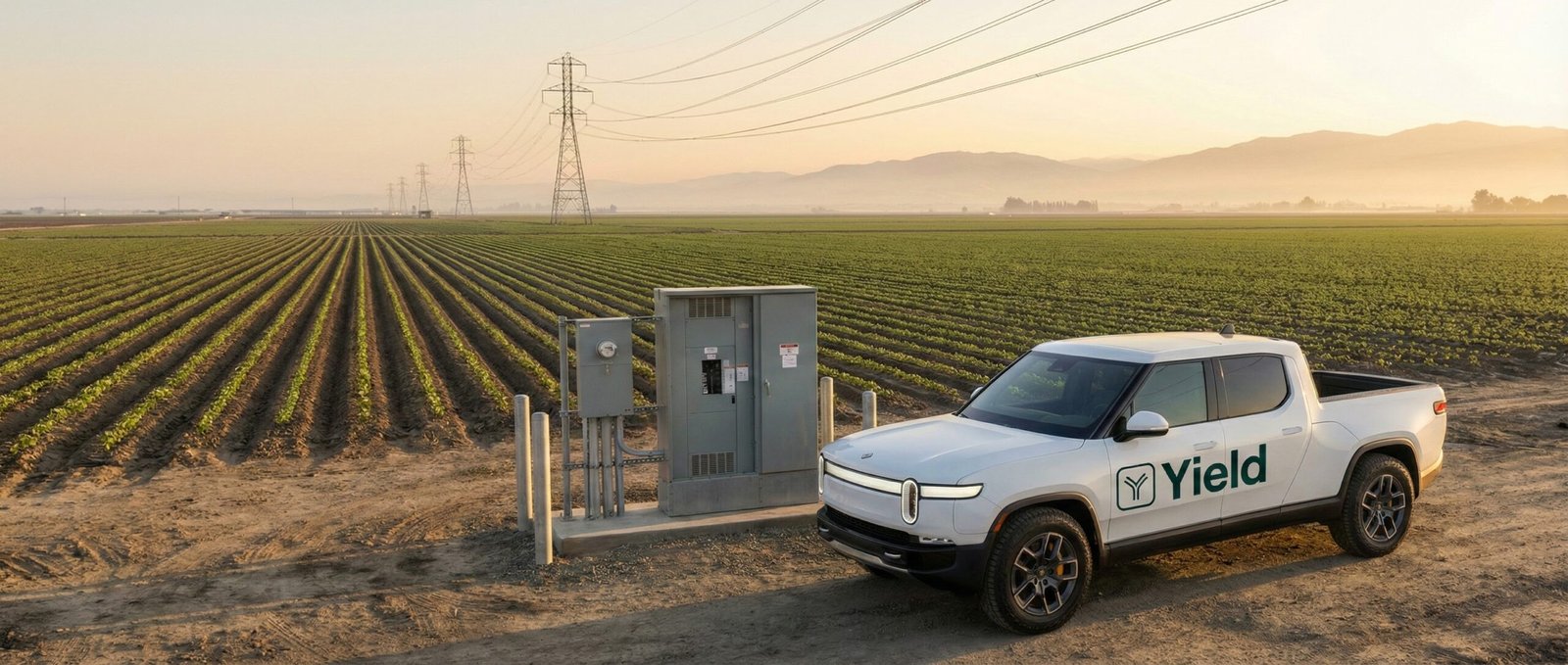
The company on Tuesday announced the launch of Yield Edge, an agriculture-first distributed energy resource management system (DERMS) designed to transform everyday farm operations into dispatchable grid resources. The launch coincides with the company’s rebrand to Yield Energy, reflecting its shift toward a hardware-agnostic energy platform built specifically for agricultural operations.
Yield Energy currently manages more than 200 megawatts of agricultural electrical load, including over 100 megawatts enrolled in Pacific Gas & Electric’s agriculture-specific Hourly Flex Pricing pilot, a program aimed at shifting energy use away from peak demand periods. The company says the platform allows utilities to tap agricultural loads as a source of fast, flexible capacity—while generating recurring revenue for growers without disrupting farm operations.
Backed by nearly $3 million in funding from the California Energy Commission, Yield Energy validated its platform through state-supported projects, demonstrating that irrigation systems and other farm assets can deliver automated, utility-grade demand response at scale. The results, the company says, provide utilities with confidence that agricultural customers can reliably participate in grid programs traditionally dominated by commercial and industrial users.
“At a time when utilities are struggling to keep pace with electrification and extreme weather, agriculture represents a largely untapped flexibility resource,” said Tyler Nuss, CEO of Yield Energy. “We’ve shown that farms can deliver capacity that is faster to deploy, cleaner, and significantly cheaper than building new infrastructure—while creating meaningful new revenue streams for growers.”
The Yield Edge platform currently orchestrates irrigation pumps and is expanding to manage a broader range of on-farm distributed energy resources, including cold storage, electric vehicle and equipment chargers, solar arrays, batteries, and on-site generation. Together, these assets function as virtual power plants capable of responding to grid conditions in real time.
A key part of Yield Energy’s strategy is deep integration with agricultural technology providers. The company works with partners including WiseConn, Farmblox, LUMO, Ranch Systems, Swan Systems, Netafim, and Verdi, enabling existing farm automation hardware to participate automatically in demand response and other grid services with minimal operational disruption.
Performance data from deployments across California highlight the model’s potential:
100 per cent average demand response performance across enrolled devices
67 per cent demonstrated load-shift capability during peak grid hours
More than $20,000 in average annual revenue per participating grower
Over 10,000 on-farm devices connected to the platform
“Yield Energy is expanding what irrigation technology can do for growers,” a WiseConn spokesperson said. “With a single integration, farms can now access new utility programs and revenue opportunities while supporting grid reliability.”
As utilities search for cost-effective ways to balance supply and demand, Yield Energy is positioning agriculture as a new category of clean, flexible capacity—large loads that can shift within minutes, support localized grid reliability, and reduce the need for expensive grid upgrades or new storage projects.
For growers, the pitch is straightforward: monetize flexibility that already exists on the farm. For utilities, the promise is equally compelling—a scalable, low-cost pathway to bring agriculture into the center of grid planning.