Tuesday, 14 July 2026


Image Source: FAO/Luiza Olmedo
How a centuries-old agroforestry system in southern Brazil is sustaining livelihoods, biodiversity, and one of the world’s most endangered forests
In southern Brazil, a drink is never just a drink. When a cuia—the traditional vessel for chimarrão, Brazil’s iconic erva-mate infusion—circulates from hand to hand, it carries more than warmth. It carries memory, community, and a living relationship with the forest.
In Paraná State, this ritual is rooted in an agricultural system that defies the logic of industrial farming. Here, erva-mate (Ilex paraguariensis) is not cultivated by clearing forests but by working within them. Grown under native canopy cover, the crop has sustained families for generations—while keeping one of the world’s most threatened ecosystems standing.
Alongside Argentina and Paraguay, Brazil is a global leader in erva-mate production and exports. But it is Paraná’s traditional shaded cultivation system that offers a powerful counter-narrative to extractive agriculture: productivity without deforestation, income without ecological collapse.
Agriculture that depends on the forest—rather than replacing it
The shaded erva-mate system operates inside the Araucaria Forest, part of the Atlantic Forest biome and among the most endangered ecosystems on Earth. Decades of logging, land conversion, and monoculture expansion have reduced this forest to fragments of its former range.
What remains has survived not by accident, but by design.
“This is not just a farming system—it is a way of being with the forest,” says Evelyn Nimmo, Adjunct Professor at the State University of Ponta Grossa. “Production happens within the forest, guided by agroecological principles and ancestral knowledge. Communities actively manage canopy cover, regeneration, and diversity so the forest remains standing while livelihoods endure.”
These systems blend agricultural production, biodiversity conservation, and collective governance under intense environmental pressure. They are living landscapes—managed, not abandoned—where ecological function and economic viability reinforce one another.
Small-scale producer João Carlos Andrianchyk describes the logic simply: “We understood long ago that preserving the Araucaria Forest, protecting water sources, and avoiding agrochemicals is not optional. We are passing this understanding to younger people because the future will need this work if we want to keep the good life we have here.”
In communities such as Pontilhão and Paço do Meio, more than 130 families depend directly on erva-mate, often for nearly 70 percent of household income. The forest is not a backdrop—it is the economic engine.
Biodiversity as infrastructure
Unlike industrial monocultures, these forest-based systems rely on biodiversity as a form of risk management.
Erva-mate grows alongside native fruit trees, medicinal plants, and keystone forest species, forming a multi-layered ecosystem that stabilizes soils, regulates water cycles, and suppresses pests naturally.
“There is a caterpillar that damages erva-mate,” explains producer João Negir e Silva. “But we have gone ten or eleven years without outbreaks here. They reach neighboring areas, but they don’t come here because of the biological diversity we maintain.”
Harvest cycles respect ecological rhythms. Leaves are collected every three years, allowing plants to regenerate. Fruit is gathered without shaking trees. Seedlings are often propagated locally, reinforcing native species such as araucaria, imbuia, and canela guaicá—pillars of forest structure and resilience.
“We survive from agriculture and from the erva-mate we grow,” says producer Olga Wenglarek. “Everything is used—from firewood to food. There is care in surviving, and care in making sure those who come after us will also find a place.”
Conservation that cannot be outsourced
The stakes are particularly high because the Araucaria tree (Araucaria angustifolia), the forest’s keystone species, cannot be effectively conserved in conventional seed banks. Its seeds are highly perishable. Without living, connected landscapes, the species cannot survive.
In effect, conservation depends not on preservation alone—but on people.
Long before erva-mate entered global markets, it was integral to Indigenous life. Known as ka’a by the Guarani, the plant has long held ceremonial, medicinal, and social significance.
“Erva-mate has always been part of our collective life,” says cacique Antonio Lima of the Rio d’Areia Indigenous territory. “It is community work, with shared rules on how to care for the forest and when to harvest. That organization is what keeps the forest standing and the community united.”
Global recognition, local responsibility
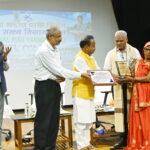
In May 2025, the Food and Agriculture Organization of the United Nations (FAO) recognized the traditional shaded erva-mate system as a Globally Important Agricultural Heritage System (GIAHS)—only the second such designation in Brazil.
“This recognition is far more than symbolic,” says Jorge Meza, FAO Representative in Brazil. “It highlights how local communities have managed forests sustainably for centuries—protecting biodiversity, generating income, and preserving cultural identity.”
In Paraná, agriculture does not stand apart from nature. It stands with it. The forest survives not because it was left untouched, but because it has been carefully worked, governed, and shared—demonstrating that resilience, when rooted in tradition and collective stewardship, can scale across generations.
In a world searching for climate solutions, the lesson may already be in the cup.
To read the original story, click: https://www.fao.org/newsroom/story/mate-the-drink-that-keeps-a-forest-alive/en