Saturday, 18 July 2026


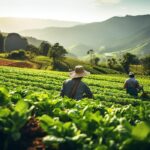
The Food and Agriculture Organization of the United Nations (FAO) has launched the Villages Recognition Initiative, a new global platform designed to honor rural communities that are shaping the future of agrifood systems while safeguarding the cultural and ecological foundations of local life. Announced in Cairo as part of FAO’s 80th Anniversary celebrations, the initiative positions rural villages—often overlooked yet indispensable—as engines of resilience, innovation, and tradition in a rapidly changing world.
Developed under the FAO MuNe (Food and Agriculture Museum and Network) and championed by FAO Director-General QU Dongyu, the initiative celebrates communities that are bridging centuries-old knowledge with modern solutions. It highlights how villages conserve biodiversity, preserve food traditions, advance sustainable agriculture, and drive inclusive rural transformation. At its core is a belief long held by the Director-General: that rural communities are the beating heart of global agrifood systems, and that global progress depends on elevating their stories, solutions, and leadership.
The Villages Recognition Initiative aligns deeply with FAO’s strategic vision of Better Production, Better Nutrition, a Better Environment, and a Better Life – leaving no one behind. It recognizes the women, men, and youth who sustain local agrifood systems through their daily work: small-scale farmers, fishers, foresters, pastoralists, Indigenous communities, and rural entrepreneurs who continue to innovate while protecting natural resources. Their contributions, often invisible in national and international narratives, are essential to building resilient food systems that can withstand climate pressures, economic shifts, and demographic change.
Villages may be nominated either by FAO Members or by the Organization itself, creating an inclusive, participatory process that reflects FAO’s commitment to equality and global cooperation. Already, more than 300 nominations from 69 countries have been submitted, representing a wide spectrum of cultures, ecosystems, and rural transformations underway across the world. Each nomination highlights a distinct story—whether rooted in natural heritage, traditional food cultures, agritourism, or science and digital innovation—offering a mosaic of how rural communities are adapting and thriving.
The initiative includes four thematic areas that collectively frame the diversity of rural life. Some villages stand out for their stewardship of natural landscapes and biodiversity, grounded in Indigenous and traditional knowledge. Others exemplify the preservation of distinctive food cultures and culinary practices that form the backbone of local identity. Certain communities have transformed agriculture into cultural and educational experiences, connecting visitors and residents through agritourism. Still others are leveraging digital tools, scientific advances, and local ingenuity to modernize rural development without losing sight of their roots. Together, these categories capture the duality of heritage and innovation that defines today’s rural transformation.
Unlike competitive awards programs, the Villages Recognition Initiative is rooted in appreciation, visibility, and mutual learning. The goal is not to rank or score communities, but to understand what makes each village unique and to elevate those insights globally. Recognized villages will receive a digital Certificate of Recognition endorsed by the FAO Director-General, acknowledgment at official FAO sessions, and placement within the FAO MuNe Network. They will also be featured on the MuNe digital platform, expanding opportunities for global exchange, peer learning, and collaborative rural development.
As FAO positions rural communities at the center of agrifood systems transformation, the Villages Recognition Initiative serves as both a tribute and a strategic accelerator. It amplifies the stories of people whose work sustains food, culture, ecosystem health, and local economies—and whose leadership will be indispensable in shaping the future of sustainable agriculture.