Tuesday, 7 July 2026

State’s first inflatable rubber dam projects, worth over Rs 160 crore, will enhance irrigation, groundwater recharge and flood management in Chhota Udepur and Tapi districts
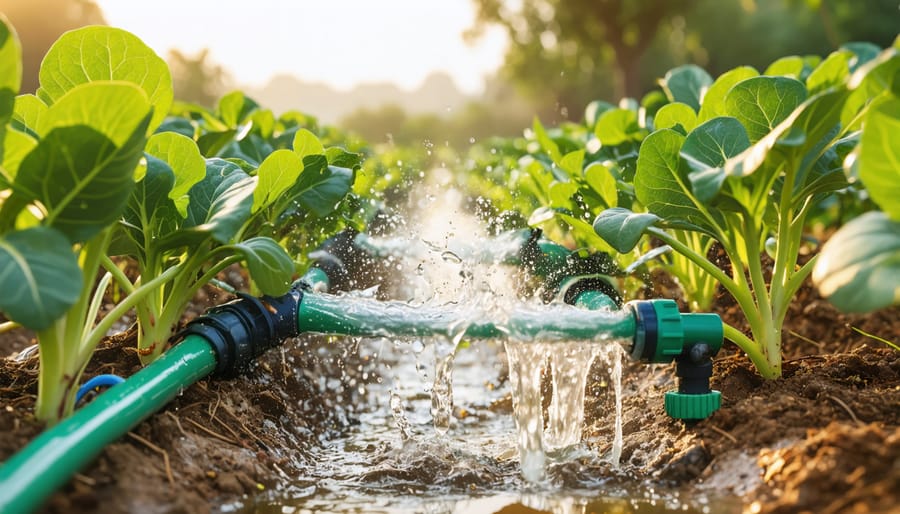
Gujarat is introducing inflatable rubber dam technology for the first time as part of a Rs160 crore-plus investment aimed at improving irrigation infrastructure, water conservation and flood resilience in two water-stressed districts.
The state government is constructing two advanced rubber dams on the Heran River in Chhota Udepur district and the Ambika River in Tapi district. Built using South Korean technology, the projects represent a shift toward more adaptive water management systems capable of responding to seasonal river flows while addressing long-term water availability challenges.
Unlike conventional check dams and gated barrages, the inflatable structures are designed to perform efficiently in regions characterized by flat topography and low riverbanks. The technology enables water storage during dry seasons while allowing rapid release during periods of heavy rainfall, reducing flood risks, limiting erosion and minimizing sediment accumulation.
Each structure incorporates a reinforced rubber bladder anchored to a concrete foundation. The bladder can be inflated to impound water or deflated to restore natural river flow, with automated control systems enabling operations without manual intervention.
The larger of the two projects is being developed at Rajvasana in Bodeli taluka of Chhota Udepur district with an investment exceeding ₹82.97 crore. Construction has progressed to around three-fourths completion and is expected to be finished within 30 months.
Once operational, the project will provide assured irrigation across approximately 3,420 hectares covering 25 villages. The infrastructure includes a 180-metre-long inflatable rubber barrier with a height of 3.5 metres, increasing the storage capacity of the existing weir to 3.5 million cubic metres (MCM). To strengthen flood resilience, the project also includes protective embankments extending 900 metres along the left bank and 500 metres on the right bank, supported by a decade-long operations and maintenance agreement.
The second installation is nearing completion at Pathakwadi village in Tapi district’s Dolvan taluka. With an investment of more than ₹79.13 crore, the project has reached approximately 90 per cent completion and is expected to deliver reliable irrigation to around 650 hectares of farmland across Pathakwadi, Dhodiyawad, Unai and Sindhai villages.
Designed according to Japanese Code 2000 engineering standards, the structure utilizes a South Korean-manufactured rubber bladder measuring between 18 mm and 32 mm in thickness and engineered for an operational lifespan of nearly 30 years. The dam rises 4.5 metres, combining a 2.5-metre inflatable bladder with a 2-metre concrete base, and stretches 280 metres across four sections.
A SCADA-based automation system enables real-time control of inflation and deflation, allowing the structure to respond automatically to changing river conditions. The automated design facilitates the passage of excess floodwater and sediment during the monsoon while retaining water for irrigation and groundwater recharge during drier months.
State officials believe the projects will improve groundwater replenishment, strengthen irrigation reliability and enhance drinking water availability in surrounding rural communities. The adoption of inflatable rubber dam technology also reflects a broader move toward climate-resilient water infrastructure capable of balancing flood control with year-round water storage in regions where conventional hydraulic structures offer limited effectiveness.