Saturday, 4 July 2026

Industree Foundation, one of India’s most forward-looking organisations working at the intersection of women’s economic empowerment, climate action, and sustainable, nature-based value chains, in partnership with the Society for Elimination of Rural Poverty (SERP), the State Rural Livelihood Mission (SRLM) of Andhra Pradesh, has launched a Primary Processing Unit (PPU) for bamboo in Maredumilli Mandal of Pollavaram district.
The region is one of Andhra Pradesh’s most ecologically rich and tribal areas, where bamboo resources are readily available and hold strong potential for creating sustainable, community-based livelihoods.
The foundation stone laying ceremony for the PPU was virtually inaugurated by N. Chandrababu Naidu, Chief Minister of Andhra Pradesh, in the presence of Vangalapudi Anitha, Minister for Home Affairs and Disaster Management, Government of Andhra Pradesh, Gummadi Sandhya Rani, Minister for Women & Child Welfare and Tribal Welfare, Government of Andhra Pradesh, and V. Karuna, IAS, CEO of SERP.
Working closely with the district administration, the land for the PPU facility was identified and finalised under the leadership of A. S. Dinesh Kumar, IAS, District Collector. The procurement of machinery and related processes for the unit has been completed, and the facility is now fully operational, with the first trial run conducted by the women bamboo growers themselves.
Speaking about the initiative, V. Karuna, IAS, CEO of SERP, said: “The establishment of the Primary Processing Unit at Maredumilli marks an important milestone in strengthening the bamboo sub-sector in Andhra Pradesh. As part of our broader efforts under the bamboo value chain initiative, we envision this facility as a model processing unit for the state. With close coordination between SERP and the district administration, we were able to expedite key processes including land allocation and infrastructure support to operationalise the unit in a short time. Spread across nearly 8,000–9,000 square feet, the facility will serve as a critical link between bamboo cultivation and market-ready products, while creating sustainable livelihood opportunities for women in the region.”
India is home to nearly 30 percent of the world’s bamboo resources, and the sector is increasingly being promoted as a sustainable livelihood opportunity for rural and tribal communities, particularly through women-led self-help groups. The establishment of the processing facility is expected to strengthen the local bamboo value chain by enabling aggregation, primary processing, and improved market linkages for bamboo grown in the region.
Speaking on the partnership, Neju George Abraham, CEO, Industree Foundation, said:
“India’s bamboo sector holds immense potential to create climate-resilient livelihoods while strengthening sustainable supply chains. Through our partnership with SERP, we aim to empower one lakh women by integrating them into bamboo plantation and value chain activities. In the immediate term, this initiative will generate income opportunities and strengthen local economies. Over the long term, it will help build a robust bamboo economy that supports rural enterprises, sustainable production, and inclusive growth.”
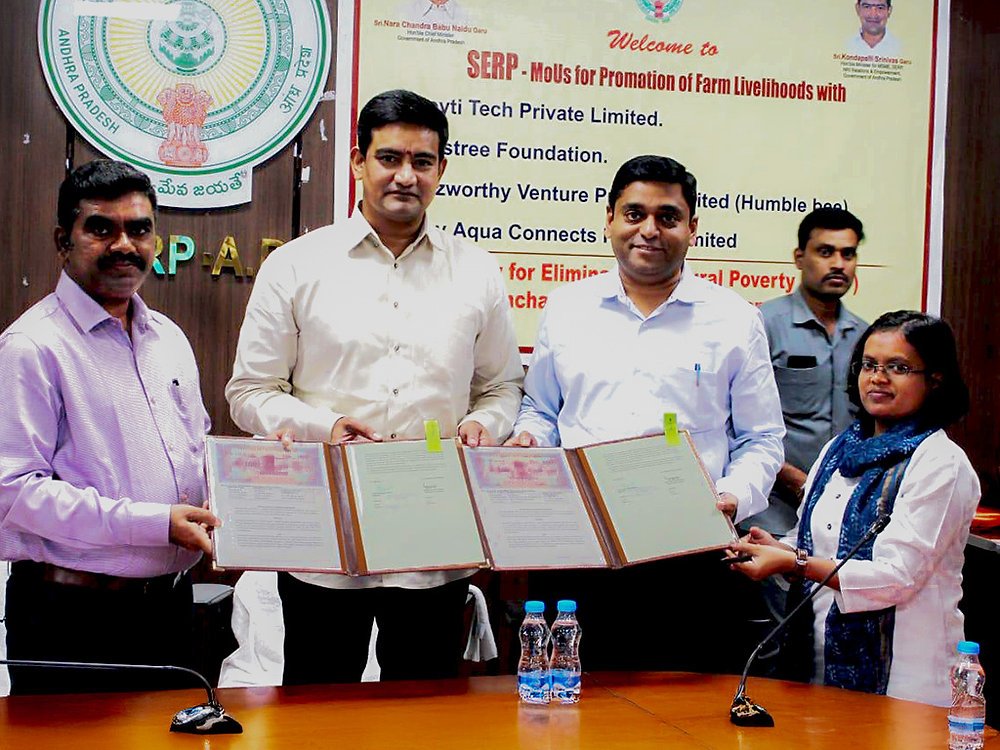
Supporting the broader vision of strengthening the bamboo value chain, Industree Foundation and SERP signed a five-year Memorandum of Understanding (MoU) in November 2024 to develop the bamboo sub-sector in Andhra Pradesh. The MoU was signed in the presence of Kondapalli Srinivas, Minister for MSME, SERP, NRI Empowerment & Relations, Government of Andhra Pradesh; and Neju George Abraham, CEO, Industree Foundation. Through this partnership, Industree and SERP aim to engage one lakh women in bamboo plantation activities across the state while strengthening the value chain and expanding bamboo-based livelihood opportunities for rural women.
The initiative aligns with Industree’s mission to create large-scale livelihood opportunities while promoting regenerative, nature-based value chains. By combining plantation development with processing infrastructure and market linkages, the partnership aims to build a resilient bamboo ecosystem that benefits both communities and the environment.