Saturday, 11 July 2026


In an exclusive AgroSpectrum interview, Abed Masarwa, VP Products at Netafim, Israel, says the new platform marks a shift from programmable dosing to self-learning nutrient management.
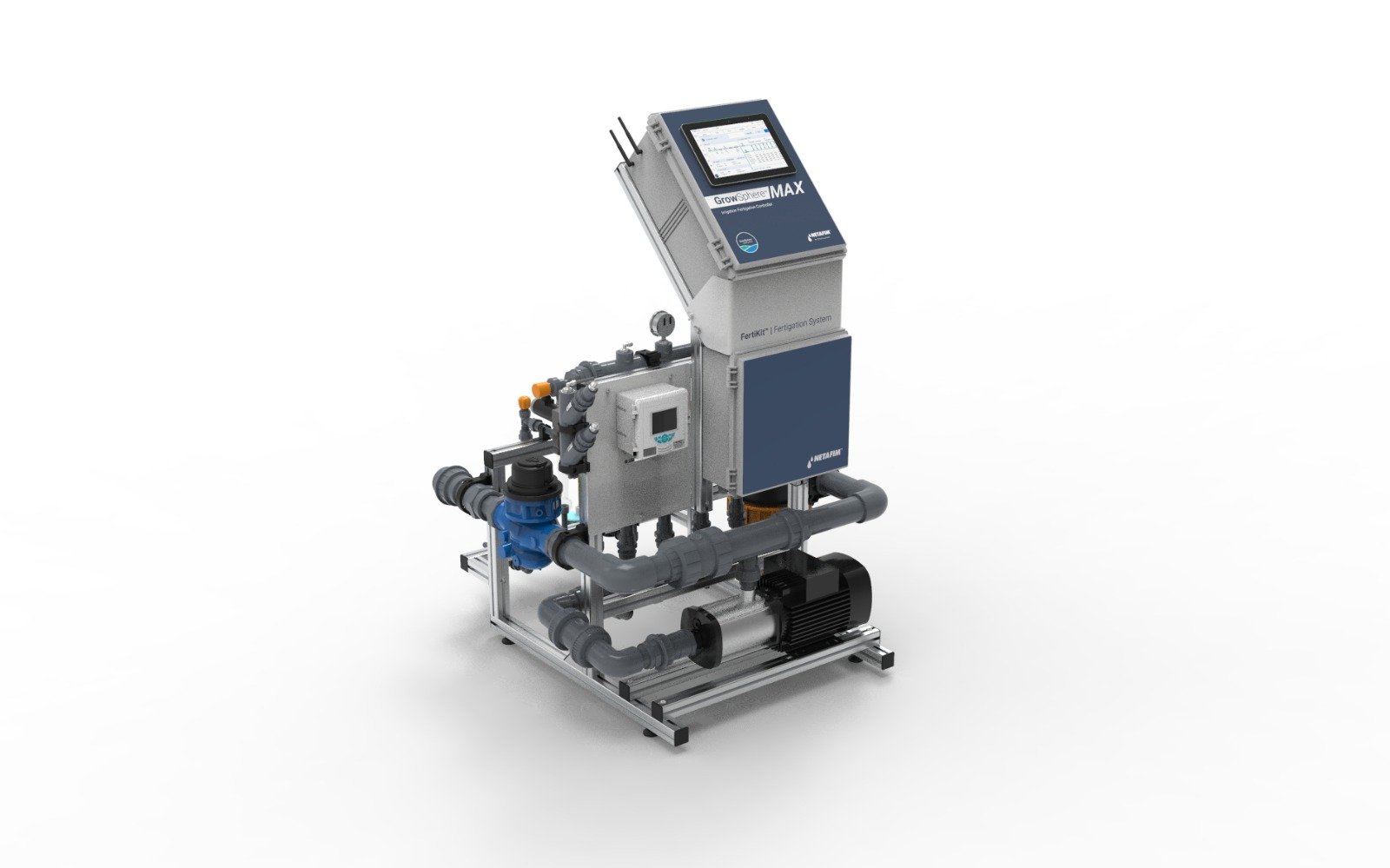
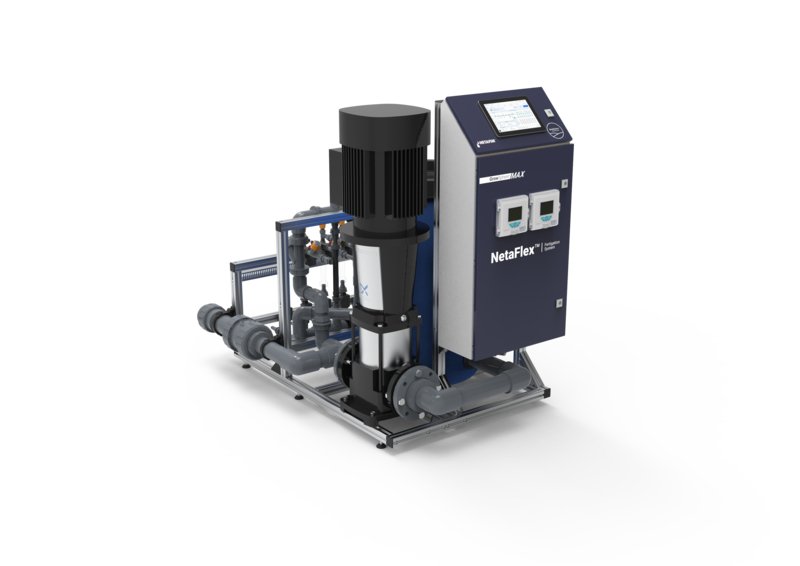
Abed Masarwa, describes Dosing 5G as both a major technology leap and a strategic pivot toward AI-driven autonomous fertigation, moving beyond predefined recipes to real-time adaptive nutrient management. Launched by Orbia Advance Corporation, S.A.B. de C.V.’s Precision Agriculture business, the new range—FertiKit 5G, FertiOne 5G, NetaJet 5G and NetaFlex 5G—combines advanced EC/pH sensing, auto-adaptive injection, and integration with the GrowSphere digital operating system to create a closed-loop, self-learning system.
Building on six decades of agronomic expertise, Dosing 5G is designed to help farmers address rising input costs, resource scarcity, and climate volatility by maximizing yields while reducing fertilizer waste, labor, and environmental impact. Masarwa emphasizes that the long-term vision is a connected, data-driven fertigation infrastructure that balances profitability and sustainability, positioning Netafim not just as an equipment provider but as an intelligent irrigation ecosystem partner.
Strategic Differentiation
Netafim has led precision agriculture for decades. With Dosing 5G, what is materially different this time — is this a product upgrade, or a strategic shift toward AI-driven autonomous fertigation?
Dosing 5G represents both a material technological leap and a strategic shift in how Netafim approaches autonomous fertigation.
Materially, the system is built on an upgraded architecture:
A next-generation controller – GrowSphere MAX – which is an intuitive and simple-to-use controller, designed to speak the grower’s language. The GrowSphere MAX also manages local and remote devices such as pumps, main valves, field valves, and other hydraulic components.
A new operating system and digital workspace under GrowSphere.
A new EC/pH measurement technology with faster stabilization and improved accuracy.
A new auto adaptive fertilizer injection mechanism that continuously adjusts dosing based on real-time feedback.
These upgrades change the way the system measures, reacts, and stabilizes nutrient delivery. Strategically, Dosing 5G flagship products mark the transition from programmable fertigation to adaptive self-learning nutrient management. While previous generations executed predefined recipes, Dosing 5G analyzes system behavior dynamically — hydraulic performance, EC/pH response, crop stage, and environmental conditions — and adjusts in real time with minimal human intervention.
AI Credibility & Data Advantage
Many ag-tech firms claim AI capabilities. What proprietary data, agronomic models, or field validation give Dosing 5G a defensible advantage over competitors in automated dosing?
Dosing 5G intelligence is grounded in proprietary agronomic and hydraulic data, robust crop models, and field-validated performance. At its core, Dosing 5G’s AI capability is the combination of real-time hydraulic intelligence and continuous operational behavior learning.
Dosing 5G does not rely solely on agronomic assumptions. It continuously analyzes how the irrigation and fertigation system is actually performing — pressure behavior, flow stability, injection response time, EC/pH dynamics, and valve activity. This real-time hydraulic data creates a live performance map of the system. This operational learning enables the system to adapt dosing logic dynamically, rather than simply executing pre-programmed recipes. Stabilization becomes faster, drift is reduced, and correction cycles become more precise. The result is a “closed loop” system that not only monitors performance in real time but continuously improves its response accuracy.
In addition, using GrowSphere workspace enables farmers with agronomic crop modeling based ondeep agronomic expertise, real climate and soil data, and historical performance and real field feedback. These models run daily to update recommendations based on current conditions, effectively tailoring dosing to each crop’s growth stage and environment.
ROI in a Cost-Pressured Market
Farmers are facing rising input costs and tightening margins. What measurable return on investment can growers expect from Dosing 5G, and over what time horizon?
Dosing 5G delivers ROI in 4 measurable areas:
Input cost reduction
Precision fertigation enables accurate, stabilized nutrient delivery directly to the root zone. By preventing over- or under-dosing and continuously optimizing application rates, growers can typically reduce fertilizer use to the desired amount.
Yield & quality optimization
By maintaining stable nutrient availability throughout each growth stage, Dosing 5G supports:
Higher yield consistency.
Improved crop uniformity.
Better market-grade quality.
Reduced leaching & losses
Minimizing nutrient leaching and runoff means growers are not paying for fertilizer that never reaches the plant. Avoiding groundwater contamination also reduces regulatory exposure and potential compliance costs — an increasingly relevant factor in Europe and North America.
Labor & Maintenance Efficiency
Automation and remote control reduce manual calibration, monitoring, and troubleshooting. This lowers dependency on skilled labor and decreases system downtime.
Sustainability vs. Profitability
Dosing 5G promises reduced nutrient leaching and groundwater pollution. How do you quantify the environmental impact — and can sustainability gains translate into direct financial incentives for growers?
As mentioned above, reduced nutrient leaching — through more direct fertilizer delivery — provides financial incentives as growers save money on fertilizer costs with lower dosage requirements. And, with reduced groundwater pollution, growers face lower regulatory exposure and compliance costs.
Integration with Digital Farming
How critical is integration with GrowSphere to the Dosing 5G value proposition? Is this primarily a hardware innovation, or is the long-term play software, data services, and recurring revenue?
Integration with the full GrowSphere Operating System is fundamental to the Dosing 5G value proposition — it is not an optional add-on.
While Dosing 5G hardware delivers precision injection and stabilization, connecting the hardware to the GrowSphere OS transforms it into a fully integrated irrigation and fertigation ecosystem that connects hydraulic control, agronomic intelligence, operational management, and data analytics in one environment
The GrowSphere OS provides:
A unified workspace for irrigation and fertigation planning, execution, and validation.
Real-time monitoring of soil, crop, climate, and hydraulic performance.
Agronomic recommendations through embedded crop models.
Alerting, traceability, and season-over-season reporting.
Remote access and multi-site farm management.
Dosing 5G introduces new controller technology, advanced EC/pH measurement, and injection technology with the GrowSphere OS. Together, this enables:
Continuous optimization based on real-time data.
Cross-system learning across seasons and sites.
Software-enabled service layers.
Scalable digital offerings beyond hardware sales.
The broader strategy is clearly platform-driven. The operating system allows Netafim to move froman equipment provider to an intelligent irrigation ecosystem partner, where data, software, and agronomic services become increasingly central to long-term value creation.
Scalability Across Markets
From open fields in emerging markets to high-tech greenhouses in Europe and North America, how adaptable is the Dosing 5G range across vastly different regulatory, climate, and infrastructure conditions?
Dosing 5G was intentionally designed as a modular, scalable portfolio.
The portfolio structure enables scalability by configuration:
FertiOne 5G – A simple, cost-effective single-channel solution for bulk fertigation in open fields, pivots, and orchards.
FertiKit 5G – A flexible, multi-channel open-field system (up to 6 channels) that can be tailored to farm size and complexity.
NetaJet 5G – High-precision EC/pH stabilization (up to 8 channels), ideal for sensitive crops and short irrigation cycles in soil and soilless greenhouses.
NetaFlex 5G – Advanced, highly uniform greenhouse mixing technology (up to 6 channels) for operations requiring very high precision.
Scalability is also achieved through configuration and modularity flexibility for each product.
Also in the pipeline is The GrowSphere Flex — a FertiOne 5G soulution with a specifically designed controller tailor-made for small farmers and their real needs.
Climate Volatility & Risk Management
With unpredictable weather patterns intensifying, how does AI-automated dosing help farmers mitigate risk in real time — and does the system learn differently across crop types and geographies?
Dosing 5G, when integrated with the GrowSphere OS and its embedded Crop Advisor capabilities, enables reactions to climate volatility.
What’s more, the GrowSphere Crop Advisor leverages advanced crop models built on decades of Netafim agronomic expertise and global field validation. It combines real-time weather data, soil moisture information, hydraulic system performance, and crop growth stage modeling which allow the system to generate daily, crop-specific irrigation, and fertigation recommendations based on actual and forecasted conditions. In periods of climate stress, this translates into:
Anticipating heat-driven evapotranspiration spikes and adjusting irrigation and nutrient concentration accordingly.
Preventing water stress during irregular irrigation windows.
Adjusting irrigation and fertigation strategies based on crop stage sensitivity.
Adjusting irrigation during extreme weather events.
The Competitive Landscape & Future Vision
Where do you see precision fertigation heading over the next five years? Will we move toward fully autonomous nutrient management systems, and how central is Dosing 5G to Orbia Netafim’s broader AI roadmap?
In the coming years, the evolution will be driven as much by software as by hardware. The continued development of the GrowSphere Workspace will expand its role from a monitoring and control interface into a comprehensive operational environment. Planning, execution, validation, reporting, and agronomic recommendations will increasingly operate in a unified digital layer. The system will not only execute fertigation strategies but support growers in designing, benchmarking, and continuously improving them.
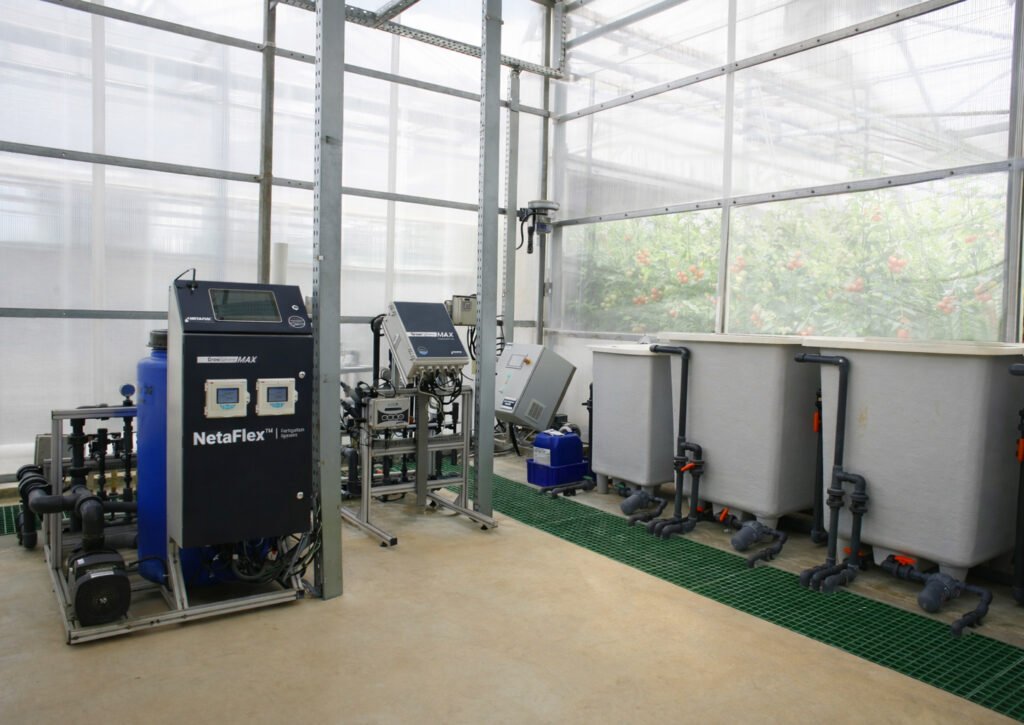
At the same time, innovation will not be limited to large high-tech operations. A major part of Netafim’s future vision is to extend advanced automated fertigation capabilities to small and medium-sized farms. By modularizing system architecture and maintaining configuration flexibility, Dosing 5G can scale in both directions — offering high and low-injection flows and high-precision greenhouse solutions while also delivering accessible, cost-effective configurations for open-field growers. The goal is to democratize intelligent fertigation rather than restrict it to premium segments.
From a technical standpoint, future development will focus on increasing injection flow capacities to support larger irrigation blocks and expanding the number of dosing elements that can operate simultaneously. As farms grow in scale and nutrient programs become more sophisticated, systems must handle higher volumes and more complex fertilizer combinations without compromising stabilization speed or accuracy.
The long-term vision is clear: a connected, high-capacity, data-driven fertigation infrastructure that continuously balances productivity, cost efficiency, and environmental responsibility across farm sizes and geographies.
— Suchetana Choudhury (suchetana.choudhuri@agrospectrumindia.com)