Thursday, 9 July 2026


AI, underwater monitoring and predictive analytics are transforming one of the world’s last analogue industries
For decades, commercial fishing has remained one of the world’s least digitised food production systems, operating largely on instinct beneath an invisible ocean surface. That era is beginning to end. In this interview, Inga Wise, Executive Director, SAFET and Tom Rossiter, Co-founder and CEO, CatchCam make the business case for treating underwater data as a strategic asset—one that can simultaneously improve operational efficiency, reduce environmental risk, strengthen supply-chain credibility and unlock new commercial value. As climate volatility reshapes fish stocks and buyers demand unprecedented levels of traceability, real-time marine intelligence is emerging as a competitive differentiator rather than a technological novelty. The conversation also challenges investors to look beyond conservation and recognise ocean data as the foundation of the next wave of blue economy innovation. If precision agriculture transformed farming, precision fisheries may well redefine the future of global seafood.
For decades, commercial fishing has operated with limited visibility beneath the waterline. How is access to real-time underwater data changing the economics of fishing, and what new competitive advantages does it create for operators?
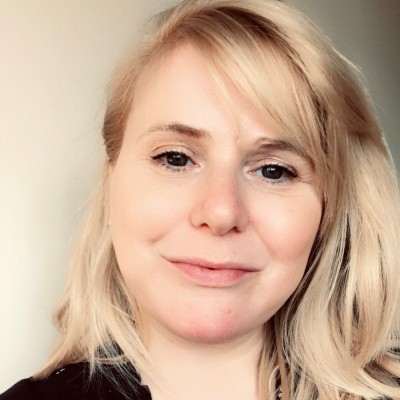
Today, real-time underwater data is changing the economics of fishing, helping operators to plan with precision and turning sustainability into a driver of profitability. At SAFET, we see this data-driven transformation creating a range of distinct competitive advantages across three areas: operational efficiency, precision catch, and market access and transparency. Ultimately, underwater data from companies like CatchCam is helping to accelerate innovation, allowing both small-scale and industrial fleets to optimize their gear. Today, technology has the power to transform sustainability from a regulatory burden into a measurable, profit-driving strategy and competitive edge.
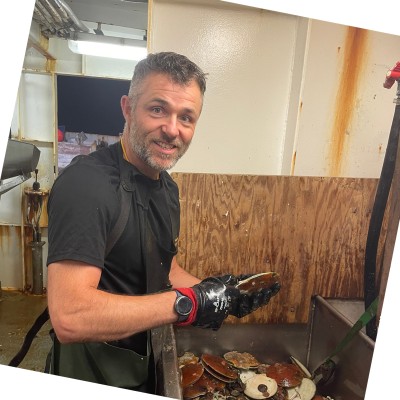
For example, compact, ruggedized cameras like CatchCam give fishers immediate visibility into gear behavior on the seabed. Skippers can adjust gears on the go and avoid wasting a multi-hour, fuel-heavy blind and unproductive fishing time. . On the topic of precision catch, access to underwater data lets operators see what is entering their nets before hauling. If non-target species are detected, fishers can alter depth, trigger release mechanisms, or shift locations — ensuring hold capacity is filled exclusively with high-value, legal catch. Market access and transparency is particularly important today, as global retailers and consumers are demanding verifiable proof of sustainable fishing. Operators leveraging underwater data and electronic monitoring gain an immediate market advantage. This data allows fishers to seamlessly qualify for premium eco-labels and secure lucrative contracts that command higher dockside prices.
The agriculture sector has embraced precision farming, while logistics relies heavily on real-time analytics. Do you see fisheries entering a similar era of precision decision-making, and what role does underwater intelligence play in that transition?
Commercial fishing has seemingly been the exception to the modern data revolution we’ve seen play out across the agricultural sector and logistics teams. Fishers have had to deploy expensive gear into an underwater black box, relying on a “tow and see” strategy. With the help of underwater intelligence, we are finally seeing an uptick in precision fishing. Underwater intelligence — and the technology that supports it — is the foundational data layer that allows us to manage the ocean with the same granularity that a farmer manages a field. Instead of treating a massive body of water as a uniform, hidden zone, technology can now map out exact behavioral and environmental variables at the point of catch, transitioning the industry from reactionary management to predictive, live-action precision.
For instance, it enables micro-spatial resource management. Fish gather based on local currents, seabed topography, and temperature structures amongst other factors. Underwater data from CatchCam cameras and sensors allows crews to overlay comprehensive intelligence with these metrics, helping operators identify the exact boundary lines where target species thrive and non-target species decline. This intelligence also enables automated catch accountability. Capturing clear data beneath the surface opens the door for automated species identification and size-grading before the fish ever hit the surface. This creates a record that can feed real-time quota tracking and dynamic marine spatial planning as well as provide valuable data to the market, reducing waste and adding value to the catch.
Ocean data has traditionally been collected for scientific research and conservation. How can marine data be transformed into commercially actionable intelligence that improves profitability, operational efficiency and risk management for seafood businesses?
Scientific research and conservation have built an important foundation for ocean data. The next step is to make that data useful for day-to-day fishing decisions as well, turning broad marine knowledge into practical, tailored intelligence that helps businesses improve profitability, efficiency, and risk management.
Through our work at CatchCam, we’ve seen that this commercial transformation is well underway. Marine data is quickly redefining paths to profitability and operational efficiency through gear optimization. Small- to large-scale fisheries use underwater intelligence and technology to save on fuel and to qualify for premium labels, higher prices, and lucrative contracts. In terms of fuel savings, if a net is distorted or towed through an empty zone, they can adjust immediately, maximizing catch and minimizing wasted fuel.
This data is also turning risk management from a guessing game into a visual science. For example, bycatch is an enormous economic risk that threatens quota closures and regulatory penalties. Near-real-time underwater insights allow operators to identify what species are entering their gear before pulling it up. This intelligence lets fishers make better informed decisions on the fly, protecting local ecosystems while ensuring hold capacity is filled only with legal, premium target catch.
As seafood supply chains face increasing scrutiny around sustainability, traceability and ESG performance, do you foresee underwater monitoring data becoming a critical business asset rather than simply a compliance tool?
Yes. This transformation is already well underway. Like land-based corporate supply chains, the availability of more granular, more accurate data enables better operational and strategic decision making. Where the data might have started as a compliance exercise, the insights it gives into costs and efficiency are becoming embedded in planning and delivery. This turns tightening international traceability and sustainability standards into an enabling tool for competitive advantage.
From our vantage point at CatchCam, underwater monitoring data is becoming a critical validator of commercial integrity — especially at a time when greenwashing can devastate a brand. Major international retailers and seafood distributors are actively restructuring their procurement strategies around verifiable and reliable data streams. Having visual and sensor-driven evidence of what happens at the point of catch acts as a necessary digital lever for the seafood industry.
For fisheries, this data fundamentally alters corporate risk management. Having real or near real time data available allows the fishers to avoid scenarios where their activity creates an unintentional negative impact. This could be seabed damage, unwanted bycatch or simply unproductive fishing. Avoiding or minimising these is essential in modern food production. In addition, the fisheries are generating exceptionally high resolution data on what is happening in the seas and this will improve understanding for managers and lead to wider societal benefits.
Climate change is altering fish migration patterns, ocean temperatures and ecosystem dynamics. How can data-driven insights help fisheries adapt to growing environmental uncertainty while maintaining economic viability?
In the past, managers and operators relied on stationary, predictable patterns, expecting certain species to be in specific places at the same time of year. Today, rapidly changing ocean conditions can cause stocks to move. At SAFET, we believe high-quality data can help fishers and fisheries managers respond to change and plan ahead. By using technology and reliable information, we can build a clearer picture of how the ocean is changing. This helps the industry protect fish stocks and marine habitats while still supporting profitable fishing. Instead of relying mainly on past experience, fishers can make better decisions using accurate information at the time they need it.
Fishermen have always sought to work in the most productive area. In the past there has been a rhythm to fishing that was for the most part predictable. Many of these patterns have now broken down and it is more difficult to find the fish.Many fishers are now using localized surface and increasingly subsurface data to guide the fishing activities. It’s also important to note that environmental instability brings significant biological stress to marine ecosystems, causing unexpected fluctuations in feed and predators as well as target catch. Fit for purpose data collection can help map these changes and predict where they will occur in the future, Data-driven insights essentially convert fishing vessels into responsive labs.
The value of data often lies not in collection but in interpretation. What advances in artificial intelligence and analytics are most likely to unlock the next generation of commercial insights from underwater observations?
Across marine technologies, artificial intelligence and computer vision can help fishers and fisheries teams get more value from the data they already collect. These tools can quickly highlight useful moments in long video recordings, giving crews, analysts, and managers clearer information to support faster, better-informed decisions.
Machine learning algorithms trained on underwater camera and sensor data have changed what’s possible — instantly flagging anomalies like unexpected species interactions, gear fouling, or signs of stock stress that would previously have been buried in hours of footage. We saw this firsthand in our SeaFrame project, where AI-powered computer vision automated video analysis and significantly reduced review time. By identifying moments of interest with pinpoint accuracy, the software ensures that critical information is not lost in the flood of data collected by underwater technologies. The challenge is to link this to relatable activities for the fishers and here AI is also helping too as we move to presenting the insight in a familiar plotter view for the skippers.
Investors are increasingly interested in the blue economy, yet ocean technologies still attract far less capital than sectors such as agritech or climate tech. What are investors overlooking about the commercial potential of marine intelligence platforms?
In addition to lack of awareness, we’ve seen that the investment community is largely underestimating the extreme operational inefficiencies that threaten the blue economy. Agritech soared because optimizing a tractor’s path yielded clear aggregate returns. Commercial fishing operates on a far steeper, but lesser-known curve. When a vessel uses hardware-enabled intelligence to eliminate blind tows, for example, it directly slashes fuel burn and prevents potentially catastrophic bycatch. The hardware is merely a mechanism for actionable data streams, which then build incredibly valuable customer — and investor — relationships.
Looking ahead five to ten years, could ocean data become as strategically important to seafood companies as consumer data is to retailers or operational data is to manufacturers? What might that future industry landscape look like?
At SAFET, we already see ocean data as very important. Our work with regional fisheries and governments has shown how useful it can be. What is changing now is how the seafood industry uses that data, it is no longer only for research or meeting regulations. It is helping businesses make better plans and decisions. Over the next five to ten years, we expect fishing to become less reactive and more planned. Instead of vessels going out and looking for fish with limited information, data could help them understand where the best fishing opportunities are before they leave port. This is similar to how retailers use customer data to predict demand and manage stock. That data layer won’t stop at the surface. We see it deeply integrating into global supply chains, where seafood brands deliver not just a product, but a complete digital record of every catch.
Fishing is food production and the advancements in operational efficiency we see in agriculture or manufacturing are open and available to fishing operators too albeit it is more challenging given the sheer number of variables and the difficulty is monitoring and understanding them.We envision fleets operating as synchronized digital networks rather than isolated vessels, with cameras and sensors continuously synthesizing data on temperatures, currents, and species behaviors to chart surgical, micro-spatial harvesting paths.
If the twentieth century was defined by humanity’s ability to map the land and the twenty-first by our ability to digitise industries, will the next frontier be the digitisation of the oceans — and how will that reshape global food production, marine sustainability and the blue economy?
We are certainly headed in that direction. We like to say that we are living through the “Fourth Industrial Revolution at Sea,” moving from an era of blind resource extraction to digital, transparent, and data-led ocean stewardship. Better ocean data can play an important role in protecting the climate and improving food security and livelihoods. By using technology below the surface, we can understand what is happening at sea more clearly. This can help fishers avoid unwanted catch, reduce damage to habitats, and show evidence of better fishing practices. For the wider blue economy, this makes marine conservation more practical. It can become a useful tool that helps fishers of all sizes make better decisions on the water.
From the CatchCam perspective, digitizing the ocean is fundamentally an operational revolution. The twentieth-century approach of dragging nets and hoping for the best won’t cut it in a world of volatile fuel prices and shifting fish migrations. Looking ahead, subsurface intelligence — interconnected across fleets — will predict high-yield zones and drive efficiency across global food production, maximizing catch-per-unit-effort. What we’re really building is a foundation for ocean stewardship at scale, where every data point makes the next harvest smarter and more accountable.
— Suchetana Choudhury (suchetana.choudhuri@agrospectrumindia.com)