Thursday, 2 July 2026

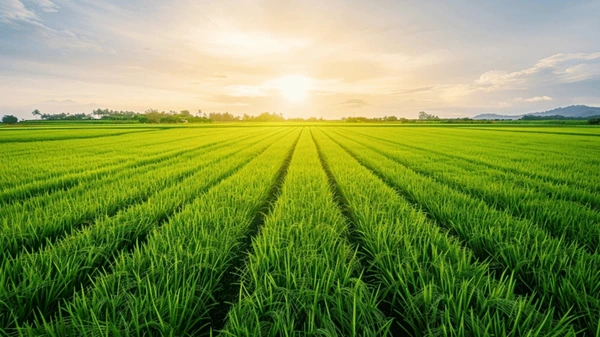
In a significant reaffirmation of its commitment to farmer welfare, the Government has underscored that Minimum Support Prices (MSPs) for 22 mandated agricultural crops continue to be fixed annually on the recommendations of the Commission for Agricultural Costs & Prices (CACP), following consultations with State Governments and relevant Central Ministries. This long-standing mechanism ensures nationally uniform price assurance and serves as a backbone for agricultural income stability.
A landmark policy shift announced in the Union Budget 2018–19—mandating MSPs at least 1.5 times the all-India weighted average cost of production—has been fully operationalized across all Kharif, Rabi, and commercial crops since 2018–19. The impact is visible: MSPs in 2025–26 are substantially higher than in 2015–16, reflecting a decisive push to improve farmgate profitability.
This decade of reform has translated into real income gains. During the 2024–25 crop year, the Government procured 1,223 LMT of agricultural produce at MSP, transferring Rs 3.47 lakh crore directly to farmers—one of the highest MSP outlays on record. The scale of procurement underscores both robust market participation and growing confidence in assured price mechanisms.
The latest MSPs reveal sweeping increases across staples, pulses, millets, and oilseeds. Paddy (Common) rose from Rs 1,410/quintal in 2015–16 to Rs 2,369/quintal in 2025–26, while Ragi—aligned with India’s Nutri-cereal push—jumped from Rs 1,650 to Rs 4,886/quintal, marking one of the steepest gains. Pulses too witnessed transformative growth, with Arhar increasing from Rs 4,625 to Rs 8,000/quintal and Moong from Rs 4,850 to Rs 8,768/quintal. Oilseeds, a priority for reducing import dependence, recorded sustained MSP strengthening: Soyabean Yellow more than doubled from Rs 2,600 to Rs 5,328/quintal.
Cotton prices tell a similar story of uplift. Medium Staple cotton MSP rose from Rs 3,800 to Rs 7,710/quintal, while Long Staple advanced from Rs 4,100 to Rs 8,110/quintal, reinforcing India’s push for a globally competitive textile value chain.
Rabi crops also show robust momentum ahead of RMS 2026–27: Wheat MSP surged from Rs 1,525 to Rs 2,585/quintal over the decade; Gram and Masur registered strong gains to Rs 5,875 and Rs 7,000/quintal respectively, and Rapeseed–Mustard nearly doubled to Rs 6,200/quintal, reflecting rising demand in food and biofuel markets.
Collectively, these MSP enhancements mark one of the most significant realignments of India’s agricultural price policy in recent years. With higher assured returns, stronger procurement volumes, and increasing market participation, the Government’s MSP framework continues to play a pivotal role in building farmer resilience, securing national food systems, and enabling long-term investment in crop diversification and productivity.