Sunday, 12 July 2026

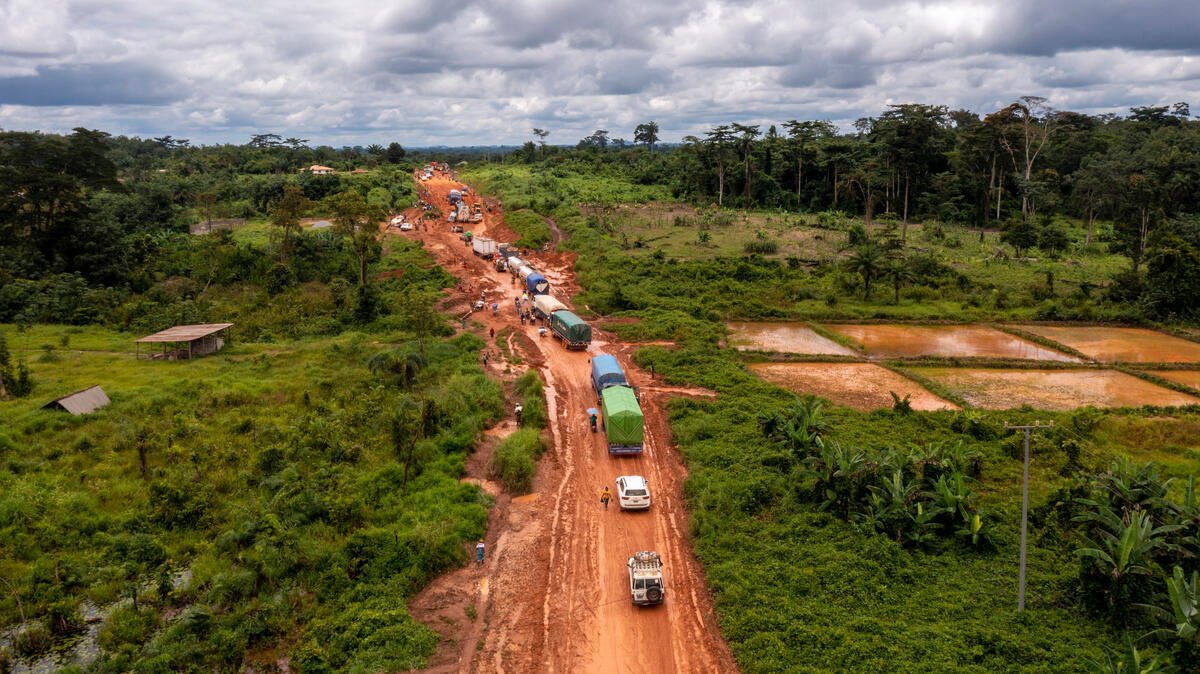
Photo courtesy: FAO / Andrew Esiebo
The next World Programme of Census of Agriculture will tap innovative technology to help collect and disseminate knowledge
Guidelines formulated by the Food and Agriculture Organization of the United Nations (FAO) for the World Programme of Census of Agriculture in 2030 were endorsed on 6 March by the UN Statistical Commission at its 57th Session, elevating them to the status of an internationally agreed standard.
The World Programme of Census of Agriculture (WCA) is embarking on its eleventh decennial program and will provide the basis for implementation of agricultural censuses in FAO Member countries between 2026 and 2035, offering harmonized and internationally comparable data to support national policy makers and allow them to benchmark their performance against others.
Censuses provide a comprehensive and granular description of the structure of the agricultural sector in a country, covering a variety of elements from number and size of holdings, land tenure, land use, area harvested, machinery and equipment, agricultural practices, irrigation, and livestock as well as labour and other farm inputs. They provide precious data for countries and for FAOSTAT, vitally supporting policy makers at country level to inform policies and programs and also providing information needed by researchers and the international community at large for analysis and identification of opportunities in the sector.
The publication and endorsement of World Programme for the Census of Agriculture 2030: Programme, concepts and definitions marks another significant milestone as the first ever WCA guidelines were published in 1928 for the 1930 census round by the International Institute of Agriculture, the precursor institution to FAO. In the decennial round that just ended, 124 countries conducted agricultural censuses, many of them benefiting from FAO’s technical assistance.
The new guidelines emphasize the use of innovative technologies and aim to provide Members with the tools to ensure the data they collect “is relevant, timely, internationally comparable and actionable,” said FAO Director-General QU Dongyu.
The WCA
Over the decades, the FAO-led WCA process has led to evolving iterations, expanding from mapping fields and holdings to include the incidence of rare crops, ways in which women are executive operators of farms, and the growing role of aquaculture activities on farms. More sophisticated statistical methodologies, such as online data collection, georeferencing and anonymized microdata that taps emerging information technology potential, have gradually been added and FAO has provided capacity building assistance to use them.
Conducting decennial agricultural census, as recommended by FAO, is important as it not only provides complete structural information on the sector but also constitutes the basis to implement agriculture sample surveys that collect fast-changing data such as prices, income and productions costs that authorities may deploy to track progress towards development goals.
The WCA 2030 specifies 27 essential items to be recorded by all Members and offers guidelines to support countries in determining whether other items should be included in the complete enumeration censusas they may be more important in some countries than in others.
It also emphasizes the utility of technological integration encompassing various tools including geospatial data and artificial intelligence.
Furthermore, FAO’s guide to implementing the WCA 2030 offers advice on how to utilize interactive outputs and web-based presentation tools, including tables, graphs and maps, which can catalyse and enable innovative ways for disseminating the census data and anonymized microdata as well as encouraging users to explore and analyse the data creatively. That bolsters the role of an agricultural census as a public good, one that can add value to other data sources as well as supporting research, investment and business decisions.