Thursday, 16 July 2026

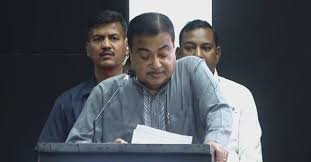
He was speaking at the inaugural session of Compressed Biogas Conclave 2026: Moving Towards an Efficient & Robust CBG Ecosystem in Pune
Nitin Gadkari, Union Minister for Road Transport and Highways, emphasised the critical role of agriculture in India’s transition to clean energy while inaugurating the ‘Compressed Biogas Conclave 2026: Moving Towards an Efficient & Robust CBG Ecosystem’ in Pune.
The two-day conclave, organised by the Indian Federation of Green Energy with support from the Ministry of New and Renewable Energy, is being held at Yashada on March 6–7. The event aims to address key operational, technological and commercial challenges facing the CBG sector, including improving plant efficiency, optimising feedstock utilisation, deploying scalable technologies and developing viable offtake and revenue models.
Industry leaders present at the event included Pramod Chaudhari, founder of Praj Industries, Sanjay Ganjoo, Director General of the Indian Federation of Green Energy, and Ravindra Boratkar, Managing Director of MM Activ Sci-Tech Communications.
Speaking at the conference, Gadkari said India imports nearly 86 per cent of its energy requirements, underscoring the need to promote indigenous and non-polluting fuels derived from agricultural resources. He noted that fuels such as ethanol, methanol, biodiesel, bio-CNG, bio-LNG, electric energy and hydrogen will play a key role in building a smart, safe and sustainable transport ecosystem by 2030.
Highlighting the agricultural opportunity, Gadkari said crop residues such as rice straw, wheat straw, cotton stalks and bagasse can be converted into bioethanol, bio-CNG and biofertilisers, creating new income streams for farmers while reducing pollution caused by stubble burning.
He also stressed the importance of building an integrated bioenergy ecosystem that focuses on improving technology, enhancing both the quality and quantity of production, and developing cost-effective solutions that reduce capital costs. Gadkari noted that advances in biotechnology can help increase biomass productivity, enabling a stronger supply chain for biofuel production.
The minister highlighted the need to ensure the economic viability of alternative fuels, noting that 100 per cent bioethanol and flex-fuel engines can offer a cost-effective alternative to petrol with competitive mileage while reducing import dependence.
According to Gadkari, India’s bioenergy sector could generate economic activity worth around Rs1.6 lakh crore and create nearly 10 lakh jobs, particularly in rural areas. Linking agriculture with energy production and value-added processing, he said, can significantly strengthen rural economies while contributing to energy security and environmental sustainability.