Thursday, 18 June 2026

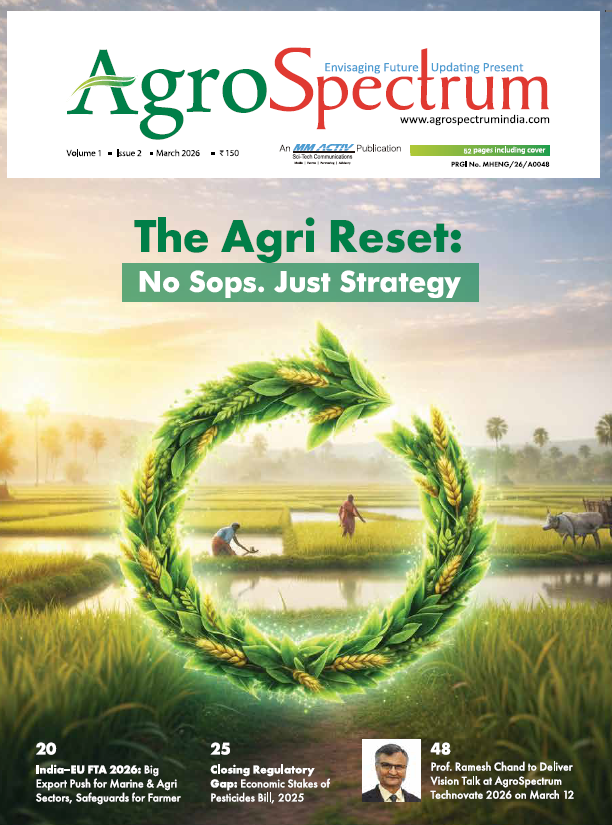
When Nirmala Sitharaman presented the Union Budget 2026–27, agriculture did not come wrapped in big-ticket sops or headline reforms, but a quieter but more meaningful shift.
When Finance Minister Nirmala Sitharaman presented the Union Budget 2026–27, agriculture did not dominate headlines. There were no radical MSP tweaks, no sweeping loan waivers, no disruptive laws. Yet beneath the calm lies a deliberate structural pivot: from protection to productivity, subsidies to value creation, staples to diversified incomes, and analog advisories to AI-driven guidance. Building on 2025–26’s stabilisation measures, this budget signals a growth-oriented, tech-integrated vision for Indian agriculture.
As Ravindra Boratkar, Publisher & Managing Editor of AgroSpectrum India, observes, “The Union Budget 2026–27 marks a pivotal moment in India’s agri-economic journey, signalling a calibrated shift from subsistence support to value creation, diversification, and enterprise-led rural growth. With one of the highest-ever allocations for the Ministry of Agriculture and Farmers’ Welfare the Budget reinforces agriculture and allied sectors as foundational pillars of India’s inclusive and sustainable development agenda.”
Tariff Rationalisation with Strategic Selectivity
At roughly Rs 1.63 lakh crore, the 2026–27 agriculture allocation signals not a spending surge, but a strategic recalibration. The increase over last year is measured. The shift, however, is structural.
Budget 2025–26 was about stabilisation. It sustained fertiliser subsidies, expanded Kisan Credit Card limits, strengthened seed systems, and consolidated crop insurance—essential buffers against climate volatility, price swings, and rising input costs. That was the defensive phase: protect the farmer, secure the base, prevent systemic shocks.
Budget 2026–27 moves to the next stage. The tone is competitive. Subsidies remain, but the emphasis is tilting toward capital formation and productivity gains—digital advisory ecosystems, high-value crop diversification, post-harvest infrastructure, and women-led rural enterprises. The objective is unmistakable: move from income protection to income generation; from output volume to value realisation; from subsidy dependence to market integration. Fiscal prudence is intact—there is no dramatic fiscal expansion—but the intent is sharper and more directional.
To read the full analysis, click: https://online.anyflip.com/unmb/iwyd/mobile/index.html