Sunday, 12 July 2026


India’s fertiliser sector is central to food security, farmer livelihoods, fiscal stability, and industrial growth. Yet, despite its strategic importance, it remains one of the most tightly regulated and policy-constrained industries—a paradox in an era where Ease of Doing Business (EoDB) drives economic reform.
While India has advanced digitisation, tax rationalisation, and regulatory simplification, fertilisers remain encumbered by legacy laws, price controls, fragmented licensing, and onerous compliance. The sector thus struggles to balance food security imperatives with outdated regulation. This analysis examines India’s fertiliser ecosystem through the prism of EoDB, identifies structural and regulatory bottlenecks and situates these challenges within the broader tapestry of national EoDB reforms championed by the Government of India.
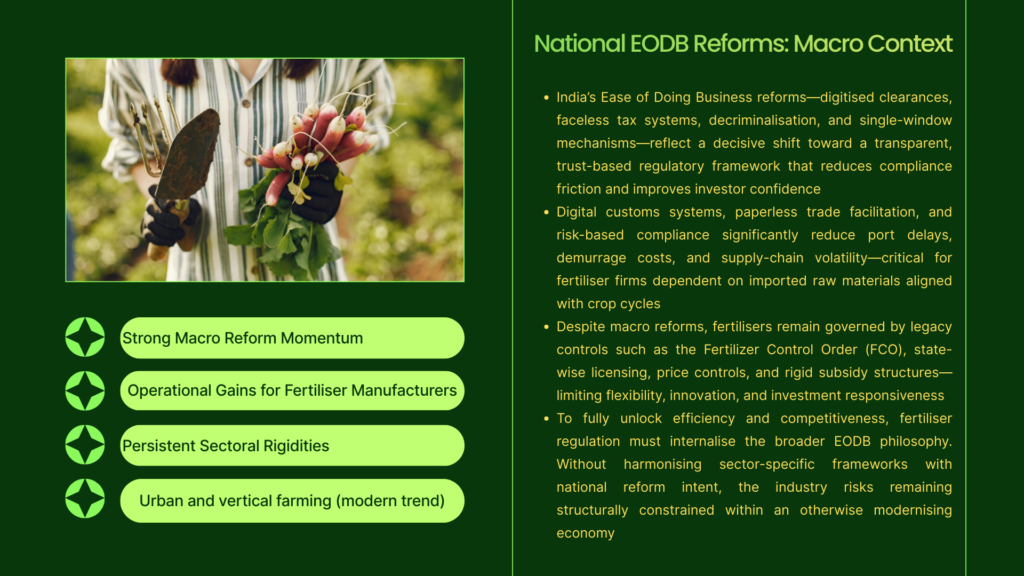
Fertilisers in India are more than industrial commodities—they underpin food security, crop yields, soil health, and farm incomes, shaping rural livelihoods and national stability. Despite national reforms aimed at EoDB, legacy controls persist, straining manufacturers and slowing innovation. Delays in subsidies, inverted taxes, and fragmented licensing increase working capital pressures, making expansion and technological upgrades difficult. In tightly regulated markets, regulatory unpredictability acts as an invisible tax on productivity.

Dr Debashis Mandal, Head, Division of Soil Science & Agricultural Chemistry, ICAR-Indian Agricultural Research Institute (IARI), frames the challenge sharply: the sector’s EoDB journey is not merely procedural—it is a strategic enabler of soil restoration and nutrient efficiency. “If crops demand nutrients and soils demand carbon, then policy must supply predictability,” he notes. “Timely, science-based approvals and transparent regulatory pathways are essential for translating innovations—such as organo-mineral complexes, slow-release formulations, and advanced nutrient delivery systems—into field-level impact. EoDB does not imply diluted standards; it means creating a facilitative, risk-based framework that accelerates responsible technologies, reduces cultivation costs, improves nutrient use efficiency, and ultimately restores balance between productivity and sustainability.”
The urgency of improving nutrient efficiency is stark. In India, nitrogen use efficiency hovers at only 30–40 per cent, meaning up to 70 per cent of applied nitrogen is lost to volatilisation, leaching, or environmental pollution. Fertiliser subsidies total nearly Rs 2 lakh crore annually, with urea alone accounting for Rs 1.35 lakh crore.

As Dr Monoranjan Mohanty, Director, ICAR-Indian Institute of Soil Science, Bhopal, explains, even a modest 10–15 per cent improvement in efficiency could save thousands of crores while enhancing soil health. Achieving this, he adds, requires biostimulants and biofertilisers to have clear, science-based regulatory pathways, predictable approval timelines, incentivised R&D, and a market where start-ups and MSMEs can operate without excessive compliance burdens, while quality standards encourage innovation rather than stifle it.
Innovation should reach farmers’ fields without unnecessary delays.
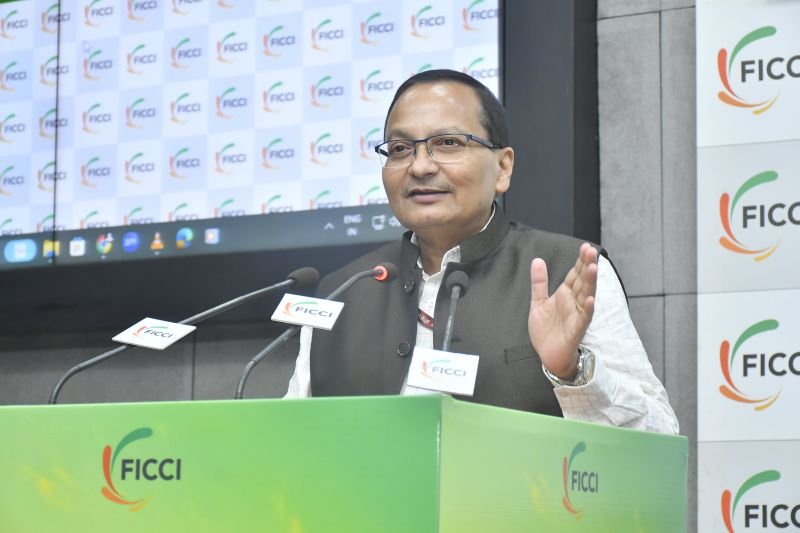
Dr P K Singh, Agriculture Commissioner, Ministry of Agriculture & Farmers Welfare, frames it as creating a predictable, science-driven ecosystem where micronutrients, bio-inputs, and balanced fertilisers move swiftly from laboratory to land. “When products reach farmers at the right time and cost, we strengthen soil health, enhance productivity, and build a resilient agricultural economy for a self-reliant India,” he says.
Industry observers see a clear business case behind these reforms.

Soumyak Biswas, Partner, BDO India Services Pvt Ltd, points out that the post-Budget policy environment signals a potential pivot from incremental tinkering to structural reform. “Regulatory simplification, digitised approvals, and reduced compliance friction can address long-standing industry challenges, lowering time-to-market and operational uncertainty,” he says. According to Biswas, a risk-based, trust-led regulatory framework, coupled with policy predictability and defined approval timelines, could unlock investment in specialty fertilisers, bio-inputs, and sustainable solutions. For smaller firms and start-ups, such clarity is not just a convenience—it is the difference between surviving and scaling in a capital-intensive sector.
Legacy Regulation and Economic Consequences
At the heart of India’s fertiliser regulatory framework lies the Fertiliser Control Order (FCO), administered under the Essential Commodities Act of 1955. Designed in an era of scarcity and state-led planning, the FCO aimed to prevent hoarding, enforce quality standards, and ensure equitable distribution. Control, not competition, was its guiding principle. Six decades on, the same framework operates in a vastly different landscape—characterised by global trade, private-sector innovation, digital governance, and competitive manufacturing ecosystems. What was once protective has become a structural bottleneck.
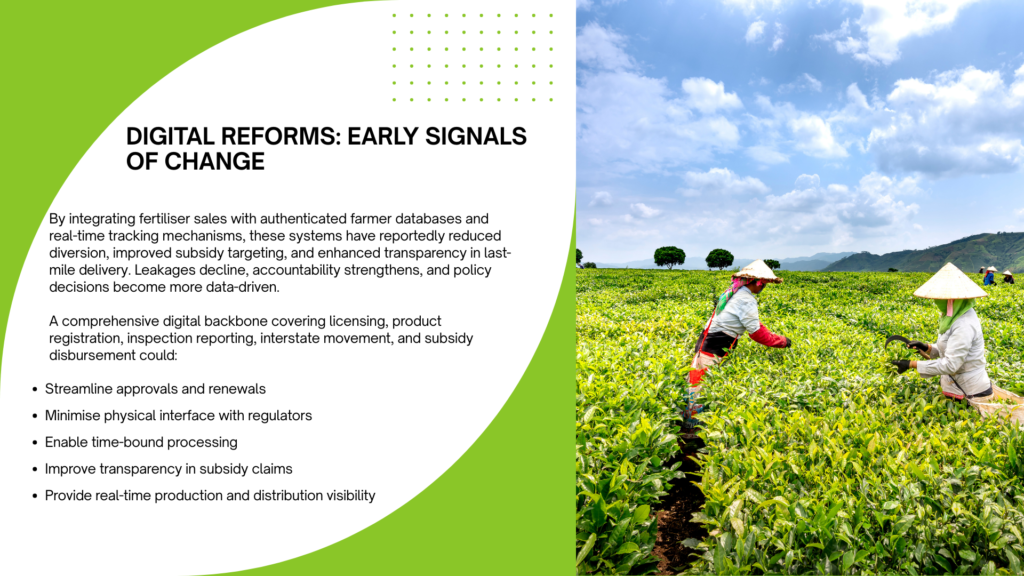
Manufacturers navigate multiple layers of licensing, state-wise product registrations, infrastructure stipulations, periodic renewals, and overlapping inspections. The absence of a harmonised “One Nation, One Licence” regime forces duplication across states, inflating costs, slowing time-to-market, and suppressing economies of scale. For start-ups and SMEs, the compliance burden can be prohibitive.

Dr Rahul Mirchandani, Chairman & Managing Director, Aries Agro Ltd., underscores the potential of digitisation: “Ease of Doing Business in agri inputs is not about lowering standards — it is about removing duplication, strengthening transparency, and enabling innovation. I propose a transformative reform: the creation of a centralised digital data stack for agri input licensing. ‘One Nation, ‘One License’ will provide harmonised approvals, uniform quality standards, real-time compliance tracking, and seamless operations across states, benefiting start ups, MSMEs, research-driven companies, and ensuring farmers timely access to quality inputs.”
Regulatory asymmetry between domestic production and imports exacerbates challenges. Imported fertilisers often face fewer operational frictions than domestically manufactured products, creating an uneven playing field that undermines self-reliance goals. Delayed approvals, evolving compliance interpretations, and working capital pressures constrain investment, slow capacity expansion, and shrink research pipelines for advanced nutrient technologies.
As imports fill domestic gaps, exposure to global price volatility, geopolitical risks, and currency fluctuations grows. India allocates one of the world’s largest fertiliser subsidies, yet regulatory inefficiency limits domestic competitiveness. Modernising the FCO through digitised licensing, harmonised standards, and transparent, time-bound approvals is not a mere industry demand—it is central to strengthening domestic manufacturing, reducing import dependence, and ensuring that public subsidy expenditure delivers long-term structural resilience.
Taxation, Subsidies and Structural Distortions
If regulatory complexity forms one layer of challenge in India’s fertiliser sector, taxation and subsidy design form another—equally consequential, yet less visibly debated. Together, they shape commercial logic, influence nutrient consumption, and determine whether efficiency or distortion dominates the system.
A persistent challenge is the inverted GST duty structure. In many cases, raw materials and key intermediates attract higher taxes than finished fertiliser products, locking up working capital in unutilised input tax credits. Refund cycles are slow and cumbersome, creating liquidity stress—particularly for small and mid-sized enterprises that lack the balance sheet strength of larger players. In a sector constrained by regulated margins, blocked capital is more than an accounting inconvenience; it is a growth bottleneck.
The problem is compounded by non-uniform GST rates across fertiliser categories and allied inputs. Variations in classification and interpretation generate compliance ambiguities, inflate administrative overheads, and occasionally trigger disputes. Companies confront procedural complexity that dilutes managerial focus and increases transaction costs. EoDB demands simplicity and predictability—qualities only partially realised in the current tax environment.
Subsidy architecture introduces a deeper structural distortion. Subsidies are indispensable in a country where farm incomes remain fragile and input affordability is politically sensitive. Yet their design significantly shapes farmer behaviour. Urea, excluded from the Nutrient-Based Subsidy (NBS) framework, is heavily subsidised and priced well below phosphatic and potassic fertilisers. The result: nutrient imbalance. Over-application of nitrogen and under-application of P&K has degraded soil health, lowered nutrient-use efficiency, and created long-term productivity challenges. Short-term affordability carries hidden agronomic and fiscal costs, with excessive nitrogen generating environmental externalities, from groundwater contamination to greenhouse gas emissions.
Fiscal consequences are equally stark. Artificially low urea prices stimulate demand beyond agronomic recommendations, inflating subsidised volumes. Public expenditure absorbs the cost, yet efficiency suffers when price signals fail to reflect relative nutrient value.
The Union Budget 2026-27 reflects these pressures.

Anand Kulkarni, Director at Crisil Ratings, notes: “The Union Budget 2026-27 has allocated Rs 1.71 lakh crore for fertiliser subsidies, with Rs 1.17 lakh crore for urea and Rs 0.54 lakh crore for complex fertilisers. Allocation for complex fertilisers may face a 15–20 per cent shortfall due to sustained higher raw material and import costs, though government support is likely to ensure adequate supply.”

S Sankarasubramanian, Chairman, Fertiliser Association of India and MD & CEO, Coromandel International Ltd., adds, “The allocations underline a steady commitment to domestic capability. Support for indigenous urea and P&K, alongside imported fertiliser support, reinforces supply security while maintaining farmer access. Customs duty rationalisation and addressing inverted GST structures help streamline costs, improve cash flows, and create a more predictable operating environment.”
Moving Beyond Incrementalism
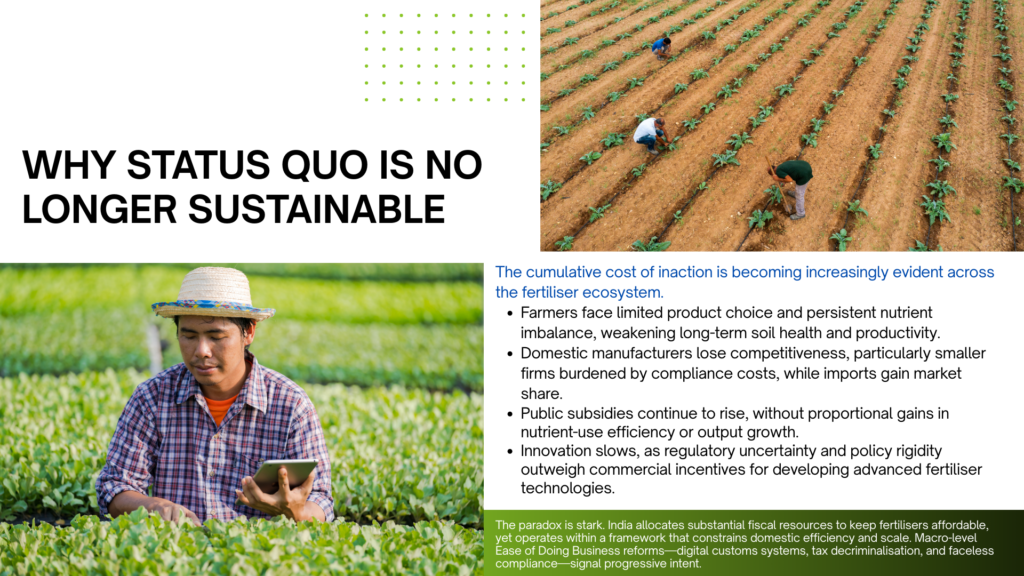
Meaningful EoDB reform in India’s fertiliser sector cannot rely on piecemeal adjustments; it requires structural recalibration. At its core lies the FCO, conceived for scarcity management rather than competitive efficiency. Modernisation demands a shift from blanket administrative controls to risk-based, data-driven quality regulation.
Encouraging domestic innovation is central.

Jayakumar Jitendrasinh Rawal, Minister of Marketing and Protocol, Maharashtra, underscores the vision: “Food production has always been India’s greatest strength. By advancing progressive policies and ensuring EoDB in agri-inputs, we can build a resilient, globally competitive, and self-reliant agricultural system. The micro-fertiliser and nutrient industry has, over the past four decades, played a pivotal role in improving crop yield, quality, and productivity, positioning India among the world’s leading food producers. With strong support for MSME-driven industries and sustained investment in research, development, and innovation, we are committed to achieving global agricultural leadership by 2047.”
Reform in fertilisers is not merely industrial adjustment—it is a strategic investment in India’s agricultural future. Structural recalibration, harmonised regulation, and innovation-led policy are essential to ensure efficiency, sustainability, and competitiveness advance hand in hand.
—- Suchetana Choudhury (suchetana.choudhuri@agrospectrumindia.com)