Friday, 5 June 2026


AI4Agri2026 highlights governance reform, digital public infrastructure and scalable farmer-first solutions
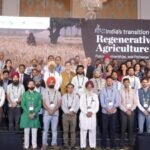
AI4Agri2026, held in Mumbai, marked a defining moment in India’s agricultural transformation journey, with Maharashtra positioning itself as a national and global leader in deploying Artificial Intelligence (AI) at scale. The conference convened policymakers, multilateral institutions, private sector leaders and grassroots innovators to advance an inclusive, climate-resilient and data-driven agri-food ecosystem.
Delivering the keynote address, Parameswaran Iyer – Executive Director, World Bank Group, commended Maharashtra for moving beyond fragmented pilot initiatives and adopting a systemic, policy-driven approach to AI in agriculture.
From Pilots to Policy-Driven Reform
Iyer emphasized that Maharashtra is not viewing AI as a series of isolated demonstrations, but as a governance transformation tool embedded within public systems. By integrating AI into policy frameworks, institutional design and service delivery, the state is ensuring that innovation translates into measurable impact.
He described Maharashtra as a “living laboratory” for responsible AI in agriculture — one where technology, governance and inclusivity intersect to deliver scalable outcomes.
Addressing the Three Core Agricultural Challenges
Iyer outlined three defining challenges shaping the future of Indian agriculture: intensifying climate stress, persistent inefficiencies in market access, and systemic inclusion gaps affecting women farmers and smallholders.
He noted that Maharashtra is shifting from reactive interventions to predictive action, leveraging AI-driven advisories delivered in local languages and embedding trust as a core metric of governance reform. This transition reflects a deeper commitment to resilience and farmer-centric design.
Strategic Partnerships for Data-Driven Transformation
The World Bank Group is partnering with Maharashtra through flagship initiatives such as the Project on Climate Resilient Agriculture (POCRA) and the SMART Project (State of Maharashtra’s Agribusiness and Rural Transformation initiative). These programs are accelerating data-driven solutions through integrated policy architecture rather than fragmented applications.
Iyer underscored that durable agricultural reform requires strong institutional systems capable of scaling innovation sustainably.
Mission Agriconnect and Digital Public Infrastructure
A key highlight of the address was Mission Agriconnect, which aims to make markets and knowledge systems work better for farmers at scale. Digital Public Infrastructure (DPI), he noted, can significantly reduce the cost of data delivery while improving transparency and efficiency.
AI-enabled systems can optimize crop aggregation, enhance price discovery, improve traceability across value chains and enable traders to move beyond blanket assumptions toward evidence-based decisions. Maharashtra is currently co-creating a blueprint for traceability-focused DPI in partnership with the World Bank Group, with the ambition of establishing a globally replicable global model.
Mobilizing Private Capital and Market Expertise
Transforming the agri-food sector requires private sector participation at scale. Through the International Finance Corporation (IFC), a member of the World Bank Group, global capital, guarantees and market expertise are being mobilized to catalyze investment in India’s agricultural ecosystem.
Iyer emphasized that AI in agriculture is not merely a technological intervention — it is a framework for building trusted markets, transparent systems and resilient value chains.
Protocols Before Products: Building Trust in AI
A central theme of the keynote was the principle that protocols must be scaled before products. Iyer stressed the importance of robust data governance systems that ensure farmers retain control over their data, supported by independent audits, transparency measures, cybersecurity safeguards and operational resilience frameworks.
He further emphasized the need for inclusion protocols to ensure AI solutions operate in local languages, are designed to be women-friendly and incorporate structured grievance redressal systems to record and resolve farmer concerns. Market and risk protocols must enable objective, data-driven financial systems that support transparent aggregation and scalable risk financing.
Global Lessons in Risk Finance
Drawing on global experience, Mr. Iyer referenced Kenya’s satellite-based insurance program, where objective climate data triggered a $ 2.1 million payout to pastoralists. This model demonstrates how AI-enabled data systems can operationalize risk finance at scale and unlock resilient agricultural financing mechanisms.
Three Strategic Calls to Action
Concluding his address, Iyer articulated three clear imperatives for the global agricultural community: establish strong protocols that make AI safe, trusted and farmer-centric; ensure innovators design solutions that function effectively at the last mile; and move beyond pilot demonstrations by investing in large-scale deployment and scalable innovation.
Maharashtra as a Global Blueprint
AI4Agri2026 affirmed that Maharashtra is creating an enabling ecosystem rooted in governance reform, digital public infrastructure and inclusive access. By integrating policy, partnerships and scalable technology, the state is shaping a global blueprint for responsible, trusted and climate-resilient AI deployment in agriculture.
The conference reinforced a powerful message: when innovation is anchored in trust, inclusion and institutional strength, AI can transform agriculture not only in Maharashtra, but across the world.
—Suchetana Choudhury (suchetana.choudhuri@agrospectrumindia.com)