Tuesday, 14 July 2026

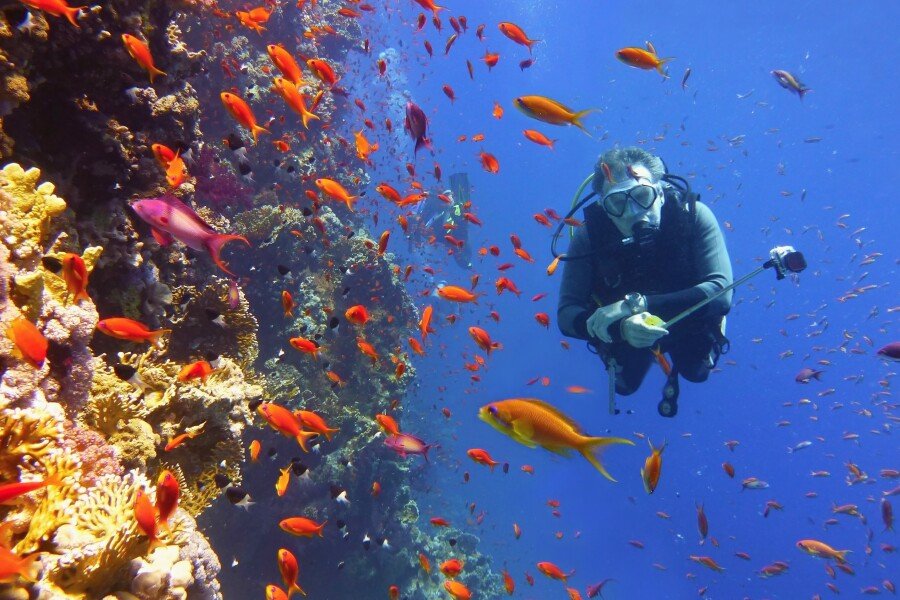

SAFET Executive Director Inga Wise explains how proven ocean technologies, if adopted at scale and tailored to local contexts, could mark a tipping point for sustainable ocean management under the UN Ocean Decade
At the midpoint of the UN Ocean Decade, progress toward sustainable fisheries remains uneven—not because of a single missing piece, but due to the need for context-specific combinations of technologies, adoption pathways, and incentives, a challenge SAFET addresses through its SEA-TECH-IN-MOTION mapping tool.
In an exclusive AgroSpectrum interview, Inga Wise, Executive Director of SAFET, describes the current moment as a “Fourth Industrial Revolution at Sea,” marked by the availability of proven technologies and a critical shift from pilots to real-world adoption.
Inga notes that tools such as satellite surveillance, AI-driven behavioral analysis, and in-situ sensors are already demonstrating impact against IUU fishing, though broader deployment is still constrained by structural, economic, and governance barriers. Ultimately, she emphasizes that SAFET’s role is not to dictate priorities or metrics, but to enable informed decision-making by showing how technology can support measurable progress toward established global frameworks like the UN Sustainable Development Goals, particularly SDG 14.
At the midpoint of the UN Ocean Decade, progress appears uneven. From SAFET’s vantage point, where is the gap largest today—technology availability, adoption by industry, regulatory alignment, or political will—and what evidence most clearly supports that assessment?
From SAFET’s perspective, there is no single gap that, if overcome, will unblock progress. Every context is different, and each situation requires a different solution or combination of technologies to be successful. This is why SAFET’s SEA-TECH-IN-MOTION map exists, to highlight as broad a cross section of solutions in different contexts as possible to enable implementers to find the most relevant parallels to their situation to learn from.
Your report frames this moment as a “Fourth Industrial Revolution at Sea.” What differentiates this technological wave from earlier digitization efforts in fisheries, and why should decision-makers believe this time will deliver systemic change rather than incremental improvements?
Whilst the Fourth Industrial Revolution at sea has been building for some time with technologies being developed and tested in various situations, we are now approaching a critical point where there are sufficient proven technologies available and the focus now needs to shift to support regarding adoption. By highlighting where technologies have been most successfully used, SAFET aims to enable faster adoption and reduce the need to reinvent the wheel. Giving potential adopters of solutions examples that relate to their challenges and pathways that relate to their goals enables informed choices that are right for their requirement.
Illegal, unreported, and unregulated (IUU) fishing remains stubbornly pervasive. Which technologies highlighted in the report have demonstrated the strongest real-world impact against IUU fishing, and what structural barriers still prevent their wider deployment?
There are a wide range of technologies now in use that have been proven effective against IUU fishing, including satellite surveillance, AI behavioural analysis, in-situ sensors, and many more. To date, many deployments have been of a pilot nature. We are now seeing a more widespread adoption, which in turn will reduce opportunities for IUU catch to enter the supply chain.
SEA-TECH-IN-MOTION emphasizes real-world case studies over theoretical promise. In reviewing deployments globally, what patterns separate successful implementations from those that underperform or stall—and what lessons should governments and industry leaders draw before investing?
One of the main lessons we have seen is that there is no one-size-fits-all solution. Each context and challenge area is different and what worked for a technology deployment in one situation may not work in another. Hence, with our new tool, SEA-TECH-IN-MOTION, we provide filters where the viewer can choose desired outcome, species, geographic location, and more to find projects that relate to their needs.
Consumer trust and traceability are central themes, yet mislabeling rates remain high. Is the challenge primarily technological, economic, or cultural within supply chains—and how realistic is full transparency at scale by 2030?
The factors contributing to mislabelling vary across seafood supply chains, which are often complex and fragmented. As a result, the challenge is not confined to a single dimension, but reflects an interaction between technological, economic, and cultural elements.
Technology can significantly improve traceability by reducing manual data entry, improving data accuracy, and enabling better data sharing across supply chain segments, but it is not sufficient on its own. Its impact depends on consistent use, data quality, and alignment across diverse actors. At the same time, economic and cultural factors — such as incentives, governance, and standardised data sharing practices — shape how effectively technology is integrated into daily operations.
Looking to 2030, full transparency at scale represents an ambitious objective, with progress likely to depend on continued alignment across technological, economic, and cultural factors.
Sustainability goals often collide with short-term commercial pressures. How can SAFET’s work help align economic incentives for fishers and seafood companies with long-term ecosystem health, particularly in developing coastal economies?
We approach this primarily as an independent, information-sharing role rather than as an implementer. Our work focuses on raising awareness of solutions that contribute to broader sustainability goals and on improving understanding of what tools and approaches are available, how they can be adopted, and where they may be most relevant.
By bringing together this information in one place, we aim to make it easier for fisheries, seafood companies, and other industry stakeholders to explore options that align operational needs with sustainability concerns. In many cases, it is already clear that some kind of technology solution is required, but it can be difficult to navigate the various options and understand how a given solution relates to the outcomes required. Our work aims to help clarify those options and outcomes, so those seeking solutions can make informed decisions that fit their local context and commercial realities.
The report highlights more than 10 enabling technologies. If forced to prioritize, which two or three technologies should receive immediate global focus—and which widely discussed solutions do you believe are currently overhyped?
As an independent organisation, SAFET’s goal is not to prioritise but to provide the information about where and when these technologies have been successfully deployed to support sustainability initiatives. Given that every situation is different, it is more important that implementers have access to the information we gather to find technologies relevant to their own initiatives and make decisions accordingly.
Looking ahead to 2030 and beyond, success will be judged by outcomes, not intent. What specific, measurable changes would convince you that the seafood and fisheries sector has truly crossed a tipping point toward sustainable ocean management?
This is a good question, but we would be cautious about defining specific metrics ourselves. Progress toward sustainable ocean management is already framed through established, measurable indicators, particularly those set out under the United Nations Sustainable Development Goals, including SDG 14.
The role of SAFET is not to define success, but to highlight how different technologies can contribute to demonstrable progress against these shared frameworks as more implementation examples emerge.
—- Suchetana Choudhury (suchetana.choudhuri@agrospectrumindia.com)