Saturday, 11 July 2026

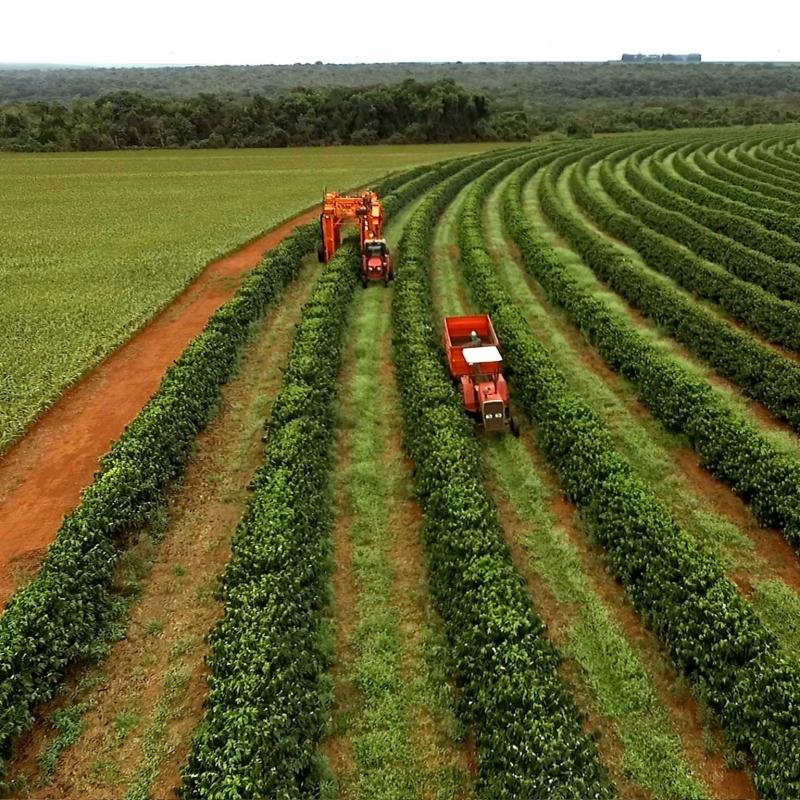
Record harvests, booming exports and expanding farm output are exposing deep infrastructure bottlenecks that industry experts warn could become the biggest constraint on Brazil’s agricultural growth by 2034.
Brazil has firmly established itself as one of the world’s agricultural superpowers. The country exported a record $169 billion worth of agricultural products in 2025, accounting for nearly 48 percent of total national exports, while agribusiness contributed approximately BRL 3.2 trillion, or 25 percent of Brazil’s GDP. However, as production surges to unprecedented levels, a growing body of evidence suggests Brazil’s biggest challenge is no longer growing more food—it is moving it.
A new assessment of Brazil’s agricultural logistics system highlights how transportation bottlenecks, insufficient storage capacity, aging infrastructure and underinvestment are creating mounting pressures across the country’s farm economy. Experts now warn that without significant upgrades, logistics could become a binding constraint on agricultural expansion within the next decade.
The numbers illustrate the scale of the challenge. Brazil’s grain harvest jumped from 290.6 million tonnes in 2024 to a record 343.5 million tonnes in 2025, driven by explosive growth in soybeans and corn. Soybean production alone reached 166 million tonnes, while corn output climbed to nearly 142 million tonnes, reinforcing Brazil’s position as the world’s leading exporter of soybeans, sugar, coffee, cotton and poultry products.
Yet infrastructure development has failed to keep pace. The country currently has only 202 million tonnes of grain storage capacity, creating a national storage deficit estimated at 134 million tonnes against total grain production of approximately 357 million tonnes. Storage infrastructure is expanding at roughly 2 percent annually, while agricultural production is growing at nearly 4 percent, causing the gap to widen every year.
The consequences are increasingly costly. Insufficient storage forces producers to market grain immediately after harvest, concentrating supply into narrow time windows, depressing prices and overwhelming transportation networks. Logistics inefficiencies now consume approximately 30 percent of production costs, while infrastructure deficits generated an estimated $14 billion in economic losses during 2025, according to the report. Brazil’s transportation network remains heavily dependent on roads despite the country’s continental scale.
The country has more than 1.7 million kilometres of highways, yet only about 217,000 kilometres are paved. Approximately 65 percent of grain shipments move by truck, compared with just 22 percent by rail and 9 percent by waterways, creating significant inefficiencies for long-distance freight movement. Transport costs have become a major burden for exporters. Freight can account for as much as 60 percent of the delivered value of corn and 25 percent of soybean prices, particularly when products must travel between 1,500 and 2,000 kilometres from inland producing regions to export terminals on the coast.
The storage challenge is equally acute at farm level.
The grain storage capacity covers only 60–70 percent of production, compared with the United States, where storage capacity exceeds 150 percent of annual output. Less than 20 percent of Brazil’s storage infrastructure is located on farms, leaving producers heavily dependent on commercial warehouses and transport systems. A recent survey found that 61 percent of Brazilian farmers lack on-farm storage facilities, limiting their ability to manage market timing and logistics costs.
The shortage has given rise to what industry participants call “stock on wheels” — a system in which trucks effectively serve as temporary grain storage during harvest periods. During peak seasons, transportation demand can surge from approximately 130,000 trucks to more than 200,000 trucks, contributing to freight inflation and severe congestion. Nowhere are these pressures more visible than in Brazil’s emerging agricultural frontier regions. Expansion across the Center-West and Northern production belts has transformed states such as Mato Grosso into global grain powerhouses, but infrastructure development has lagged behind production growth. Mato Grosso alone accounts for 33 percent of the nation’s grain storage capacity, underscoring its central role in Brazil’s farm economy.
To address these challenges, Brazil is increasingly betting on the Northern Arc logistics corridor, which integrates highways, railways, waterways and ports across the northern region. The corridor has rapidly gained importance over the past decade. In 2010, Northern Arc ports handled only 12 percent of Brazil’s soybean, corn and soybean meal exports. By 2024, that figure had risen to 35 percent, reflecting a major shift in export flows away from traditional southern ports.
The economics are compelling. Studies show that shipping soybeans from Mato Grosso through Northern Arc ports can reduce export costs by approximately $7.82 per tonne to China and $14 per tonne to Europe compared with traditional routes through Santos. Between 2015 and 2025, cargo movement through the corridor increased from 337 million tonnes to 493 million tonnes. Investors are taking notice. Brazil’s National Waterway Transportation Agency projects approximately BRL 46 billion in private investments for Northern Arc ports and terminals. However, regulatory hurdles remain significant. Of 70 port authorizations issued between 2013 and 2019, 21 terminals failed to begin operations within the legal deadline, largely due to environmental, financial and legal challenges.
The bottlenecks are already evident on the ground. During the 2026 harvest season, truck queues stretched up to 40 kilometres at river terminals in Miritituba, Pará, highlighting the growing strain on critical export corridors. Meanwhile, drought-related disruptions on key waterways and inadequate rail connectivity continue to limit system efficiency. Despite these challenges, Brazil’s export engine continues to accelerate. China imported approximately $55.2 billion worth of Brazilian agricultural products in 2025, accounting for one-third of total exports, while Brazilian ports shipped 132 million tonnes of soybeans and soybean products and 41 million tonnes of corn and corn coproducts to global markets. Maritime exports alone represented $114 billion in agricultural trade.
The paradox facing Brazil is increasingly clear. The country has successfully solved the challenge of producing more food. Through technological innovation, expanded cultivation and productivity gains, it has become one of the world’s indispensable suppliers of agricultural commodities. The next challenge is ensuring that its infrastructure can keep pace. Without accelerated investment in railways, waterways, storage facilities and ports, experts warn that Brazil’s logistics network could become the very factor that limits the growth of one of the world’s most important agricultural economies.
— Suchetana Choudhury (suchetana.choudhuri@agrospectrumindia.com)