Friday, 10 July 2026

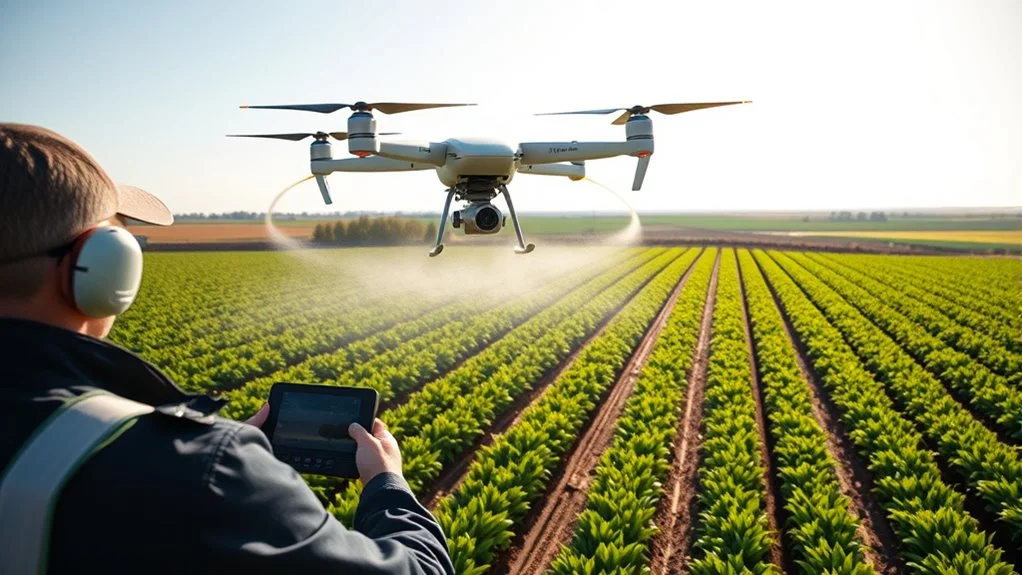
The new Autonomous Systems Policy seeks to create a large-scale ecosystem for drones, robotics and precision farming technologies
Maharashtra, India’s second-largest tractor market and one of the country’s leading agricultural states, has approved the Autonomous Systems Policy 2026, a landmark initiative aimed at accelerating the adoption of drones, robotics and autonomous technologies across agriculture, manufacturing and public services.
The policy establishes a comprehensive framework to position Maharashtra as a national hub for unmanned and autonomous systems while supporting the large-scale deployment of advanced technologies across the agricultural value chain. The initiative is expected to attract investments worth Rs 25,000 crore and will remain in force for at least five years.
For the agriculture sector, the policy focuses on expanding the use of autonomous technologies for crop monitoring, precision spraying, soil analysis, mechanized weed management and real-time field data collection. The government also plans to strengthen the ecosystem supporting agricultural drone services through operator training programs, capacity building and expanded service delivery networks.
The initiative aligns with national efforts to modernize agriculture and complements the implementation of the Namo Drone Didi programme, which seeks to increase access to drone-based agricultural services in rural India. By supporting both technology providers and service operators, the state aims to accelerate the adoption of precision agriculture practices among farmers.
Unlike many pilot-driven technology initiatives, Maharashtra’s new policy is designed to create an integrated ecosystem spanning manufacturing, training, operations and commercialization. Industry observers note that the framework moves beyond isolated demonstrations and establishes conditions necessary for scaling autonomous technologies across farming systems.
The policy also builds on Maharashtra’s previous investments in agricultural artificial intelligence and digital farming initiatives, signaling a broader strategy to position the state at the forefront of smart agriculture and autonomous farm technologies in India.
Officials believe the framework will encourage collaboration among agri-tech startups, drone manufacturers, robotics developers, research institutions and agricultural service providers, creating new opportunities for innovation and rural entrepreneurship.
For the agricultural technology industry, the policy is being viewed as a potentially significant catalyst. By providing regulatory support and encouraging ecosystem development, Maharashtra is creating a pathway for wider deployment of precision farming solutions that can improve efficiency, reduce input costs and support data-driven farm management.
As autonomous systems become increasingly important in modern agriculture, Maharashtra’s initiative could serve as a model for other states seeking to accelerate technology adoption and strengthen the competitiveness of India’s agricultural sector. The policy’s success will likely be measured by its ability to translate emerging technologies into practical, scalable solutions that deliver value to farmers while fostering a robust domestic ecosystem for drones, robotics and autonomous agricultural systems.