Saturday, 11 July 2026

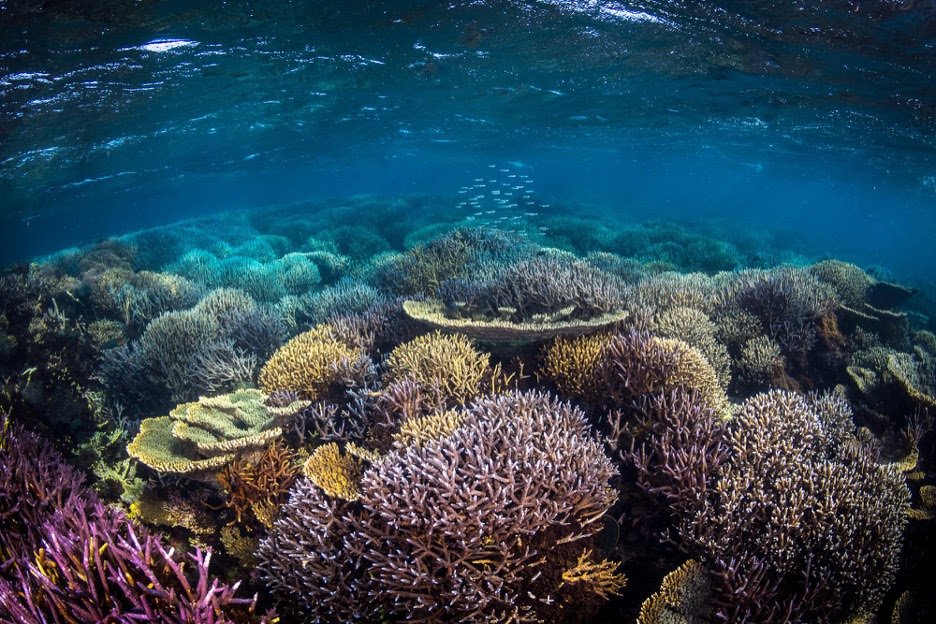
Kenya, Comoros, the Dominican Republic, Mexico, and the United Kingdom are the newest signatories to the High-Level Climate-Resilient Coral Reef Commitment
At the 11th Our Ocean Conference (OOC11) in Mombasa, Kenya, 5 new governments signed the High-Level Climate-Resilient Coral Reef Commitment, the first global pledge to protect the world’s climate-resilient coral reefs – reefs with the greatest potential to survive climate change and serve as the foundation for future reef recovery.
The new signatories bring the total coalition to 20 reef countries across all coral regions, expanding a movement first launched at the UN Ocean Conference in Nice, France in June 2025. Today, WCS was invited to take the stage at the official event plenary to present the commitment.
Coral reefs are among the most threatened ecosystems on Earth. They cover less than 0.1 per cent of the ocean floor yet support around 25 per cent of all marine life, generate up to $2.7 trillion each year in ecosystem services, and underpin the food security, livelihoods, and coastal protection of nearly 1 billion people. Despite their importance, only 28 per cent of identified climate-resilient reefs currently fall within protected or conserved areas – underscoring the urgency of the growing coalition.
“With 20 coral reef countries now signing the high-level commitment, governments are embracing science-based action and making a statement that there is renewed hope for coral reefs,” said Dr. Susan Lieberman, WCS’s Vice President of International Policy. “WCS stands shoulder to shoulder with our partners to deliver the best scientific, technical, and financial support to ensure governments can maximize actions to protect these reefs in national biodiversity, climate, and other strategies and actions. We look forward to bringing on more signatories ahead of CBD CoP17 in October and UNFCCC COP31 in November – landmark moments for the ocean and a chance to show leadership in saving the most resilient coral reefs – for the sake of biodiversity and humanity’s future.”
The new government signatories coincide with the launch of Our Reefs, Our Future, a global campaign from WCS, World Wildlife Fund (WWF), and The Nature Conservancy (TNC) calling on governments to recognize climate-resilient reefs as critical for ocean biodiversity and as economic infrastructure for people, food security, and coastal resilience. The global initiative uses new science to identify which reefs are most likely to survive the impacts of climate change and coral bleaching as a guide for where protections can have the greatest long-term impact.
“Our reefs are not postcards. They are lifelines – sustaining over 500,000 livelihoods along Kenya’s coast alone,” said Dr. Eng. Festus Ng’eno, Kenya’s Principal Secretary for Environment and Climate Change. “That is why this Commitment cannot be a signal of good intentions; it must be a binding signal of political will. We need a financing revolution: reef conservation funded by a budget line, not a brochure, and treated as climate investment, not charity. Our destinies are tied to the future of this ecosystem. This is the turning point – the moment we stop mourning what we’ve lost, and start funding what we can still save.”
By signing, governments commit to identifying and prioritizing climate-resilient coral reefs in national policies and 30×30 planning, integrating reef protection into national biodiversity and climate frameworks, reducing local pressures like water pollution and destructive fishing, implementing national reef monitoring and action plans, and ensuring community leadership and local knowledge underpin their action for corals.
“When a government signs the Coral Commitment, it sends a clear signal – to the global community, to fellow nations, to policymakers, and to funders – that this country is ready and willing to act for its reefs,” said Marie-Céline Piednoir, Global Coordinator for the High-Level Coral Commitment. “But a signature is only the starting point. Our work is also to make sure that signal travels all the way from a global stage down to the water’s edge, so that global ambition ripples into local action, and coastal communities who have always lived alongside these reefs become the ones leading their protection.”