Friday, 10 July 2026

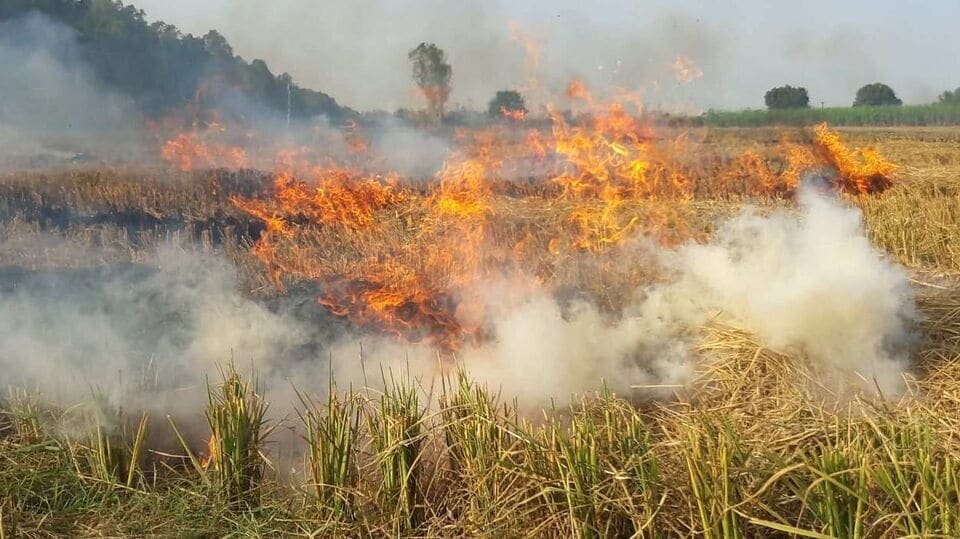
Government targets distribution of 46,000-plus crop residue management machines and expansion of biomass-based utilisation networks as it pushes for a permanent solution to stubble burning across northern India
The Centre has intensified its efforts to address one of India’s most persistent environmental and agricultural challenges, unveiling a comprehensive strategy aimed at permanently curbing stubble burning through mechanisation, industrial utilisation, technological innovation and enhanced field-level monitoring.
At a high-level inter-ministerial meeting held at Krishi Bhavan, Union Agriculture and Farmers’ Welfare Minister Shivraj Singh Chouhan and Union Environment, Forest and Climate Change Minister Bhupender Yadav reviewed the progress of the Crop Residue Management (CRM) scheme and assessed the preparedness of states ahead of the upcoming paddy harvesting season.
The meeting underscored the government’s growing emphasis on transforming crop residue from an environmental liability into an economic resource. The Centre has earmarked Rs 544.15 crore for 2026-27 under the CRM programme, with the first tranche of Rs 272.07 crore already released to support implementation efforts across key agricultural states.
Under the current year’s action plan, states have been tasked with distributing more than 46,000 crop residue management machines, establishing 910 additional Custom Hiring Centres, and developing 141 stubble supply chain projects designed to strengthen the collection, aggregation and utilisation of paddy residue.
The programme forms part of a broader effort to manage an estimated 27.62 million tonnes of paddy stubble expected to be generated during the 2026 harvesting season.
Since the launch of the CRM scheme in 2018-19, the Centre has provided cumulative financial assistance exceeding Rs 4,266 crore to Punjab, Haryana, Uttar Pradesh, Madhya Pradesh and the Indian Council of Agricultural Research (ICAR). These investments have facilitated the deployment of more than 354,000 crop residue management machines and supported the establishment of over 43,500 Custom Hiring Centres, significantly expanding farmers’ access to mechanised residue management solutions.
Government officials noted that coordinated interventions involving state governments, research institutions, Krishi Vigyan Kendras, local administrations and farmer groups have contributed to a sustained decline in stubble-burning incidents over recent years.
From Waste to Economic Resource
A key focus of the Centre’s strategy is accelerating the ex-situ utilisation of agricultural residue through industrial applications. Policymakers highlighted growing opportunities for stubble use in biomass-based power generation, compressed biogas (CBG) production, ethanol manufacturing and pelletisation units, creating viable commercial pathways for crop residue that was previously burnt in fields.
The approach reflects a broader shift in policy thinking—from treating stubble solely as a pollution issue to integrating it into the circular bioeconomy.
“We will work towards turning stubble from a problem into a resource,” Agriculture Minister Shivraj Singh Chouhan stated during the meeting, emphasizing the government’s commitment to creating long-term economic value from agricultural waste streams.
Enhanced Monitoring and NCR Focus
To further reduce stubble-burning incidents, the government plans to intensify surveillance and enforcement mechanisms across critical hotspots. Particular attention will be directed towards the National Capital Region (NCR), where a dedicated ‘Stubble Protection Force’ will be activated across 70 tehsils spanning 14 districts. The initiative aims to ensure real-time monitoring, rapid response and stricter enforcement during the paddy harvesting season.
The Centre has also directed states to complete machinery distribution before August 2026, strengthen Custom Hiring Centres and maximise the utilisation of existing equipment while simultaneously scaling up awareness campaigns among farmers.
Agronomic Interventions Gain Priority
Beyond mechanisation, policymakers stressed the importance of addressing the underlying agronomic factors contributing to stubble burning. The government is increasingly promoting short-duration and low-water-consuming paddy varieties, which can widen the interval between paddy harvesting and wheat sowing, reducing pressure on farmers to clear fields quickly through burning.
Research institutions under ICAR and state agricultural universities have already been mobilised to discourage the cultivation of long-duration paddy varieties and encourage the adoption of alternatives better aligned with sustainable residue management practices.
Officials also highlighted the importance of expanding the adoption of Direct Seeded Rice (DSR) technology, which has emerged as a promising approach for reducing water consumption, lowering production costs and facilitating more efficient crop residue management.
Towards a Permanent Solution
The meeting concluded with a renewed commitment to eliminating stubble burning through a combination of policy support, technology deployment, industrial partnerships and farmer engagement.
As India balances the twin imperatives of environmental protection and agricultural productivity, the Centre’s strategy signals an increasingly integrated approach—one that seeks not only to curb air pollution but also to preserve soil health, improve resource efficiency and create new income streams for farmers.
With substantial investments, strengthened monitoring systems and growing industrial demand for crop residue, policymakers are betting that India’s stubble challenge can ultimately be transformed into an opportunity for sustainable agricultural and rural economic development.