Tuesday, 16 June 2026

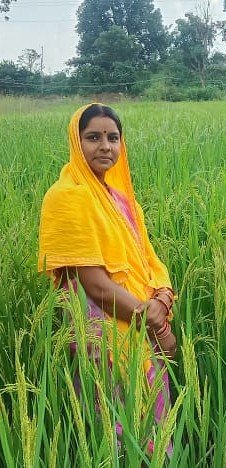
Her story begins in a small village of Umaria and unfolds into a larger narrative of resilience, enterprise and women-led transformation
In the forested heartlands of Madhya Pradesh’s Umaria district, where the boundaries between agriculture, forests and livelihoods often blur, a silent revolution is taking shape. It is not being led from government offices or corporate headquarters, but from village courtyards, community meetings and farmer collectives. At the centre of this transformation stands Poonam Tiwari, a woman whose journey from a small village in Bandhavgarh to the leadership of a thriving women-led Farmer Producer Company reflects the changing face of rural India. Her story is not one of extraordinary privilege or institutional advantage. Rather, it is a testament to what becomes possible when determination meets opportunity, and when women are given the space to lead rather than merely participate.
A Beginning Rooted in Simplicity
Born and raised in Pipariya village of Umaria district, Poonam’s early life mirrored that of countless rural women across India. Her formal education concluded after Class 8, a reality shaped as much by circumstance as by geography. Yet education often extends beyond classrooms.
Long before she entered the world of producer companies and agricultural entrepreneurship, Poonam learnt the economics of resilience. Through stitching work and small livelihood activities, she contributed to household income while navigating the challenges of rural life. Those years quietly cultivated qualities that would later define her leadership—resourcefulness, discipline, empathy and an ability to solve problems with limited resources.
Her association with a Self-Help Group (SHG) became the first major turning point.
What began as participation in a community institution soon evolved into something deeper: a growing confidence in her own abilities and a realisation that collective action could create opportunities far beyond individual effort.
Building an Institution, Not Just a Business
The year 2022 marked a defining chapter. Under the National Rural Livelihoods Mission-supported Farmer Producer Company initiative, Bandhavgarh Krishi Vanopaj Producer Company Limited was established with a modest beginning of ten women members. Like many grassroots institutions, it was built on ambition rather than abundance.
There was no guarantee of success. No established market. No assured roadmap.Yet there was belief. Recognising her commitment and leadership potential, members selected Poonam as a Director of the newly formed organisation.
What followed was far more demanding than a title.
She became actively involved in governance, procurement planning, compliance management, village-level mobilisation and member engagement. She travelled from village to village, encouraging women to become stakeholders in an institution they could call their own. In many ways, she was helping build not merely a company, but a new culture of women’s economic participation. Today, Bandhavgarh Krishi Vanopaj Producer Company stands as a growing example of what collective enterprise can achieve when women move from the margins of agricultural systems to their centre.
Turning Adversity into Opportunity
Every successful institution carries stories of setbacks hidden beneath its achievements. For Bandhavgarh FPC, one such moment arrived when a proposal submitted to NABARD was rejected. The disappointment was significant. For a young organisation seeking credibility, resources and momentum, the setback could easily have stalled progress.
Instead, it strengthened resolve. Working alongside fellow Board members and supported by organisations such as Samunnati Foundation and Corteva Agriscience, Poonam helped guide the organisation through a crucial period of restructuring and learning. The persistence eventually paid off. The Farmer Producer Company secured Rs 25 lakh in government support, enabling it to strengthen governance systems, improve compliance mechanisms, develop structured business plans and build stronger market linkages.
More importantly, the experience transformed the institution’s mindset. It reinforced an important lesson often overlooked in rural entrepreneurship: resilience is not simply the ability to recover from setbacks—it is the ability to convert them into foundations for future growth.
Discovering Gold in the Forest
Leadership often reveals itself through the ability to see possibilities where others see familiarity. For Poonam, that possibility emerged through Mahua. Across central India, Mahua has long been intertwined with rural life. Its flowers are gathered seasonally, its uses deeply embedded in local traditions. Yet despite its abundance, much of its economic potential remained unrealised. Poonam recognised an opportunity hidden in plain sight. Rather than selling Mahua as a raw commodity, she envisioned transforming it into a value-added product capable of generating sustainable livelihoods for women.
That vision led to the production of nutritious Mahua laddus. What may appear to be a simple product represented something far more significant. It reflected a shift from extraction to enterprise- From raw produce to value addition; from subsistence to entrepreneurship.
With support in branding, packaging and product positioning, the initiative evolved into the launch of the “Tribo” brand, creating a market identity rooted in local resources and indigenous knowledge. The impact extended beyond income. Women who once viewed Mahua merely as a seasonal resource began to see it as an economic asset capable of supporting long-term livelihoods.
Championing the Millet Renaissance
Poonam’s influence today stretches beyond Mahua. She also oversees Kodo-Kutki millet operations and serves as the state in-charge for Women Farmer Producer Company initiatives across Madhya Pradesh. At a time when India is witnessing renewed interest in traditional grains, her role places her at the forefront of a larger agricultural transformation. Millets such as Kodo and Kutki are increasingly recognised for their climate resilience, nutritional value and suitability for sustainable farming systems.
Through her work, Poonam is helping ensure that women remain central participants in this revival. The effort is about more than promoting crops. It is about creating value chains where women are producers, processors, entrepreneurs and decision-makers.
Giving Rural Women a Voice Beyond the Village
Leadership acquires greater significance when it transcends local boundaries. Over the years, Poonam has represented Madhya Pradesh’s Farmer Producer Organisations at state-level forums and conclaves, carrying with her the aspirations of hundreds of women farmers. She has also received recognition under the Ajivika Mission, acknowledging her contribution to institution-building and rural women’s entrepreneurship. Yet those familiar with her work suggest that her greatest achievement lies not in awards or public recognition.
It lies in the confidence she has inspired among other women- Women who now attend Board meetings; women who negotiate with buyers; women who understand balance sheets; women who see themselves not as beneficiaries, but as business leaders.
A New Definition of Empowerment
Much of the discourse surrounding women’s empowerment focuses on inclusion. Poonam’s journey illustrates something more powerful: Ownership – Ownership of institutions; ownership of ideas; ownership of enterprises; ownership of futures.
Through Bandhavgarh Krishi Vanopaj Producer Company, she has demonstrated that rural women do not lack ambition or capability. What they often lack are platforms that recognise and channel their potential. Her story challenges conventional assumptions about leadership, education and entrepreneurship.
It reminds us that transformative leaders do not always emerge from elite institutions. Sometimes they emerge from villages, carrying with them lived experiences, community trust and an intimate understanding of local realities.
The Legacy Being Built
As India increasingly focuses on women-led development, climate-resilient agriculture and rural enterprise, stories like Poonam Tiwari’s acquire broader significance. They demonstrate that economic transformation is not merely a function of capital and technology. It is also a function of human agency. In the forests of Bandhavgarh, where Mahua blossoms quietly each year before carpeting the earth in shades of gold, another flowering is underway.
It is the flowering of confidence- Of collective enterprise; of women stepping into leadership roles once considered beyond reach. At the centre of that story stands Poonam Tiwari—a village woman who transformed opportunity into enterprise, enterprise into empowerment, and empowerment into a movement that continues to inspire women across Madhya Pradesh. Her journey is a reminder that sometimes the most profound revolutions begin not with noise, but with belief.
— Suchetana Choudhury (suchetana.choudhuri@agrospectrumindia.com)