Tuesday, 16 June 2026

Policy leaders, agribusiness executives and grassroots institutions converge in a conference hosted by Corteva, to argue that empowering women farmers is no longer a social imperative alone, but an economic necessity capable of reshaping productivity, profitability and rural prosperity
For decades, women have formed the invisible backbone of Indian agriculture—sowing fields, managing livestock, preserving seed diversity, participating in post-harvest operations, and sustaining rural households. Yet despite contributing substantially to agricultural labour, they have remained largely absent from land titles, financial systems, institutional decision-making, and policy recognition.
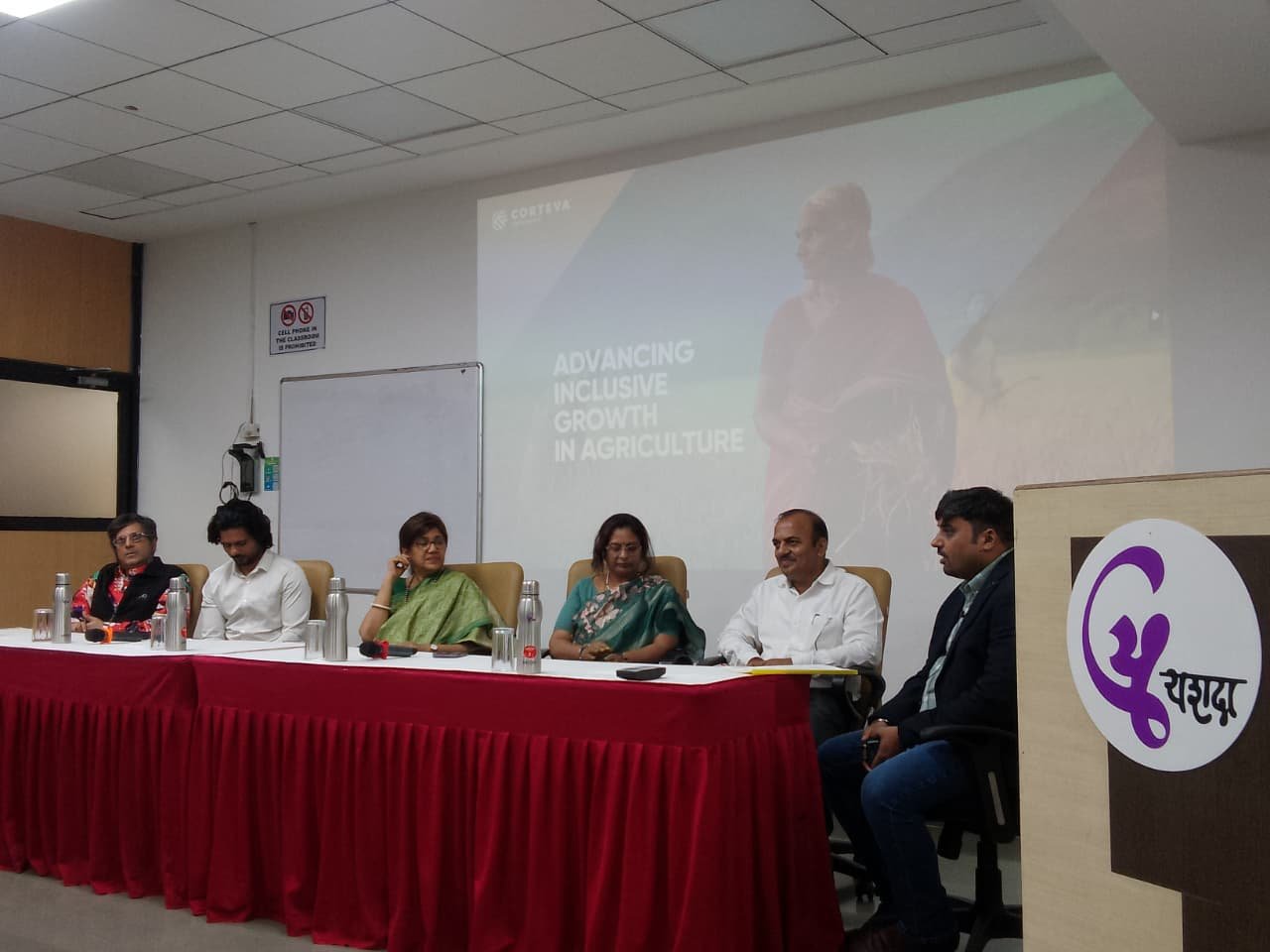
That paradox took centre stage at a high-level discussion on “Enabling Women in Agriculture” hosted by Corteva, where policymakers, corporate leaders, development practitioners and agricultural institutions collectively argued that the next phase of India’s agricultural transformation will depend not merely on technology or productivity gains, but on how effectively the country integrates women into the economic architecture of farming.
The discussion brought together Vandana Chavan, former Member of Parliament, Rajya Sabha; Dr. Priti Sawairam Deputy Director Seeds (Agri Inputs & QC) Department of Agriculture, Government of Maharashtra; Asha Sridhar, Corporate QA Head at Suhana Masale; Karan Sinha of the Maandeshi Foundation; Dr. Shantaram Gaikwad, General Manager, Govind Foundation, among others. What emerged was a compelling consensus: women are no longer seeking inclusion as beneficiaries of welfare programmes—they must be recognised as entrepreneurs, asset creators, decision-makers and drivers of agricultural growth.
From Participation to Productivity
Opening the discussion, representatives from Corteva Agriscience highlighted a striking economic argument often overlooked in conversations around gender and agriculture.
The company has set an ambitious target of empowering two million women across the agricultural value chain by 2030, building on initiatives that currently support 75 women-led Farmer Producer Organisations (FPOs) across India. These include 10 women-led FPOs in Maharashtra and 25 in Rajasthan, where participating members have reportedly achieved profitability improvements of around four per cent.
According to FAO, closing the gender gap in farm productivity and the wage gap in agricultural employment would “increase global gross domestic product by nearly $1 trillion and reduce the number of food-insecure people by 45 million”, at a time of growing global hunger., illustrating that gender inclusion is fundamentally an economic growth strategy. The observation reflects a growing body of global research indicating that closing gender gaps in access to resources, knowledge, markets and finance can substantially improve agricultural productivity and rural incomes.
Recognition: The Missing Link
If productivity is the outcome, recognition remains the prerequisite. That argument was forcefully articulated by Dr. Priti Sawairam, who outlined Maharashtra’s efforts to create a more inclusive agricultural framework. “Quality seed remains the first and most critical input in agriculture. Yet equally important is recognising who is actually cultivating that seed. Maharashtra’s proposed Women Farmers Empowerment Bill seeks to address precisely that gap by providing legal recognition to women farmers, ensuring they become visible participants within the formal agricultural ecosystem,” she noted.
Dr. Sawairam emphasised that legal recognition is not merely symbolic; it unlocks access to institutional credit, government schemes, insurance, training and market opportunities. She also highlighted the growing role of women-led producer organisations in the state.
“Women-led agricultural collectives are emerging as powerful instruments of rural transformation. Nearly 40 per cent of Maharashtra’s Farmer Producer Organisations are today led by women, making them important forerunners of inclusivity, enterprise development and community leadership,” she observed. Public-private partnerships, she added, would be crucial in scaling these efforts beyond isolated success stories.
Visible in Fields, Invisible in Records
Perhaps the most thought-provoking intervention came from Vandana Chavan, who challenged the conventional framework through which women’s agricultural participation is viewed. “Women are the torchbearers of change in Indian agriculture. Yet policy frameworks continue to place them largely within the domain of welfare rather than economic empowerment. We need to move beyond that limited lens,” she said.
Drawing attention to one of Indian agriculture’s most persistent contradictions, Vandana remarked:
“Women are visible everywhere on farms, but invisible on paper. They sow, harvest, manage livestock and support entire agricultural systems, yet they remain absent from ownership records, financial documentation and many decision-making platforms.” Her remarks underscored a structural reality that continues to define rural India: while women contribute significantly to agricultural labour, relatively few hold legal ownership over land or productive assets.
“Recognition, economic enablement and participation in decision-making must become the three pillars of the next agricultural reform agenda. Without these, discussions around empowerment will remain incomplete,” she argued.
The Skill Deficit Hidden in Plain Sight
While policy recognition is essential, industry leaders highlighted another challenge—skills. According to Asha Sridhar, Corporate QA Head at Suhana Masale, women already dominate several specialised agricultural operations, particularly in horticulture and value-added processing.
“In regions such as Nashik’s grape-growing belts, women perform a substantial share of vineyard operations and post-harvest activities. Their contribution extends well beyond cultivation into grading, sorting, handling and processing functions that directly influence product quality,” she noted. Yet despite this deep involvement, formal skill development opportunities remain inadequate.
“If India wants to move up the agricultural value chain, specialised skill-based training for women in food processing, quality management and value addition cannot remain optional. It must become a strategic priority,” Asha said. Her observations reflected a broader shift occurring across agriculture, where value increasingly resides not only in production but in processing, branding and market differentiation.
Science in the Hands of Women
Technology, too, emerged as a recurring theme during the discussion. For Karan Sinha of the Maandeshi Foundation, empowering women requires far more than access to resources—it requires access to knowledge.
Through initiatives such as the foundation’s “Soil Sakhi” programme, women are being trained to understand soil health, agricultural science and market dynamics.
“True empowerment begins when science and technology are placed directly in the hands of women farmers. We start with soil and ultimately connect women to markets, enabling them to participate in the entire agricultural value chain rather than just one segment of it,” Sinha explained. The programme seeks to transform women from passive recipients of advisory services into active interpreters and users of scientific information.
As climate variability, input costs and market uncertainties intensify, such knowledge-based empowerment could become increasingly valuable.
Dairy’s Silent Revolution
If crop agriculture often overlooks women’s contributions, the dairy sector provides a compelling counterexample. Dr. Shantaram Gaikwad, General Manager of Govind Foundation, presented a striking account of how women-centric dairy models are creating tangible rural wealth.
According to him, approximately 35,000 women are associated with the organisation’s dairy ecosystem, participating across production and value-addition activities. “Women are not merely contributing to dairy—they are driving its value creation. Our model is built around women training women, enabling knowledge transfer that is practical, scalable and sustainable,” he said.
The foundation currently operates four dedicated training centres, where women receive technical and entrepreneurial training. The results have been transformative. “Around 18,000 heifers are owned by women associated with our programmes. Individual annual turnovers range between Rs 3 lakh and Rs 4 lakh, and collectively these women have created assets worth nearly Rs 2.5 crore within their villages through dairy-led enterprise development,” Dr. Gaikwad noted. His remarks demonstrated that when women gain ownership of productive assets rather than merely participating as labourers, the economic outcomes become significantly more durable.
The Next Agricultural Revolution
What distinguished the Pune discussion was its departure from conventional narratives of gender inclusion. Rather than framing women solely as beneficiaries of development programmes, participants repeatedly positioned them as economic actors capable of influencing productivity, profitability, sustainability and rural transformation.
The conversation also reflected a broader evolution underway within Indian agriculture. As the sector confronts climate volatility, shrinking farm sizes, labour shortages and rising market complexity, future growth will increasingly depend on improving efficiency rather than merely expanding production. Women, participants argued, represent one of the largest untapped sources of that efficiency.
Whether through women-led FPOs, dairy entrepreneurship, technology adoption, processing enterprises or institutional leadership, evidence is steadily emerging that empowering women generates measurable economic returns. The challenge now lies in translating scattered successes into systemic change. Legal recognition, asset ownership, targeted skills development, access to technology, institutional finance and stronger market linkages will all be necessary to bridge the gap between participation and prosperity.
As the discussion concluded, a clear message resonated across sectors: India’s next agricultural breakthrough may not emerge solely from new seeds, machines or technologies. It may emerge from finally recognising, investing in and empowering the millions of women who have always been at the heart of the country’s farming economy.
— Suchetana Choudhury (suchetana.choudhuri@agrospectrumindia.com)