Saturday, 11 July 2026

UN agency warns that weakening monsoon patterns, coupled with rising input costs and escalating climate volatility, could test agricultural resilience across South and Southeast Asia during the 2026 crop season.
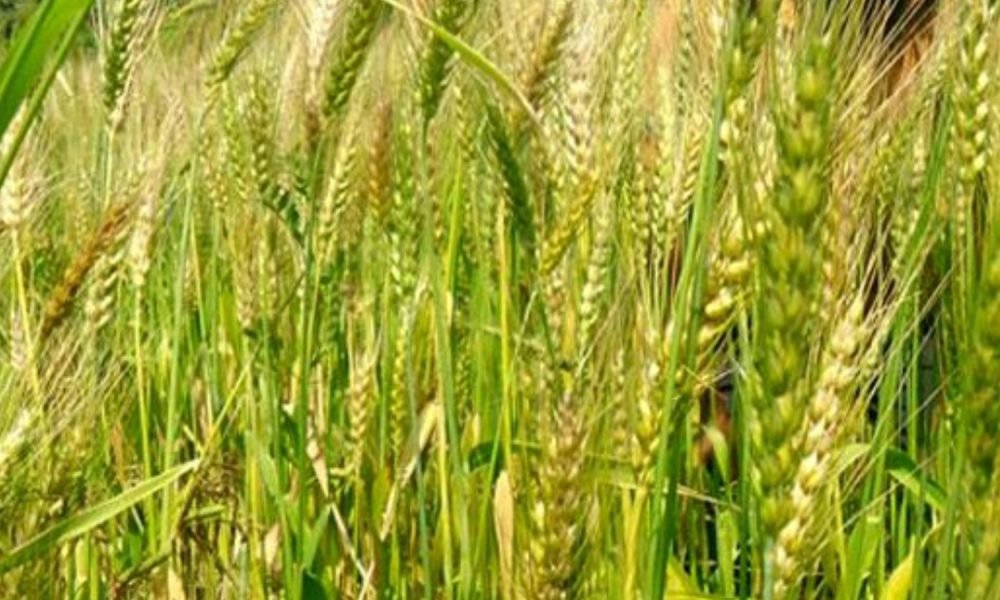
As the climatic phenomenon El Niño reasserts itself across the Pacific, global agricultural attention is once again turning towards India’s monsoon-dependent farming landscape. The Food and Agriculture Organization (FAO) has cautioned that the evolving weather pattern could temper the intensity and distribution of India’s southwest monsoon, potentially placing key rainfed crops such as rice and maize under considerable stress during the ongoing kharif season.
The warning arrives at a critical juncture for the world’s largest rice exporter and one of the globe’s most significant agricultural economies, where seasonal rainfall continues to underpin food production, rural livelihoods and broader economic stability.
Drawing upon more than four decades of satellite-derived agricultural drought data, the FAO’s latest assessment identifies South and Southeast Asia as among the regions most exposed to El Niño-induced moisture deficits. The analysis suggests that agricultural drought risks stretch across a vast corridor encompassing India, Pakistan, Myanmar, Thailand, Cambodia, Vietnam, Indonesia, the Philippines and Timor-Leste.
For India, the concern extends beyond immediate crop performance. Historical evidence indicates that previous strong El Niño episodes have disrupted rainfall patterns sufficiently to affect national agricultural output. During the 2015–16 El Niño cycle, maize production in India contracted by approximately four per cent, while rice output registered a decline of around one per cent. Although these reductions may appear modest at a national scale, they carry significant implications for farmer incomes, food supply chains and commodity markets.
The broader regional experience underscores the scale of the challenge. Across Southeast Asia, the same climatic event contributed to an estimated loss of nearly 15 million tonnes of rice production, tightening supplies and intensifying food inflation pressures in import-dependent economies.
The latest FAO assessment argues that the current climate context may render future El Niño impacts more severe than historical precedents. Unlike previous cycles, the phenomenon is now unfolding against the backdrop of elevated global temperatures, increasing frequency of extreme weather events and mounting pressure on food systems already strained by geopolitical instability and economic uncertainty.
Agriculture-dependent communities remain particularly vulnerable. In many rural economies, crop failure often triggers a cascading chain of consequences, affecting livestock holdings, household incomes and long-term food security. The FAO estimates that more than 80 per cent of projected drought-related impacts are likely to be concentrated in low- and middle-income countries, where adaptive capacity remains limited.
The risks are further compounded by developments beyond the agricultural sector. Ongoing disruptions to global trade routes, particularly through the strategically important Strait of Hormuz, have introduced additional volatility into energy and fertiliser markets. Rising fuel and fertiliser costs are increasing production expenses for farmers precisely when seasonal sowing activities are underway, amplifying concerns over profitability and input affordability.
Despite these challenges, the FAO maintains that proactive intervention can substantially mitigate potential losses. Recent experience from Southern Africa demonstrated the value of anticipatory action, where targeted investments in seeds, livestock support and early warning systems helped shield millions of vulnerable households from the worst effects of climate-induced disruptions during the 2023–24 El Niño cycle.
The broader lesson emerging from global experience is increasingly clear: climate intelligence alone is insufficient unless it is accompanied by timely policy action, institutional preparedness and field-level implementation. As India advances through the 2026 kharif season, the effectiveness of weather advisories, water management strategies, seed deployment programmes and farmer support mechanisms may prove just as important as the monsoon itself.
For policymakers, the challenge is no longer merely managing a seasonal weather anomaly. Rather, it is navigating an era in which climatic shocks are becoming more frequent, more interconnected and more economically consequential. The re-emergence of El Niño serves as a reminder that food security in the twenty-first century will increasingly depend not only on agricultural productivity, but on the resilience of entire farming systems in the face of growing climate uncertainty.