Monday, 6 July 2026

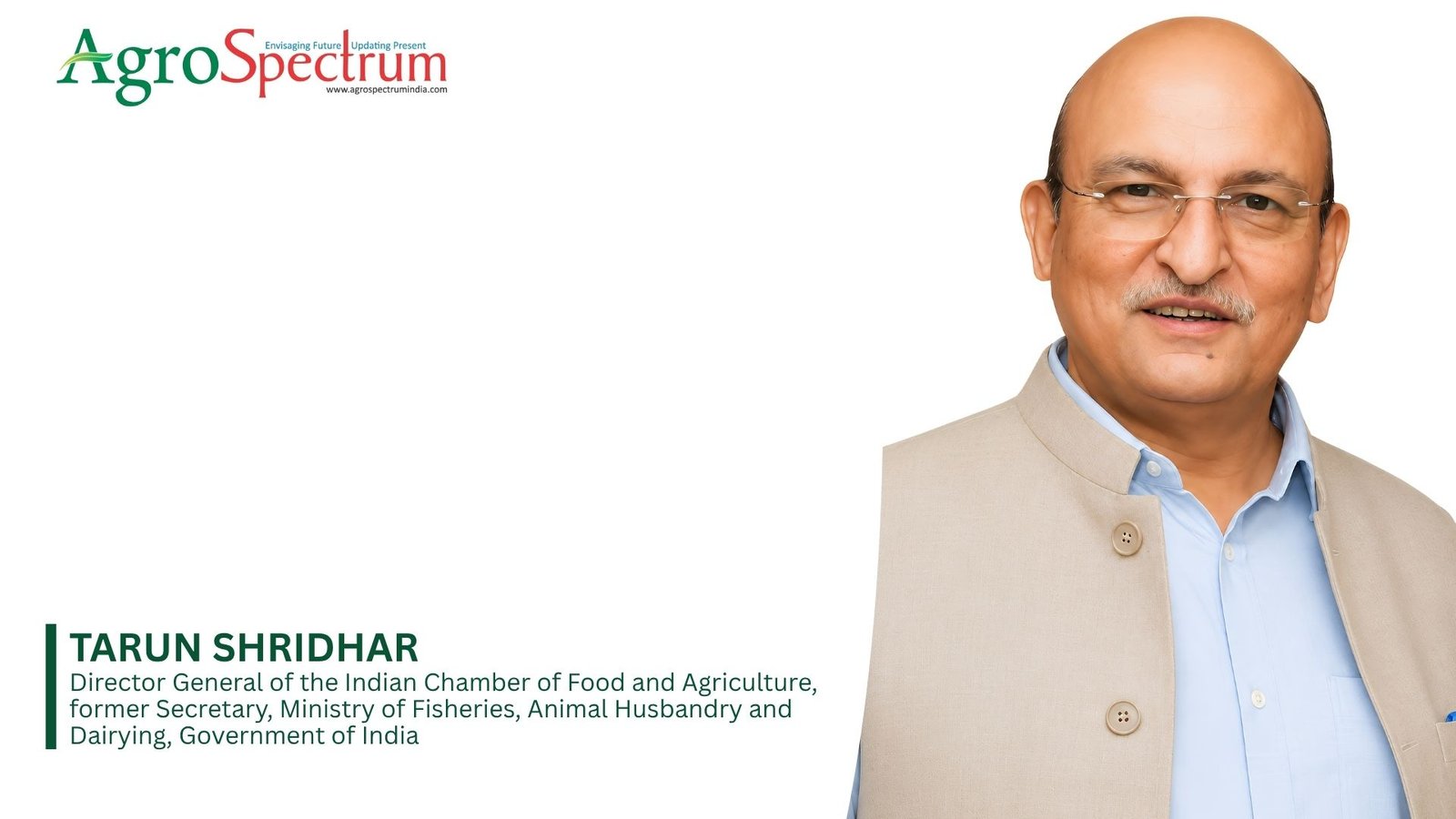
Authored by Tarun Shridhar, the Director General of the Indian Chamber of Food and Agriculture, former Secretary, Ministry of Fisheries, Animal Husbandry and Dairying, Government of India
Imagine a fish so beautiful, so rare, that a single pair of it fetches a couple of lakh rupees, and even twice this amount at times, in an overseas aquarium shop. Now let it be known that this fish swims freely in the rivers and streams of Northeast India, often unnoticed, its value unknown to the very farmers who share a riverbank with it.
That fish is Channa Barca, the Barca snakehead, found in the wetlands of Assam and Arunachal Pradesh. And the story of this hypnotic beauty is, in many ways, the story of the entire fisheries sector in our Northeast: extraordinary natural wealth, sitting just below the surface, waiting to be discovered and harnessed.
A Region Born for Fish Farming
Northeast India, the eight sister states of Assam, Arunachal Pradesh, Manipur, Meghalaya, Mizoram, Nagaland, Tripura, and Sikkim, is one of the world’s richest freshwater ecosystems. The Brahmaputra river system alone drains an area larger than France. Over 250 species of ornamental fish are endemic to this region — the kind of exotic, brilliantly coloured fish that hobbyists in Europe, Japan, and the United States will pay a premium for.
The region holds 42,691 km of rivers and canals, over 1.83 lakh hectares of wetlands, and sits above one of Asia’s most productive aquatic belts. It accounts for nearly 45 per cent of all freshwater fish species recorded in India. Put simply, if nature were handing out fishing licences, Northeast India would have been first in line.
Yet, paradoxically, the region cannot meet its own fish demand. Fish is not a weekend delicacy here, it is a daily staple. An overwhelming majority eats fish regularly, and yet the region imports roughly 50,000 to 90,000 tonnes of fish every year from Andhra Pradesh, West Bengal, and even Bangladesh. Even though the fish production has been growing at a healthy rate of 5.38 per cent annually,reaching close to 7 lakh tonnes, the hunger for fish still outpaces supply. It is a bit like a family sitting on a gold mine but buying gold from the neighbour.
The Fisherman’s Daughter and the Ornamental Fish
Manipur offers an intriguing case study. Loktak Lake, India’s largest freshwater lake, floating with its famous phumdis (islands of matted vegetation), is home to dozens of indigenous species found nowhere else on earth. The Pengba, Manipur’s state fish, is a delicacy that commands enormous local pride and high market prices. Yet, most of it is caught wild; its declining numbers should be a cause of serious concern calling for transition from capture to culture.
On the other side of the region, in tribal communities in Arunachal Pradesh and Nagaland, farmers rear ornamental fish in backyard tanks, often unaware that their colourful produce, species like the Glowlight Danio, the Striped Snakehead, or the Assamese Pufferfish, are sold in aquarium stores in Singapore, Germany, and the USA. Around 5,000 farmers across the Northeast are currently engaged in ornamental fish production. But without proper market chains, grading facilities, or export know-how, most of them sell at a fraction of the international price, with middlemen pocketing the difference.
The global ornamental fish trade is worth hundreds of millions of dollars. India’s share in it? Below 1%. Northeast India alone could potentially flip that equation, if only it had the support structure to do so.
The Food on Every Plate, and the Gap in Every Cold Room
Think about what happens when a fish farmer in Tripura harvests his freshwater prawn: scampi, a species that restaurants in Kolkata and Delhi serve as a luxury item. He has maybe 12 hours before the catch begins to spoil. The nearest cold storage facility might be 80–100 km away, on a hill road prone to landslides in the monsoon. By the time the prawn reaches a wholesale market, a third of it may be unsaleable.
This is the cold chain problem, and it is not a minor inconvenience; it is the single biggest reason why farm-gate prices in the Northeast remain depressed. Across eight states, only 34 cold storage units have been approved under the government’s flagship PMMSY scheme (Pradhan Mantri Matsya Sampada Yojana). Compare this with the sheer scale of the production landscape, and the gap is glaring.
For context, Andhra Pradesh, India’s aquaculture powerhouse, has a cold chain dense enough to get shrimp from a farm in Krishna district to an airport container in under six hours. That is the benchmark the Northeast must eventually reach, maybe not overnight, but deliberately, district by district.
Farming on Water: Harnessing Technologies
Here is something many of us don’t know: you can grow fish in a cage in the middle of a river or reservoir, with almost no land required. Cage culture and pen culture, technologies well-established and successfully demonstrated, are virtually absent in the Northeast, despite the region having some of the most productive river and reservoir systems in the country.
Cage culture in rivers can yield 10 to 15 kg of fish per cubic metre of water. Pen culture in floodplains and wetlands can produce 7 to 8 tonnes per hectare per crop cycle. These are not futuristic numbers: they are documented results from trials already conducted in parts of Assam and Manipur. The bottleneck is not the technology; it is awareness, access to credit, and the lack of assurance that someone will buy the produce at a fair price.
Then there is integrated farming, the ingenious art of combining fish with rice, duck, or pig on the same farm. In Meghalaya, farmers in Ri-Bhoi district practice paddy-cum-fish farming, releasing fingerlings into their paddy fields after transplanting. The fish eat weeds and insects, fertilise the soil with their droppings, and are harvested alongside the paddy. The farmer earns twice from the same piece of land with minimal extra input. Over 27,000 hectares across the Northeast are suitable for this model; most of it is currently unused for fish farming, thus a continuing lost opportunity.
Protecting What is Unique
Walk into any freshwater fish market in Guwahati or Dimapur and you will find a striking diversity of species that would make a marine biologist give a cry of joy, but make a conservationist weep with concern. Many of these species are threatened by overfishing, habitat loss, and a seasonal disease called Epizootic Ulcerative Syndrome (EUS) that can wipe out up to 100 per cent of a farmer’s stock in winter.
Research institutions like ICAR-CIFRI (Central Inland Fisheries Research Institute), with its regional centre in Guwahati, and ICAR-NEH in Barapani have been quietly working on breeding programmes for species like Mahseer, the prized sporting and food fish of Himalayan rivers, and developing disease management protocols for EUS. But the gap between what scientists know and what farmers practice remains uncomfortably wide. Extension services, the bridge between lab and land, are thinly staffed across most NE states.
Traditional knowledge, too, holds answers that formal research has barely tapped. Indigenous communities in the region have, for generations, managed fisheries through community-enforced seasonal bans and sacred groves that double as aquatic refuges. These practices achieve what expensive government regulations often fail to: they work because the community enforces them for themselves. Let science and traditional wisdom blend in happy and holy matrimony.
Act East Opportunity: Fish Heading to ASEAN
Here is the bigger geopolitical picture. India’s Act East Policy positions the Northeast as the country’s gateway to Southeast Asia. Agartala, the capital of Tripura, is just 200 km from Chittagong, Bangladesh’s main seaport: closer to a major international port than most cities in the Hindi heartland are to any port at all. Mizoram shares a long border with Myanmar. Manipur has a land border crossing at Moreh.
This geography is a gift for aquaculture exporters. High-value fish species like Rainbow Trout, Golden Mahseer, ornamental fish, and freshwater prawns could be packed and transported on a container truck to Chittagong in hours, further bound to markets in Japan, South Korea, Thailand, or even the UAE. But only if the logistics- roads, cold chain, certification, and of course, trade facilitation- are in place. Why shouldn’t they be is the question leaders and all stakeholders of the region need to loudly ask.
Sikkim’s hill aquaculture sector, led by Rainbow Trout farming in its cold mountain streams, is already emerging as a model worth replicating in Arunachal Pradesh and Nagaland. The first commercial-scale Recirculating Aquaculture System (RAS) for Rainbow Trout was successfully established in India in 2025, a signal that even technology-intensive methods are becoming viable.
What an Aquaculture Expo Could Do for the Northeast
Against the backdrop of the status outlined above, a focused regional event like Aquaex Northeast 2026, being held on June 12–13 at Maniram Dewan Trade Centre, Guwahati, becomes genuinely significant. Organised by Aquaex India in collaboration with the National Fisheries Development Board (NFDB) and supported by the fisheries departments of all eight NE states, it is for the first time that the entire freshwater fisheries value chain is being assembled under a single platform in the region.
Think of what usually happens in the Northeast aquaculture ecosystem. A fish farmer in Jorhat has never met the equipment supplier in Hyderabad whose aerators could triple his pond yield. A feed manufacturer in Vizag has never spoken to the fish farmer collective in Tripura that could become his biggest bulk buyer. A venture capitalist in Bengaluru has never sat across the table from the fisheries commissioner of Arunachal Pradesh. These disconnections are not just a bane of fragmented governance, they are costly and an avoidable impediment to fish farmer prosperity.
Aquaex Northeast Addresses these Disconnects: Here is how
Aquaex puts buyers and sellers in the same room, sits them at the same table and makes them talk, not idle gossip but meaningful business and outcome oriented dialogue. Aquaex events have historically delivered a 40 per cent + trade conversion rate among over 4,000 buyers and sellers. For NE farmers who have never had access to institutional buyers, this single outcome can change the economics of their operation permanently.
It brings technology demonstrations to the farmer. Most farmers in the Northeast have heard of biofloc technology or IoT-based farm monitoring but have never seen it in action. Hands-on demos at the expo, of aeration systems, disease diagnostics, RAS, and digital pond monitoring, give farmers practical knowledge they can implement on their own farms, not in distant future, but the week after they return.
It attracts institutional finance. Banks and insurance companies, who are often reluctant to lend to first-generation fish farmers without collateral, change their calculus when they see the scale of the sector assembled in one place. Dedicated investor evenings at the expo, where each NE state presents its aquaculture potential to venture firms and financial institutions, can unlock credit flows that no individual loan application can.
It surfaces new products. Several new products and services are typically launched at Aquaex events. For a region where farmers still struggle to access quality seed, certified feed, and affordable medicines, this pipeline of new products, debuting in the Northeast for the first time, is not just exciting, it is necessary.
It gives women farmers a platform. Fish farming in the Northeast is deeply interwoven with women’s labour: feeding, harvesting, and selling are predominantly done by women. An expo that runs dedicated sessions for women entrepreneurs, connects them with microfinance institutions and SHGs (Self-Help Groups), and spotlights their success stories sends a powerful signal about who the future of aquaculture in this region really belongs to.
It builds political will. When the fisheries ministers of eight states sit together in a discussion mode, look at the same data, and hear the same experts, convergence on policy — shared cold chain standards, uniform seed certification, joint export facilitation — becomes far more achievable than through individual bilateral meetings.
What Next
The two-day expo in Guwahati is a spark, not a solution. But sparks matter. What follows the expo, the follow-through on investor meetings, the technology tie-ups, the policy discussions, is where the real work lies.
For the sector to truly take off, a few things need to come together. Fish Farmer Producer Organisations approved under PMMSY for the region need to be operationalised, not just registered. Cold chain infrastructure needs to be built at the district level, not just in state capitals.
Lease policies for rivers and reservoirs need to be made transparent and long-term so entrepreneurs are willing to invest. And quality fish seed, the foundation of productive aquaculture, needs to be regulated and certified across all eight states. The government has been providing adequate funds, no doubt; what has often been found missing is the last-mile execution and the private-sector energy and enthusiasm to co-invest alongside public money.
The River Waiting to Be Tapped
There is an old Assamese saying, reflecting upon the duality of nature, that the Brahmaputra gives but also takes, it floods, it shifts course, it humbles the most ambitious plans. And another pregnant with wisdom saying is “only the Brahmaputra knows how deep it flows”. We would be well advised to learn that working with the Northeast’s waters, not just extracting from them, is the philosophy that sustainable fisheries development demands.
The opportunity is real, the resources are extraordinary, and the market, both domestic and international, is hungry.
A farmer in Meghalaya growing ornamental fish for Japanese hobbyists; a cooperative in Manipur processing Pengba into ready-to-eat pouches for urban supermarkets; a tribal community in Arunachal Pradesh running a fish-and-trek tourism business along a pristine river: these are not distant fantasies. They are the next chapter of a story that the Northeast is only just beginning to write. All it needs is for the right people to be in the same room at the same time looking at the same waters, with the same ambition and enthusiasm.