Thursday, 9 July 2026

IRRI, Kerala Agricultural University and government agencies advance data-driven water management, greenhouse gas monitoring and farmer-led innovation to build a scalable blueprint for sustainable rice production
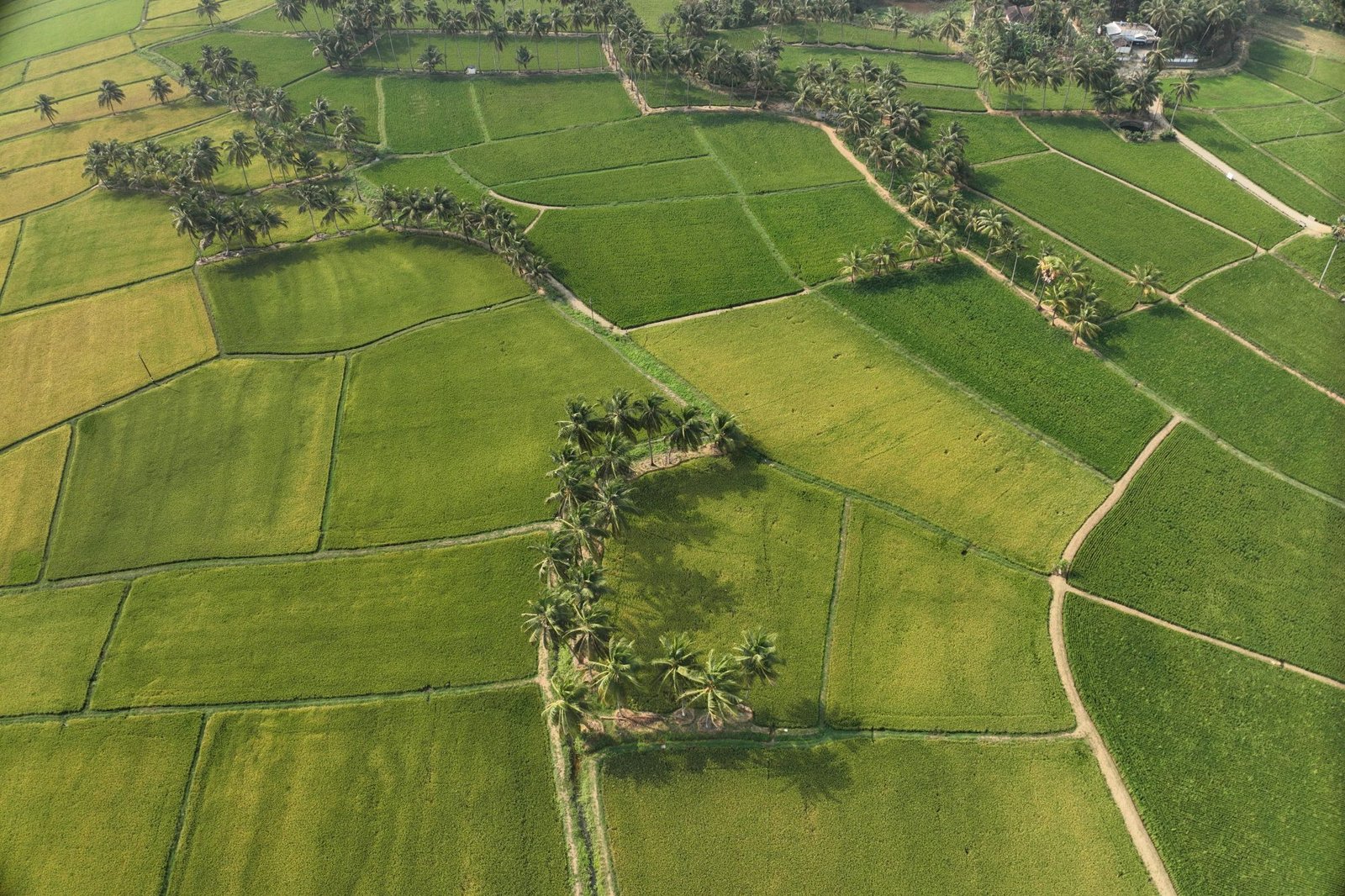
Kerala is positioning itself at the forefront of climate-smart agriculture with a multi-stakeholder initiative aimed at transforming conventional rice cultivation into a low-emission, resource-efficient production system that could serve as a model for rice-growing regions globally.
The project, titled “Technical Assistance to KERA in AWD – Catalyzing Transitions to Low-Emission Rice-based Systems in Kerala (KERA-AWD)”, is bringing together researchers, policymakers, irrigation experts and farming communities to test how science-backed water management and digital monitoring can simultaneously improve productivity, reduce greenhouse gas emissions and strengthen farm resilience.
Implemented jointly by the Kerala Agricultural University (KAU), the International Rice Research Institute (IRRI) and the Centre for Water Resources Development and Management (CWRDM), the initiative is supported by Kerala’s Departments of Agriculture and Irrigation, alongside local Padasekhara Samithis, the farmer collectives that play a central role in paddy cultivation across the state.
The programme arrives at a critical juncture for global agriculture as governments and food systems increasingly confront the dual challenge of maintaining rice productivity while reducing agriculture’s carbon footprint. Rice cultivation remains one of the largest agricultural sources of methane emissions worldwide, making improvements in water management a key climate mitigation priority.
Kerala’s diverse agroecological landscape—from coastal lowlands and flood-prone wetlands to midland farming zones and upland regions—offers an unusually comprehensive testing ground for evaluating how low-emission technologies perform under varied environmental conditions.
The districts of Palakkad and Thrissur, among the state’s most important rice-producing regions, are serving as living laboratories where researchers are generating field-level evidence to support wider adoption of climate-smart rice production systems.
As preparations begin for the upcoming cultivation season, IRRI and its partners recently convened scientists, technical experts, project teams, government officials and farmer representatives to assess progress and align implementation strategies across multiple workstreams.
These include Alternate Wetting and Drying (AWD) irrigation systems, landscape-level assessments, greenhouse gas modelling, digital irrigation management, monitoring-reporting-verification (MRV) platforms, carbon-linked payment mechanisms and institutional capacity-building initiatives.
“Kerala has the opportunity to become a global example of how evidence-based water management and farmer-led innovation can transform rice cultivation into a more resilient and low-emission production system,” said Dr. Prakashan Chellattan Veettil, Project Lead at IRRI.
The discussions highlighted the growing importance of translating climate science into operational farming practices. Stakeholders reviewed progress in AWD implementation and the development of MRV dashboards designed to capture field-level environmental and productivity outcomes. At the same time, participants identified challenges around data quality, irrigation scheduling, farmer participation and last-mile implementation that will be critical to scaling the model successfully.
Beyond water management, the project is examining a broad range of interventions aimed at reducing emissions while sustaining yields. Ongoing station-based and on-farm trials are evaluating irrigation regimes, nutrient management strategies, soil-health interventions, microbiome interactions and greenhouse gas mitigation practices across different agroecological settings.
Researchers are also placing significant emphasis on the human dimensions of agricultural transformation.
Farmer consultations conducted under the programme revealed concerns around rising cultivation costs, labour shortages, salinity intrusion, uneven field topography, migration trends and infrastructure gaps—factors that increasingly shape decision-making at the farm level and influence adoption of new technologies.
Project leaders argue that understanding these socioeconomic realities is just as important as refining technical solutions.
“Through science, policy and farmer experience, this project helps build a scalable model for low-emission rice production that can inform climate-smart agricultural transitions well beyond Kerala,” said Dr. Latha A, KAU Project Lead for KERA-AWD.
A significant component of the initiative focuses on strengthening local scientific and analytical capacity.
To support this objective, IRRI recently conducted a specialised four-day training programme at Kerala Agricultural University centred on the ORYZA Rice Crop Model, one of the world’s most widely used simulation tools for analysing rice growth under different environmental and management conditions.
Led by Dr. Tao Li, Senior Scientist at IRRI and a leading expert on the ORYZA platform, the workshop introduced participants to the newly developed ORYZA user interface and its application in monitoring, reporting and verification systems for rice production landscapes.
Researchers and technical personnel received hands-on training in data standardisation, model calibration and validation, crop growth simulation, yield forecasting, soil carbon dynamics, greenhouse gas emissions assessment and climate stress analysis. The programme also explored how modelling tools can help quantify trade-offs between productivity, carbon sequestration and emission reduction objectives.
The training is expected to enhance the state’s ability to generate science-based evidence for climate-smart agricultural investments, support low-emission development strategies and guide future policy interventions.
As climate pressures intensify and governments seek practical pathways to decarbonise food production systems, the Kerala initiative reflects a broader shift toward integrating digital technologies, predictive analytics and farmer-centred innovation into agricultural policy.
If successful, the KERA-AWD model could demonstrate how rice-growing regions can reduce emissions without compromising productivity—an outcome increasingly viewed as essential for achieving both food security and climate goals in the decades ahead.