Saturday, 11 July 2026

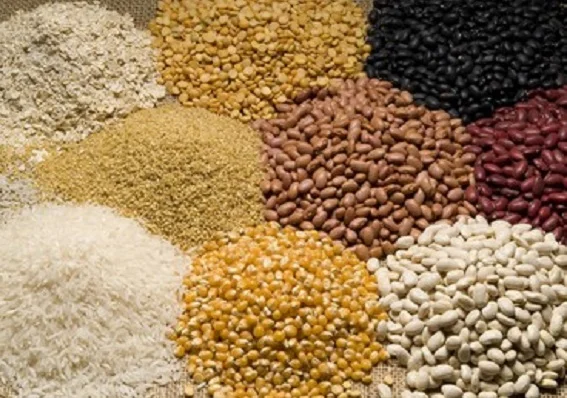
India’s foodgrain story is entering a new phase—one defined not just by record output, but by increasing complexity in sustaining that growth.
The latest Second Advance Estimates, approved by Union Agriculture Minister Shivraj Singh Chouhan, place Kharif and Rabi foodgrain production for 2025–26 at 1741.44 million tonnes (LMT) and 1745.13 LMT respectively, both reflecting year-on-year increases of close to 3 per cent. At a headline level, the data reinforces a familiar narrative of resilience, supported by policy continuity under Prime Minister Narendra Modi. Yet, beneath these strong numbers lies a more complex story around sustainability, crop balance, and resource use.
Cereals Continue to Dominate the Growth Story
Cereals remain the primary driver of India’s agricultural expansion, with rice and wheat leading from the front. Kharif rice production is estimated at a record 1239.28 LMT, while Rabi rice contributes an additional 167.20 LMT. Wheat output, at 1202.10 LMT, has also reached a new high, marking a significant increase over the previous year.
Maize, increasingly seen as a versatile crop with applications in feed and industry, has recorded strong growth across both seasons. Alongside this, coarse cereals, including millets, continue to gain incremental traction. The overall trend suggests that India’s cereal ecosystem is not only stable but scaling. However, this continued reliance on water-intensive crops such as rice raises deeper concerns around ecological sustainability, particularly in regions already facing groundwater stress.
Pulses and Oilseeds: Incremental Gains, Structural Gaps
Pulses production has shown moderate improvement, with tur estimated at 34.55 LMT, gram at 117.92 LMT, and lentil at 17.33 LMT. While these figures indicate progress, they do not fully address the structural imbalances that keep India dependent on imports in key pulse categories.
A similar pattern is visible in oilseeds. Groundnut and rapeseed-mustard have recorded strong output levels, with the latter touching a record 133.31 LMT, while soybean production remains robust. Despite this, domestic production continues to fall short of demand, particularly in edible oils, underscoring the gap between output growth and consumption needs. The sector’s long-term challenge remains one of productivity, policy alignment, and market incentives.
Diversification Signals Emerge—but Slowly
There are early signs of diversification within the cropping system, particularly with the rise of millets and maize. These crops align well with both climate resilience and nutritional priorities, and their increasing presence reflects a gradual shift in policy direction.
However, the pace of change remains measured. Traditional staples continue to dominate acreage and output, indicating that while diversification is underway, it has yet to achieve the scale required to fundamentally alter India’s crop mix. Bridging this gap will require stronger market linkages, pricing support, and farmer-level incentives.
Commercial Crops: Strong Output, Market Sensitivity
Commercial crops such as sugarcane and cotton continue to post strong production numbers, reinforcing India’s position in global markets. Sugarcane output is estimated at a record 5001.97 LMT, while cotton production stands at 290.91 lakh bales.
At the same time, both sectors remain highly sensitive to global price movements, export policies, and domestic demand fluctuations. Sugarcane, in particular, continues to raise concerns due to its high water consumption and the distortions created by pricing mechanisms. The challenge lies in balancing production strength with long-term sustainability.
Technology and Data: A Quiet Transformation
An important but less visible shift is taking place in how agricultural data is generated and validated. The use of remote sensing, Crop Cutting Experiments, and multi-source triangulation reflects a gradual modernization of India’s agricultural data systems.
This transition is critical as agriculture becomes increasingly linked to markets and climate variability. Reliable, real-time data will be essential not only for policymaking but also for managing risks and improving decision-making at every level of the value chain.
The Bigger Question: Can Growth Be Sustained?
While the current estimates highlight record production, they also bring into focus the broader question of sustainability. Continued dependence on water-intensive crops, combined with import reliance in key segments and slow diversification, presents structural challenges that cannot be overlooked.
Sustaining growth will require a shift in focus from purely increasing output to improving efficiency, optimizing resource use, and aligning crop choices with long-term environmental and market realities.
The Road Ahead
The Second Advance Estimates reaffirm the strength of India’s agricultural sector, but they also signal the need for a more nuanced approach to future growth. Expanding acreage and pushing yields may no longer be sufficient to drive the next phase of progress.
Instead, the path forward lies in rebalancing crop patterns, strengthening value chains, and building resilience into the system. As Shivraj Singh Chouhan emphasized, the focus remains on farmer prosperity. Achieving that goal in the years ahead will depend on how effectively India can transition toward a more diversified, sustainable, and market-aligned agricultural framework.