Friday, 17 July 2026

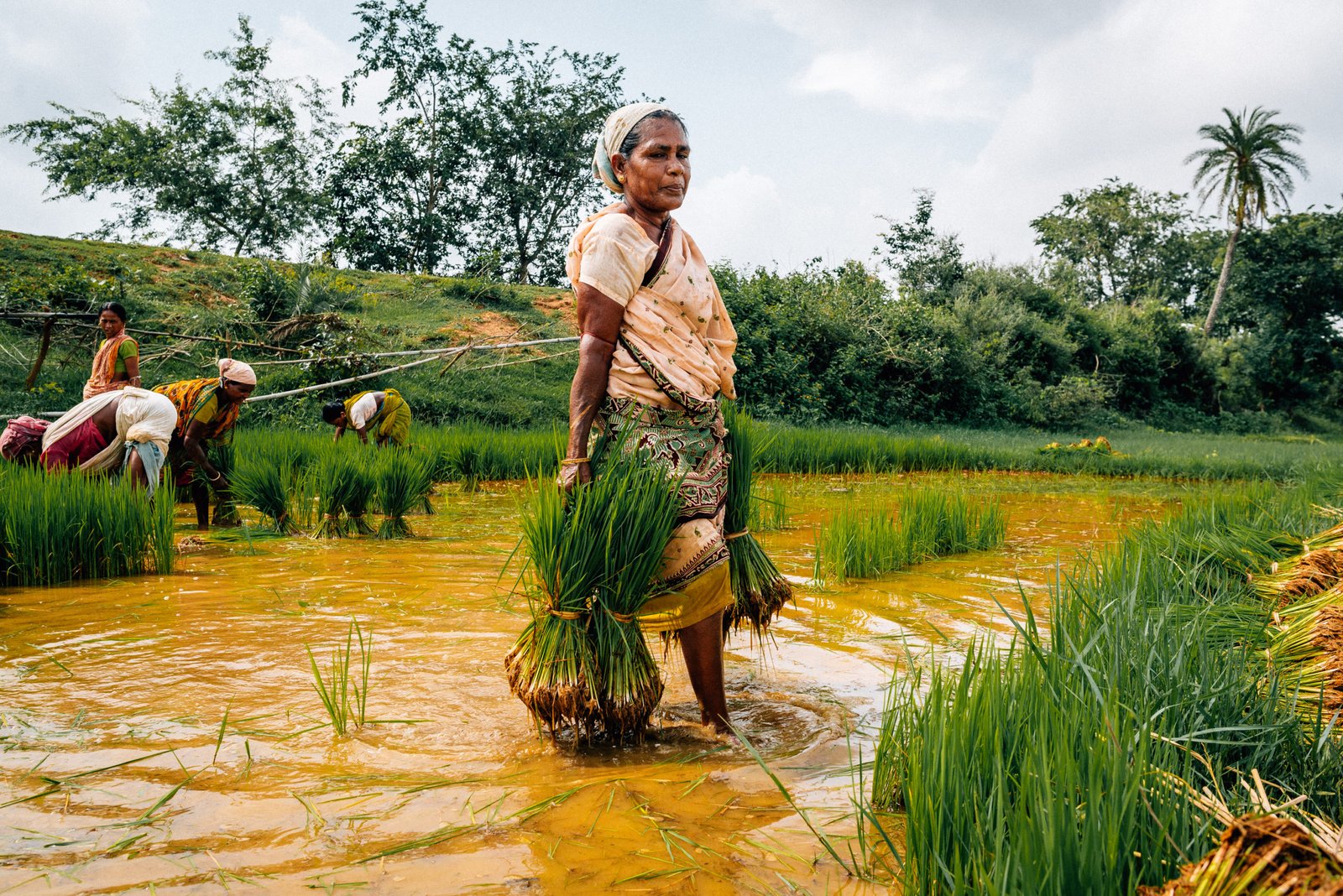
In a significant policy update aimed at strengthening farm incomes and ensuring price stability in India’s agricultural economy, the Government has announced the Minimum Support Prices (MSPs) for mandated Kharif crops for the marketing season 2026–27, reflecting a calibrated increase across key staples, pulses, oilseeds, and commercial crops.
The latest MSP framework underscores a continued policy emphasis on ensuring remunerative returns for farmers, with most crops now priced at 50 per cent or higher over the projected cost of production, consistent with the government’s long-standing income support benchmark.
Among cereals, paddy (common) has been raised to Rs 2,441 per quintal, reflecting an increase of 3.0 per cent over the previous season’s MSP of Rs 2,369 per quintal, while paddy (Grade A) is fixed at Rs 2,461 per quintal. Coarse cereals witnessed stronger upward revisions, with jowar (hybrid) rising to Rs 4,023 per quintal, marking a sharp 8.8 per cent increase, while jowar (Maldandi) was fixed at Rs 4,073 per quintal, up 8.6 per cent. Bajra was increased to Rs 2,900 per quintal, registering a 4.5 per cent rise, while ragi saw one of the most notable jumps among cereals, rising 6.5 per cent to Rs 5,205 per quintal. Maize recorded a marginal increase of 0.4 per cent to Rs 2,410 per quintal, reflecting relatively stable input-cost dynamics in the segment.
In the pulses segment, MSPs reflected continued support for domestic protein security and import substitution. Tur (Arhar) has been raised to Rs 8,450 per quintal, up 5.6 per cent, while moong remains largely stable with a marginal 0.1 per cent increase to Rs 8,780 per quintal. Urad was increased to Rs 8,200 per quintal, up 5.1 per cent, reinforcing incentives for pulse cultivation across major producing states.
Oilseeds witnessed robust upward revisions, reflecting both global price volatility and domestic supply chain considerations. Groundnut MSP has been fixed at Rs 7,517 per quintal, up 3.5 per cent, while sunflower seed recorded a sharp 8.1 per cent increase to Rs 8,343 per quintal. Soybean (yellow) was raised to Rs 5,708 per quintal, reflecting a 7.1 per cent increase. Sesamum and nigerseed were also revised upward to Rs 10,346 per quintal and Rs 10,052 per quintal, respectively, registering increases of 5.1 per cent and 5.4 per cent, reinforcing incentives for high-value oilseed cultivation.
Among commercial crops, cotton (medium staple) saw a notable increase of 7.2 per cent, with MSP fixed at Rs 8,267 per quintal, while cotton (long staple) rose to Rs 8,667 per quintal, marking a 6.9 per cent increase, reflecting continued policy support for India’s textile supply chain and export competitiveness.
A key structural feature of the revised MSP regime is the sustained assurance of profitability margins, with most crops priced at approximately 150 per cent or higher of the cost of production, with select crops such as moong and maize reflecting margins above 160 per cent, indicating differentiated support aligned with agronomic and market realities.
The cost benchmarks indicate significant variation across crops, with higher-value pulses and oilseeds reflecting elevated production costs, while cereals continue to benefit from relatively stable input structures. The policy adjustment thus reflects a calibrated balancing of inflationary input pressures, demand-supply dynamics, and the strategic need to diversify cropping patterns.
Overall, the MSP revisions for Kharif 2026–27 signal a continued policy commitment to safeguarding farmer incomes while encouraging crop diversification, strengthening domestic supply resilience, and supporting inflation-managed growth in the broader food economy.