Tuesday, 14 July 2026

International Treaty marks dual milestones at Svalbard Global Seed Vault and Arctic World Archive, protecting biodiversity, knowledge and climate resilience for generations
In a defining moment for global food security and climate resilience, the International Treaty on Plant Genetic Resources for Food and Agriculture this week secured two historic milestones in the Arctic — reinforcing humanity’s long-term insurance policy against hunger, biodiversity loss and climate shocks.
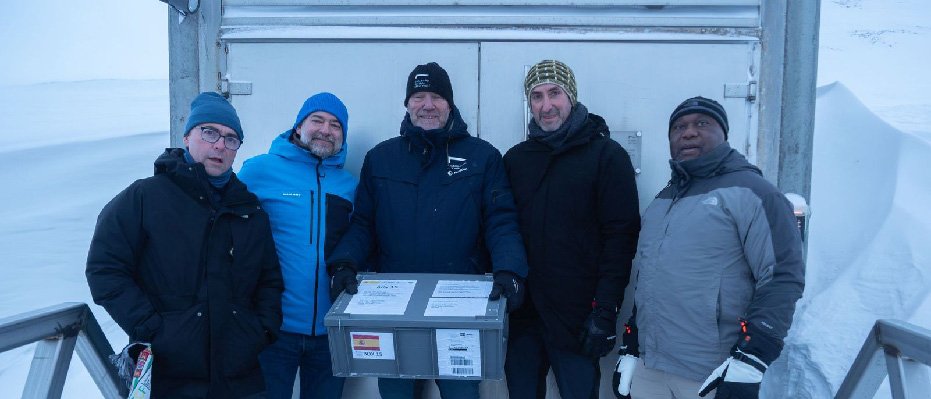
New deposits were made to the iconic Svalbard Global Seed Vault, located 1,000 kilometers from the North Pole, while the Treaty also completed its first-ever deposit to the Arctic World Archive (AWA), safeguarding foundational legal texts, multilingual agreements and field-level testimonies deep within Arctic permafrost.
The coordinated actions underscore a powerful message: protecting food security requires preserving not only seeds, but also the scientific knowledge, legal frameworks and community stories that sustain their use.
“This week’s deposits reaffirm our shared responsibility to safeguard crop diversity, the knowledge it carries, and the international cooperation that makes this possible,” said Kent Nnadozie, Secretary of the International Treaty. “By securing seeds and preserving the records and agreements that guide their stewardship, we are investing in humanity’s capacity to adapt, innovate and respond to climate change and future challenges.”
The World’s Ultimate Backup: Strengthening the Arctic Seed Vault
Carved into a sandstone mountain on the Norwegian archipelago of Svalbard, the Svalbard Global Seed Vault serves as the planet’s most secure backup facility for crop diversity. Designed to withstand natural and human-made disasters, it currently safeguards more than 1.3 million seed samples representing over 6,500 plant species essential to global food systems.
This year’s deposit ceremony expanded that genetic safety net significantly — both symbolically and scientifically.
A Historic First: Olive Genetic Resources Enter Svalbard
For the first time in its history, the Vault received olive genetic resources — a milestone that strengthens global conservation of one of humanity’s most culturally and economically significant crops.
In collaboration with the International Olive Council (IOC), 5,000 olive seeds from 59 accessions — including cultivated varieties and wild oleasters — were deposited under the International Treaty’s Multilateral System of access and benefit-sharing.
The move follows strengthened cooperation agreements signed in 2024–2025, bringing two of the world’s largest olive collections under the Treaty’s framework. The deposit was enabled through the European H2020 GEN4OLIVE project, in partnership with Spain’s Ministry of Agriculture, the University of Córdoba, the University of Granada, the Spanish National Research Council (CSIC), INIA and the Centre for Plant Genetic Resources (CRF).
The initiative comes at a pivotal time, as olive biodiversity plays a central role in Mediterranean food systems, rural livelihoods and climate adaptation strategies.
IOC Executive Director Jaime Lillo described the deposit as a historic step in integrating the olive tree into the global system for long-term conservation and food security.
A Culinary Voice for Biodiversity
Bridging science and culture, UNESCO Goodwill Ambassador for Biodiversity and three Michelin star chef Mauro Colagreco participated in the ceremony, underscoring the deep connection between crop diversity, culinary heritage and food sovereignty.
Together with representatives from the World Vegetable Center (WorldVeg) and UNESCO, Chef Colagreco carried onion seed boxes to the Vault entrance — a symbolic act linking ancestral seeds to future resilience.
In a gesture rich with meaning, he donated seeds of the Pink Onion of Menton — an ancestral variety from southern France entrusted to him in 2019 by local farmers — to WorldVeg Tanzania. The seeds will be regenerated and duplicated to ensure sufficient material for permanent conservation at Svalbard.
“Protecting biodiversity is an absolute priority,” said Chef Colagreco. “What we are losing is an essential part of our identity and of the world that makes us live.”
From Smallholder Fields to Arctic Permafrost
The week’s deposits also reflected the Treaty’s grassroots impact.
Through projects supported by its Benefit-sharing Fund (BSF), institutions deposited more than 200 accessions of farmer-managed pearl millet, sorghum, cowpea and groundnut from Mali, Burkina Faso and Niger. These climate-resilient crops are central to food and nutrition security across the Sahel and were collected and characterized under the BSF project Increasing Variety Portfolios for Greater Resilience of Sahel Communities.
Guatemala marked its first-ever contribution to Svalbard through the national genebank at the Instituto de Ciencia y Tecnología Agrícolas (ICTA). The shipment included more than 930 accessions of maize, beans, squash, amaranth and teosinte — many maintained and documented by smallholder farmers in the Sierra de los Cuchumatanes through initiatives led by ASOCUCH.
These additions reinforce the Vault’s role as a global safety net, ensuring that farmer-developed diversity — often adapted to harsh climates — remains available to future generations.
Beyond Seeds: Preserving Knowledge in the Arctic World Archive
In a parallel milestone, the International Treaty made its first deposit to the Arctic World Archive, a secure preservation facility located deep within Arctic permafrost.
The deposit includes the official Treaty text in fourteen languages and four testimonial stories illustrating the real-world application of international cooperation — from potato conservation efforts in Peru to millet revival in India, climate-resilient cereal research in Serbia and crop security initiatives across Pacific island nations.
Stored on long-lasting archival film designed to endure for centuries, these records safeguard the governance, agreements and institutional memory that underpin global collaboration on plant genetic resources.
“Preserving official texts, data and knowledge underscores the importance of sustained support for the International Treaty,” Secretary Nnadozie noted, “ensuring that this shared legacy endures for generations to come.”
A Dual Shield Against Future Shocks
As climate volatility intensifies and biodiversity loss accelerates, crop diversity has become one of humanity’s most strategic assets. The Arctic milestones demonstrate that resilience depends on two inseparable pillars: genetic diversity and knowledge governance.
The Svalbard Global Seed Vault safeguards the biological foundation of agriculture.
The Arctic World Archive protects the legal, scientific and cultural frameworks that make those seeds usable.
Together, they form a comprehensive system to secure food systems against disruption — whether caused by climate change, conflict or economic instability.
In the stillness of the Arctic, humanity has strengthened its most critical insurance policy: ensuring that seeds, science and shared responsibility endure — long after today’s crises have passed.