Tuesday, 14 July 2026

India to strengthen tech-driven vessel monitoring, traceability, detection of illegal fishing
In a major move aimed at modernising the country’s fisheries governance, the Central Government has showcased a roadmap for technology-driven initiatives integrating Artificial Intelligence (AI), satellite communication and digital traceability systems to strengthen monitoring, control and surveillance (MCS). Aimed at combating illegal fishing and improving seafood quality, the roadmap was presented at a regional High-Level Policy Meet on Artificial Intelligence in Fisheries held in Mumbai. The two-day regional meet was organised by the Bay of Bengal Programme Inter-Governmental Organisation (BOBP-IGO) under the Bay of Bengal Large Marine Ecosystem (BOBLME-II) Project.
It brought together senior policymakers, fisheries administrators, international organisations and technology experts from India, Bangladesh, Maldives and Sri Lanka, and regional organisations such as BIMSTEC, SAARC, SEAFDEC, global NGOs and tech agencies to discuss the role of AI in fisheries governance. Presenting India’s strategy, Dr Sanjay Pandey, Deputy Commissioner of Fisheries, Government of India outlined a series of digital governance initiatives that are laying the foundation for AI-enabled fisheries management. The government is positioning AI as a key tool to combat Illegal, Unreported and Unregulated (IUU) fishing, improve fisher safety and build a transparent fisheries supply chain from catch to consumer.
A major highlight is the nationwide expansion of the ReALCraft digital platform, a web-enabled system for registration and monitoring of fishing vessels. According to the presentation, more than 2.25 lakh fishing vessels have already been registered under the system across all coastal states and Union Territories. The platform enables real-time data sharing with maritime agencies, Aadhaar-based authentication and integration with DigiLocker. The government also highlighted future applications of AI in vessel behaviour analytics, detection of illegal fishing activities, catch traceability, predictive safety alerts and personalised advisories for fishers.
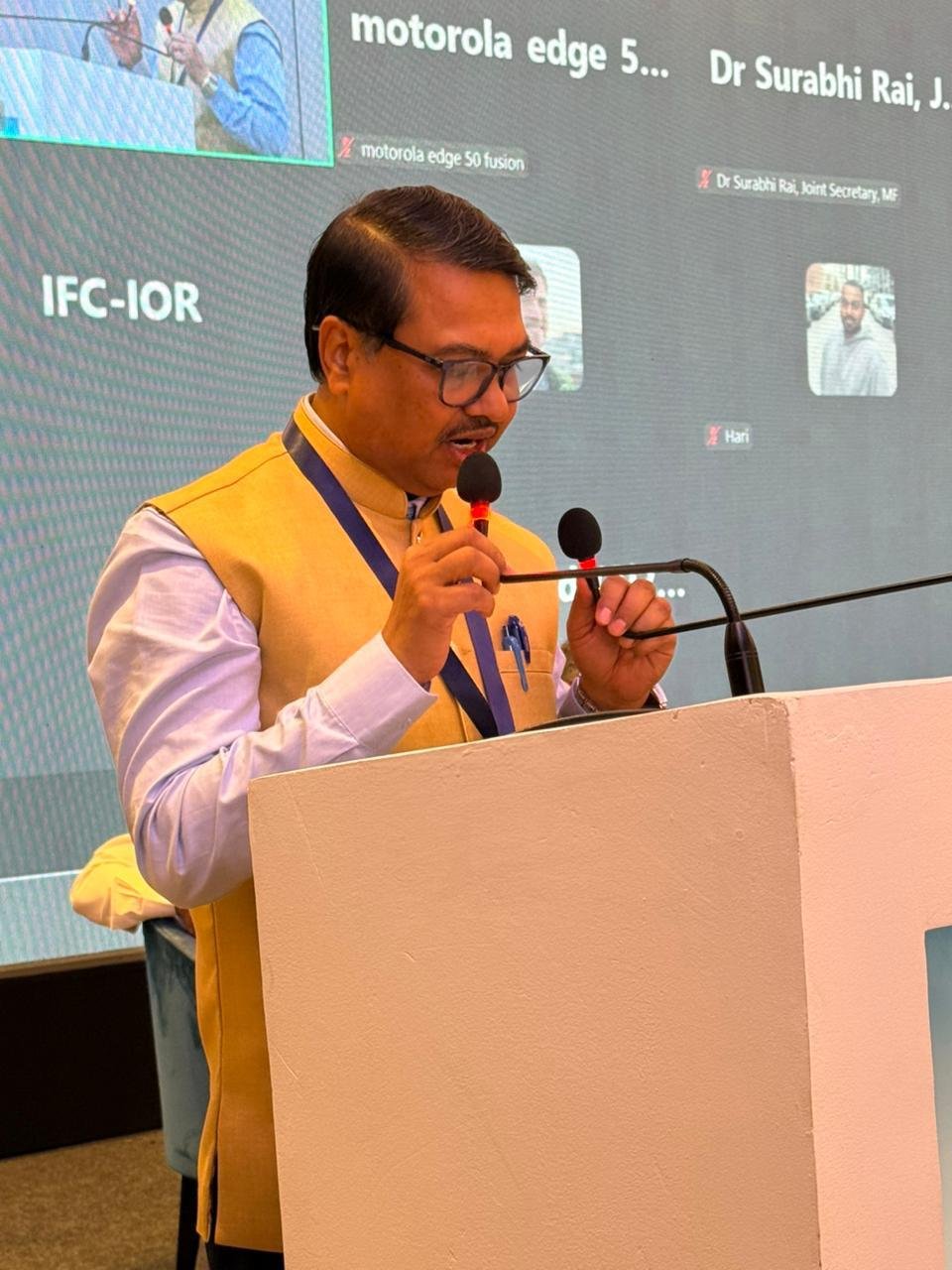
Addressing the workshop, Union Fisheries Joint Secretary Surabhi Rai said India has achieved significant growth in fisheries production and exports but governance challenges remain in monitoring fishing activities across thousands of landing centres and among millions of fishers.
She said AI and digital technologies could help bridge the gap between policy and enforcement, while stressing the need for practical and inclusive solutions that also benefit small-scale fishers. Rai also underlined the importance of regional cooperation among Bay of Bengal countries to tackle IUU fishing. In his inaugural address, Indian Council of Agricultural Research (ICAR) Deputy Director General Dr J.K. Jena said AI can play a transformative role across the fisheries value chain, from harvest to consumers. He highlighted the importance of traceability, quality assurance and transparent seafood supply chains in ensuring safe and quality fish for consumers.
Jena said investments and technological innovations are emerging as key drivers of transformation in the fisheries sector, helping improve governance, sustainability and market competitiveness. Providing a global perspective, Dr Rishi Sharma, Senior Fisheries Officer, Food and Agriculture Organization (FAO), said AI is emerging as an important governance tool for fisheries management amid growing pressure on global fish stocks.
He said AI could help address information gaps through improved monitoring, surveillance, stock assessment and decision-support systems, but cautioned that technology alone cannot solve governance challenges without strong institutions and reliable data systems.
BOBP-IGO Director Dr P. Krishnan said the Bay of Bengal supports the food security and livelihoods of nearly half a billion people and that AI offers significant opportunities to bridge information gaps in fisheries management, particularly in monitoring, control and surveillance of small-scale fisheries. The workshop focused on AI applications in vessel surveillance, electronic monitoring, traceability, stock assessment, species identification and fisher advisory services. The deliberations are expected to lead to a regional roadmap for AI-enabled fisheries management under the BOBLME-II programme.