Tuesday, 30 June 2026

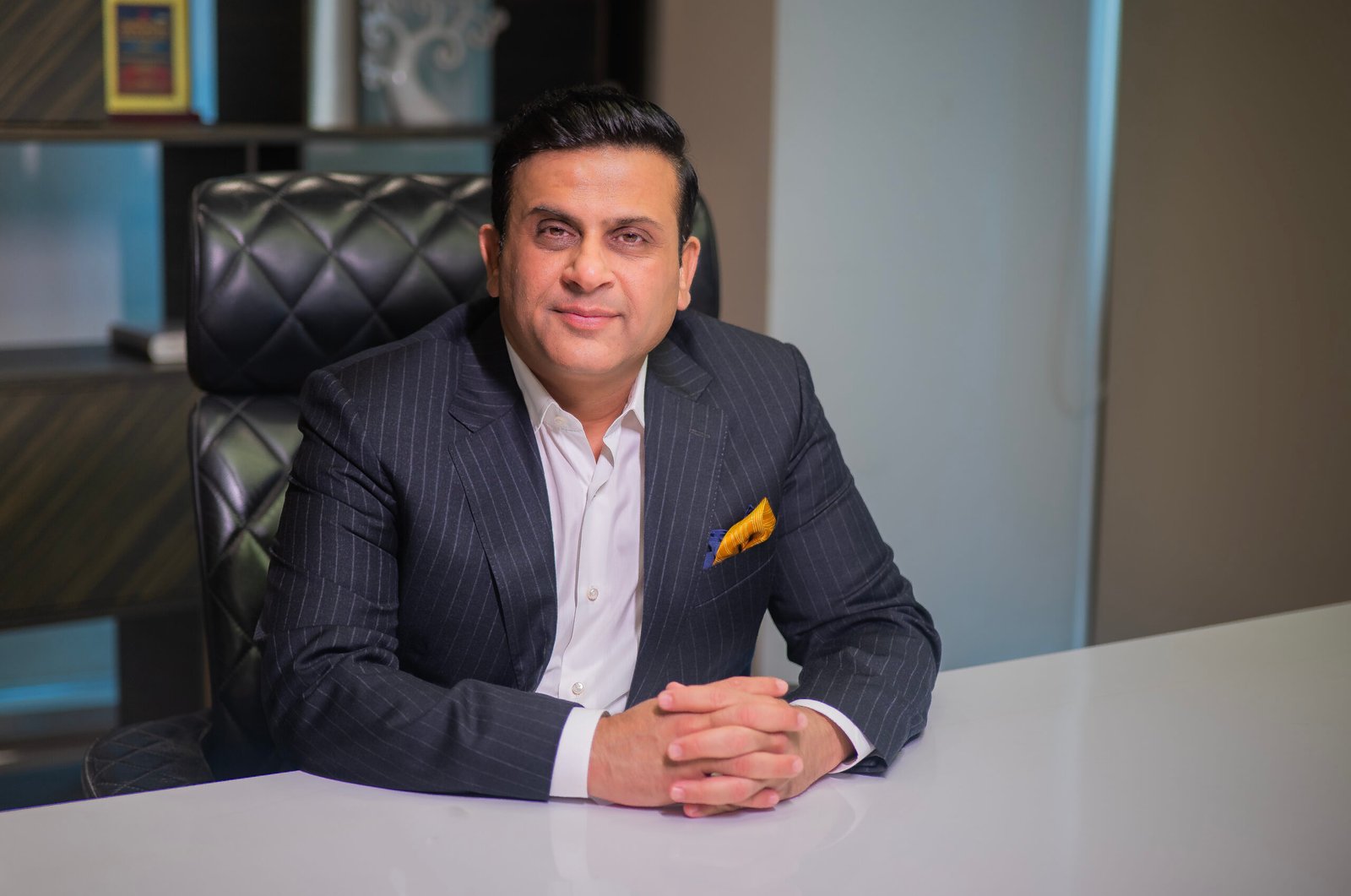
In an exclusive AgroSpectrum interview, MD & Group CEO Haresh Karamchandani outlines a capacity-led growth strategy anchored in farmer integration, automation, and export expansion
Haresh Karamchandani, details how the company’s growth thesis is “capacity-led, market-backed, and brand-enabled,” with large-scale manufacturing and backward farmer integration forming its competitive moat. He explains how investments in automation, AI-driven grading, IoT-enabled farm monitoring, and cold-chain fidelity are driving efficiency while maintaining global QSR-grade quality standards. With exports prioritized to absorb new capacity and domestic retail gaining rapid traction, HyFun is targeting a long-term 50/50 revenue split between global and Indian markets. Over the next decade, the company aims to expand to 100+ countries, support 30,000 farmer families, and emerge as a globally preferred frozen foods brand from India.
HyFun has scaled rapidly in India’s frozen foods space. What is the core growth thesis guiding your investments today capacity, markets, or brand?
At this stage, HyFun’s growth thesis is capacity-led, market-backed, and brand-enabled. We prioritize investment in scalable capacity and supply-chain robustness, recognizing that growth in the frozen food industry depends on operational depth and execution expertise. Once this foundation is established, we activate markets,both domestic and export through strong QSR and B2B partnerships and by expanding retail reach. Brand investments follow, building recall and trust among customers, particularly in retail, but always anchored in execution capability rather than being advertising-led.
Strategically headquartered in India, HyFun is positioned to serve the global frozen food market of 19 million tons, with a serviceable addressable market (SAM) spanning Southeast Asia, the Far East, Australia, and the GCC, regions growing at approximately 10% annually. By focusing on capacity expansion, we aim to achieve economies of scale while maintaining product quality comparable to European and US standards, enabling HyFun to capture market share from these mature markets while delivering consistent, high-quality products worldwide.
How do you prioritise capital allocation between manufacturing expansion, supply chain integration, farmer partnerships, and product innovation?
Our capital allocation is guided by a mix of long-term strategy and ongoing operational priorities, aligned with market needs:
Capacity Expansion & Backward Integration (Long-Term, Simultaneous): Since our facilities operate at full capacity, capacity addition and backward integration occur together to ensure sufficient raw material supply, primarily potatoes, to support growth. Decisions are based on market demand, prevailing conditions, and raw material availability.
Supply Chain Integration (Ongoing Priority): Strengthening the supply chain is a continuous focus. For example, the implementation of GoComet software allows us to track products through every stage, ensuring reliable last-mile delivery.
Farmer Partnerships (Ongoing, High Priority): We have built the largest contract-farming network in India for French fries-grade potatoes, securing quality raw materials and strengthening upstream resilience.
Product Innovation (Strategic, Targeted): Innovation is a key strategic priority, though it requires less capital than manufacturing expansion or backend development. Over the past few years, we have launched 10–12 new products, with our hero product, Hashbrowns, shipping to origin countries and other key markets. The success of the hash brown demonstrates the power of product innovation in driving market leadership.
This integrated approach ensures that capital is deployed efficiently, anchoring growth in operational strength while enabling market expansion, product leadership, and sustainable raw material supply.
Frozen food is capital-intensive and margin sensitive. Which investments have been most critical in driving efficiency and scale without compromising quality?
HyFun does not compromise on quality, sourcing European equipment identical to what leading global manufacturers use to maintain a top-tier manufacturing setup. All investment decisions are guided by the principle of optimizing operations and functionality without sacrificing quality. Efficiency and scale are driven by capacity expansion, with plans to more than double French fries production capacity within the next nine months, unlocking economies of scale, a critical advantage in this volume-driven industry.
We also focus on operational excellence and sustainability:
Maersk Cold Storage: Strategically located close to our plant to ensure product integrity throughout the supply chain.
Vihaan CETP (ZERO Liquid Discharge): Our socially responsible initiative reduces steam costs and improves our carbon footprint.
Renewable Hybrid Plant: Currently under development to meet 50–60% of our energy requirements, further enhancing efficiency and cost reduction.
This integrated approach ensures that HyFun maintains world-class quality, drives operational efficiency, and invests in sustainable solutions while scaling production to meet growing market demand.
HyFun’s backward integration with farmers is often highlighted. How does investing in farmer partnerships translate into long-term resilience and margin stability?
Backward integration is central to reducing volatility at the very core of our supply chain. By working closely with farmers, through our own seed selection, agronomy practices, and assured offtake agreements, we gain predictability in yield, quality, and pricing. This not only protects margins across cycles and reduces dependency on spot markets but also builds mutual commitment, creating a competitive moat in this commodity-linked category.
Investing in farmer partnerships provides long-term resilience and margin stability, as the processing variety of potatoes cannot be sourced from the open market. Programs like PaathShala and Vigyan Shala help farmers improve yields, optimize fertilizer usage, and reduce irrigation costs, ensuring a reliable supply of 300,000 tons of potatoes this year and 600,000 tons within two years. These initiatives strengthen upstream security while fostering sustainable, mutually beneficial relationships with the farming community.
With rising exports and growing domestic demand, how do you balance investments between global markets and India’s QSR and retail segments?
HyFun will continue to focus heavily on export markets to fully utilize the upcoming 20 MTPH production line. We are the only Asian supplier approved to supply our products to the three biggest QSRs – McDonald’s, KFC, and Burger King demonstrating the global credibility of our manufacturing and quality standards.
At the same time, we have entered the retail segment in India, quickly earning praise from customers and becoming the #1 highest-selling frozen food brand on e-commerce platforms. While exports remain the priority due to larger volumes, India’s domestic market is expected to grow significantly, potentially reaching a 50/50 split between exports and domestic sales within five to seven years.
HyFun is developing a wide variety of products tailored to each market: innovations like Manchurian balls and kebabs for the retail market, while the global market primarily focuses on potato-based products such as French fries and hash browns. Importantly, capital expenditure decisions are not split between these lines, as the same high-quality products are supplied to both domestic and export markets.
What role do technology, automation, and data play in improving productivity and managing costs as the business scales?
When we say “technology is crucial for our business,” we mean that every investment is purposeful, aimed at lowering costs, reducing risk, and improving consistency at scale. In frozen foods, even small inefficiencies multiplied over millions of units can erode margins. Manual processes vary by shift, operator, and fatigue, often leading to quality deviations, rework, and wastage, which can prevent us from meeting the exacting specifications of global QSRs. Automation addresses these challenges, allowing us to process higher volumes with the same infrastructure while maintaining exceptional precision and quality.
Technology also enables data-driven operations. Logistics and production decisions are planned, not reactive, ensuring smoother operations across domestic and export markets. HyFun leverages a range of tech solutions:
Farmoji: A proprietary mini-ERP that manages end-to-end farmer data — from seed booking to payment — supporting 7,000 farmers across 35,000 acres. It is also used to track crop quality and share best farming practices through video training modules and advisory support in regional languages to assist farmers.
IoT device: Used for weather prediction and soil quality monitoring at the farm level.
Harvest Eye: AI solution for automated potato grading and defect identification.
Cold chain fidelity: Ensures product remains at minus 18°C from production to retailer shelf.
This integration of automation, AI, and IoT ensures consistent quality, operational efficiency, and scalability, allowing HyFun to meet the stringent requirements of global markets while expanding domestically.
What are the biggest risks to sustained growth—raw material volatility, logistics, currency exposure—and how does your investment strategy mitigate them?
The biggest risks for HyFun stem from agricultural volatility due to climate issues, energy costs, and logistical disruptions driven by geopolitical developments and global policy changes. We mitigate these risks through a multi-pronged approach:
Backward Integration: Ensures predictability in raw material supply and reduces dependence on spot markets. We are also expanding our potato cultivation beyond Gujarat (currently 95%) into Uttar Pradesh and Madhya Pradesh to further diversify sources.
Logistics & Infrastructure: Long-term partnerships with vendors, increased cold storage facilities, and multiple shipping partners help safeguard against disruptions.
Energy & Efficiency: Investments in energy-efficient infrastructure reduce cost exposure and support sustainability goals.
Market & Currency Diversification: By balancing exports with strong domestic QSR and retail demand, and avoiding over-reliance on any single geography, we build resilience against operational and geopolitical shocks. Hedging mechanisms and a favorable dollar-rupee scenario help manage currency volatility.
This integrated risk management framework enables us to maintain operational stability, protect margins, and sustain growth despite external uncertainties.
Looking ahead 5–10 years, what would success look like for HyFun Foods in terms of scale, global presence, and value creation?
For HyFun, success means reaching every kitchen—from hotels, restaurants, and canteens to home kitchens and global QSRs—while building a business that is resilient across cycles and creates sustained value for customers, partners, and shareholders. Over the next 5–10 years, we aim to enable stable income for 30,000 farmer families and promote good agricultural practices across up to 150,000 acres, and help play a part in our Prime Minister’s Vision of “India becoming the food basket of the world”.Our ambition is to emerge as a globally preferred frozen food brand from India, with unmatched supply-chain control, scale-driven efficiency, and enduring partnerships with QSRs. We plan to expand our presence to 100+ countries globally, achieve a 50/50 balance between domestic and export markets, and eventually list on the stock markets, creating a business that compounds value steadily, regardless of market cycles.
— Suchetana Choudhury (suchetana.choudhuri@agrospectrumindia.com)