Friday, 17 July 2026


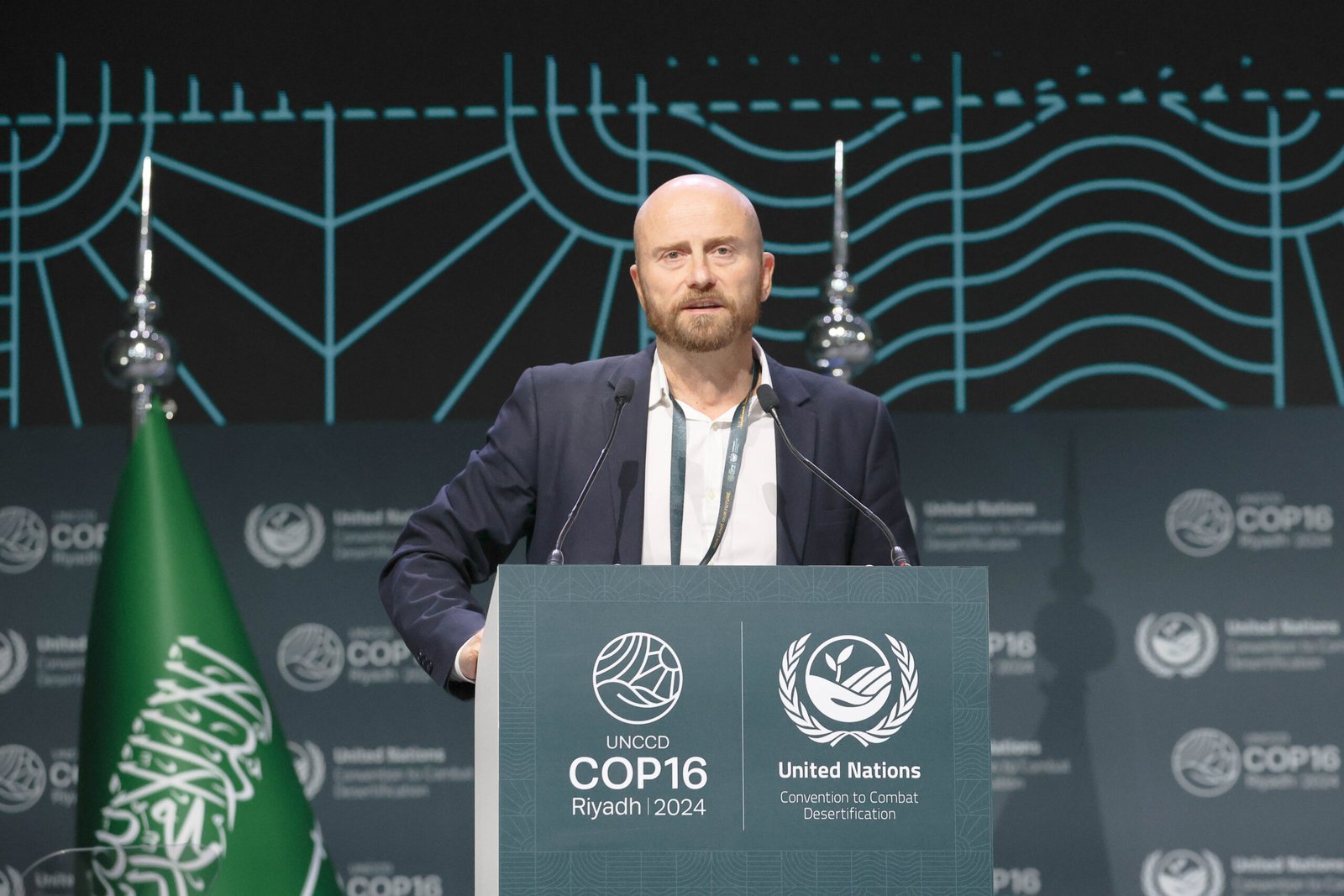
Dr Ward Anseeuw, Senior Land Tenure Officer, FAO shares insights with AgroSpectrum on land tenure insecurity, inequality in land distribution, and the need for stronger governance reforms.
A new global report on land tenure and governance has highlighted slow progress in securing land rights worldwide, revealing that only about 35 percent of the world’s land has formally documented ownership. The findings underscore growing concerns over land tenure insecurity, with nearly 1.1 billion people fearing they could lose their land or housing within the next five years, posing risks to food security, livelihoods, and climate resilience.
In this context, AgroSpectrum conducted an exclusive interview with Dr Ward Anseeuw, Senior Land Tenure Officer at the Food and Agriculture Organization of the United Nations. In the interview, Dr Anseeuw discusses the key findings of the report, including stark inequalities in land ownership, the challenges surrounding customary land rights, and the implications for sustainable agriculture and rural development. He also outlines the urgent need for stronger political commitment, inclusive land governance frameworks, and improved documentation systems to enhance tenure security globally.
The Big Picture
Only 35 percent of the world’s land is formally documented. After two decades of global policy frameworks, why has progress on tenure security remained so structurally slow?
Progress on strengthening tenure security has remained structurally slow since many legal systems still fail to recognize the legitimacy of existing practices, particularly the ownership and management rights of customary and Indigenous communities who, in reality, govern large territories.
Where formalization is possible, the high cost and complexity of surveying, registration, and documentation create significant barriers, especially since most systems were never designed to accommodate overlapping or collective rights at scale. At the same time, limited baseline data and incomplete records generate overlapping claims, such as customary use versus statutory ownership or unclear boundaries, which in turn fuel disputes and make it even harder to build reliable, trusted land information systems.
Rising Insecurity
The report finds that 1.1 billion people fear losing their land within five years — a figure that is rising. What structural forces are driving this acceleration of land insecurity now?
The report finds that roughly 1.1 billion adults, around one in four, fear they could lose rights to some or all of their land or housing within five years, a share that has risen in since 2020. This acceleration is driven by a convergence of structural pressures on land, particularly where rights remain undocumented or legally ambiguous. Intensifying competition from mainstream development, including rapid urban expansion, as well as large-scale industrial agriculture and extractive industries, generate heightened conflict risks and displacement.
An additional layer of pressure comes in recent years from the paradoxical “green squeeze,” where climate‑oriented initiatives such as renewable energy installations, biofuel production, conservation programs, and carbon offset project can end up harming areas with existing tenure practices that lack formal protections. All of this unfolds in the broader context of weak tenure documentation globally: with only 35 percent of global land formally recorded and many customary systems remaining in legal limbo, communities face heightened vulnerability precisely when land values and external demand are surging.
Climate & Carbon Stakes
With Indigenous and customary lands holding an estimated 45 gigatons of irrecoverable carbon, how does insecure tenure undermine global climate commitments, including net-zero pledges?
Mapped customary territories hold an estimated 45 gigatons of irrecoverable carbon, which is approximately 37 percent of the global total, and insecure tenure within these communities places these critical carbon reserves at heightened risk. Without recognized and enforceable rights, communities are more vulnerable to pressures that drive deforestation and ecosystem conversion, threatening carbon stocks that cannot be restored on climate‑relevant timescales.
The report highlights that Indigenous Peoples, and other customary rights‑holders, occupy roughly 42 percent of the world’s land area but have legally recognized ownership over only about 8 percent, leaving vast high‑carbon landscapes in a state of legal uncertainty. This weakens long‑term stewardship and exposes forests to degradation, undermining the durability required for credible climate action. It also compromises the integrity of net‑zero strategies: land‑based mitigation, offsets, and carbon removal initiatives depend on secure, stable tenure. Without that, the risks of reversals, project failure, and conflict rise, directly jeopardizing the credibility and permanence of national and corporate climate commitments.
Inequality & Concentration
The top 10 percent of landholders operate 89 percent of agricultural land. Does this concentration represent a productivity reality — or a governance failure?
Land concentration can be an outcome of structural transformation in countries where productivity growth led by technological modernization displaces less efficient farms and increases farm sizes while non-farm employment generation absorbs agricultural labor surplus. However, the report notes that “ Evidence shows that having sufficient and equitable access to agricultural land is one of the determinants in achieving poverty reduction and food and nutrition security.
Furthermore, equitable agrarian structures support the capital accumulation needed for inclusive growth and structural transformation, particularly at low levels of development and in the long term”. It notes that “Current patterns of structural change show the growth of low-income and informal jobs in the service sector, alongside deindustrialization or insufficient industrialization.
The persistence of rural poverty at the lower end of the farm size distribution, when combined with the patterns above, calls attention to the role of expanded access to land. In countries with both private and public land availability, a range of policy measures, including redistributive approaches where contextually appropriate, remain possible options to reduce rural poverty, enhance food security, mitigate social and political tensions and revitalize rural economies. Where redistribution is not on the agenda due to land scarcity or political sensitivities, other policies, including rent and tenancy control, as well as regulations against land concentration, can be deployed.
Customary Systems vs. State Control
In regions like sub-Saharan Africa, most land is under customary tenure but remains legally undocumented. What political and institutional barriers prevent formal recognition?
In sub‑Saharan Africa, while roughly 73 percent of land is held under customary tenure, only about 1 percent is formally recognized and documented, leaving most customary areas with more limited designated use rights, often with documentation, or simply unrecognized by governments and classified as state land. This structural imbalance reflects deep political and institutional barriers. Not all countries legally recognize the longstanding and widely prevalent customary tenure practices, leading to a complete incongruence between customary and statutory systems that does not recognize the reality on the ground.
Even where policy commitments exist, translation into practice remains slow, constrained by weak implementation capacity, fragmented institutional mandates, and limited incentives for coordination. These challenges are compounded by the rising economic and political stakes of land, driven by infrastructure expansion, agribusiness, extractive projects, and emerging climate‑related investments, which may make institutions reluctant to pursue reforms that reduce control over valuable land assets.
Gender & Generational Gaps
The gender gap in land rights exceeds 20 percentage points in nearly half of reporting countries. What policy levers have proven effective in closing this divide — and why are they not scaling faster?
The report reveals that in nearly all 49 countries with data on SDG 5.a.1, men are more likely than women to own or hold secure rights to agricultural land, with gender gaps of more than 20 percentage points in almost half of reporting countries. Evidence from long‑standing tenure governance practice points to a set of effective policy levers: joint titling and spousal co‑ownership defaults, strengthened inheritance laws and enforcement, gender‑responsive land administration systems that ensure women’s names appear on documents, low‑cost registration and legal aid, as well as quotas that guarantee women’s representation in local land governance and dispute resolution bodies.
Robust gender‑disaggregated data and monitoring also create political incentives for action. Yet despite their demonstrated effectiveness, these approaches remain underutilized. In practice, such reforms can challenge entrenched household and institutional power structures, while many land administration systems remain ill‑equipped to deliver accessible, gender‑responsive services at scale. A significant factor behind weak legal protection is that women’s land rights are deeply interconnected with longstanding religious beliefs, cultural practices, and social norms.
Changing such beliefs, practices, and norms is difficult. Together with gender, these intersectional factors shape how land tenure insecurity is experienced. In particular, young women, women from Indigenous Peoples, and other groups living in conditions of marginalization, often face overlapping and mutually reinforcing barriers. However, data on these intersections remain sparse, highlighting a critical area for future research and policy attention.
Climate Finance & Land Rush
The report suggests that net-zero strategies could require up to 1.2 billion hectares for land-based carbon removal. How do we prevent climate finance from triggering a new wave of land dispossession?
The report warns that achieving global net‑zero targets could require land‑based carbon removals on nearly 1.2 billion hectares, raising serious risks of large‑scale land capture. It also notes that environmental and climate concerns are already driving new land acquisitions, including those backed by institutional investors such as pension funds. Preventing dispossession under expanding climate finance requires safeguards commensurate with these risks.
First, climate‑related investments should not proceed without rigorous tenure due diligence showing that rights, especially customary and collective rights, are legally recognized, documented, and supported by accessible grievance mechanisms.
Second, more broadly at country level, legal recognition of customary lands must be prioritized before scaling offsets or carbon‑removal projects, since pressures intensify precisely where rights lack formal protection.
Finally, climate strategies should favor interventions that do not require dispossession or consolidation of land, such as restoring degraded areas under community stewardship, and ensure that any project with a land footprint is grounded in benefit‑sharing, free, prior and informed consent, and inclusive governance.
Accountability & SDGs
Only 12 countries report comprehensively on land-related SDG indicators. Should land tenure security become a more enforceable metric within global development financing frameworks?
Given that secure tenure is intrinsically linked with food security, climate action, and biodiversity protection, a strong case can be made that tenure security should be treated as a more enforceable performance condition in development financing, especially where finance is directly land-linked (agriculture transformation, nature-based climate, conservation, infrastructure). We already do see more emphasis on tenure security in other global frameworks such as the UNCCD and CBD, and aspects of secure tenure rights, such as Free, Prior and Informed Consent (FPIC) being embedded in the standards for projects financed by the GEF and GCF.
In FAO projects, environmental and social safeguards increasingly require tenure-risk screening a necessity, so progress is being made on that front, although more enforceable requirements in the future could further facilitate accountability.
— Suchetana Choudhury (suchetana.choudhuri@agrospectrumindia.com)