Wednesday, 15 July 2026


Dr. Kent Nnadozie, Secretary, FAO International Treaty on Plant Genetic Resources for Food and Agriculture, calls the Svalbard and Arctic World Archive deposits a historic step for food security and international cooperation
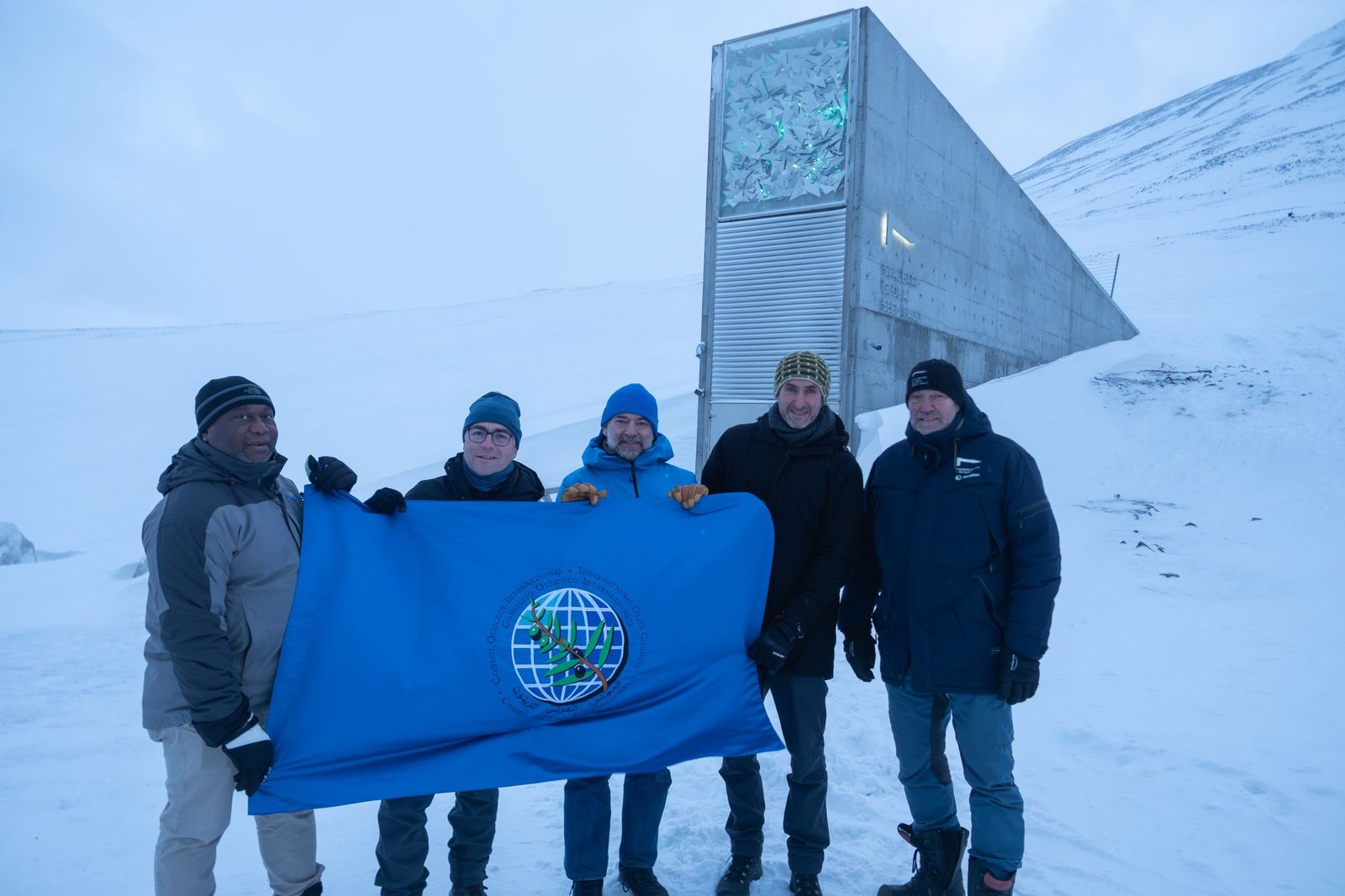
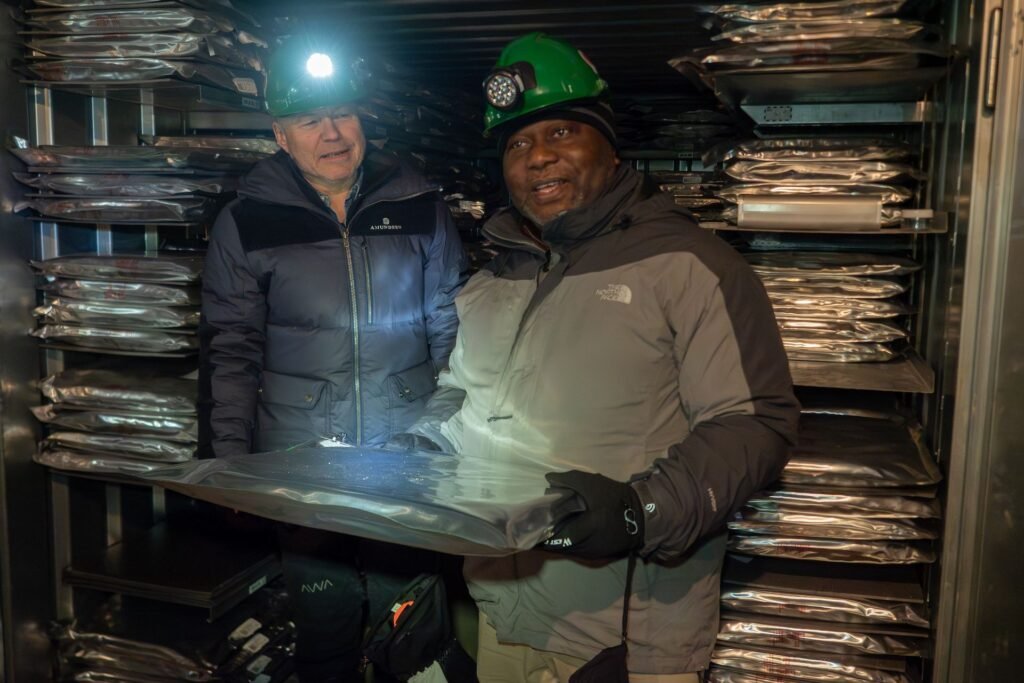
The International Treaty on Plant Genetic Resources for Food and Agriculture marked a historic week with new deposits at the Svalbard Global Seed Vault and the Arctic World Archive. For the first time, olive genetic resources were secured in Svalbard, with 5,000 seeds from 59 accessions deposited by the International Olive Council. The nearby Arctic World Archive now houses digital records, legal texts, and knowledge that underpin global stewardship of these resources.
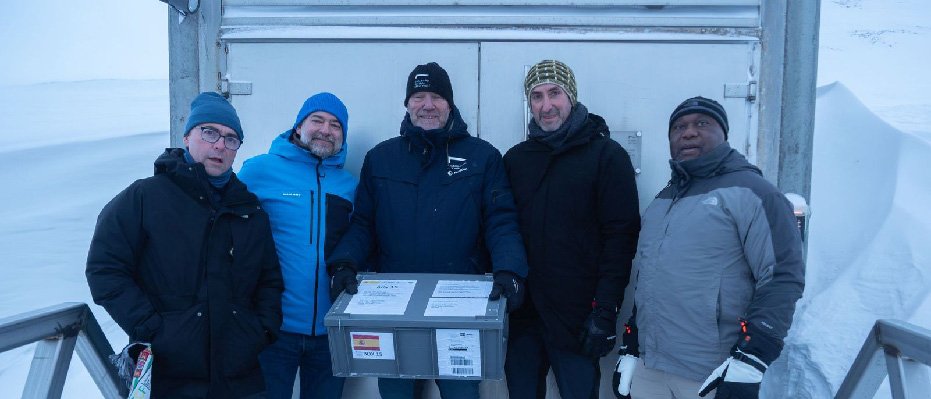
Storting representative Geir Pollestad has nominated the Seed Vault and key partners—including NordGen, Crop Trust, CGIAR, and the FAO—for the Nobel Peace Prize, highlighting the link between food security and global peace. The milestones underscore the strategic importance of crop genetic diversity as global infrastructure, while emphasizing the need for long-term funding, equitable access, and cooperation in the face of climate challenges.
This exclusive interview with Agrospectrum, explores the recent milestones achieved by the International Treaty on Plant Genetic Resources for Food and Agriculture, including the dual deposits at the Svalbard Global Seed Vault and the Arctic World Archive. It examines the strategic importance of crop genetic diversity as global infrastructure, the evolving role of commodity organizations in biodiversity governance, and the challenges of financing, cooperation, and digital sequence information in securing the world’s food systems. The discussion also looks ahead to the Treaty’s vision for 2035, focusing on strengthening political, operational, and financial frameworks to ensure resilience, equitable access, and the active use of plant genetic resources in a rapidly changing climate.
The Dual Arctic Milestone
The International Treaty has now secured both genetic material in the Svalbard Global Seed Vault and institutional knowledge in the Arctic World Archive. How do you see this dual protection strategy reshaping the global architecture of food security and multilateral cooperation?
This dual milestone reflects a fuller understanding of what resilience requires. Food security does not rest only on conserving seeds. It also depends on preserving the legal frameworks, institutional memory and shared knowledge that allow countries to cooperate in conserving and using those seeds over time.
By securing crop diversity in the Svalbard Global Seed Vault and preserving key records in the Arctic World Archive, we are protecting both the biological foundation of agriculture and the governance architecture that sustains it. One safeguards the material basis of adaptation. The other safeguards the continuity of cooperation.
In an era of accelerating climate risk and geopolitical uncertainty, that matters greatly. It signals that resilience is not only about storing resources, but also about protecting the systems of trust, law and collaboration that make those resources available for the common good.
A useful way to put it is this: seeds preserve options for the future, and institutions preserve our ability to act on them together.
Crop Diversity as Strategic Infrastructure
As climate volatility intensifies, should crop genetic diversity now be considered critical global infrastructure, on par with energy grids or digital networks? What policy shifts are needed to elevate it to that level?
Yes, crop genetic diversity should increasingly be treated as strategic infrastructure. It is less visible than roads, power grids or digital cables, but it is just as foundational. Without genetic diversity, there is no durable pathway to crop adaptation, no sustained breeding progress, and no real resilience in food systems.
Every time a breeder develops a variety that tolerates heat, drought, salinity or emerging pests, that progress depends on access to diverse genetic material. In that sense, crop diversity is not a peripheral environmental concern. It is core productive infrastructure for humanity. It is truly an existential issue.
To elevate it to that level, several policy shifts are needed.
First, conservation systems such as genebanks, community seed systems and in situ conservation efforts must be funded as long-term public infrastructure, not as short-cycle projects.
Second, plant genetic resources need to be integrated more explicitly into national climate adaptation, food security and development planning.
Third, international exchange systems must remain functional, predictable and trusted, because no country is self-sufficient in the diversity it will need.
We would never leave an electricity grid to chance. We should not treat the biological infrastructure of food security any less seriously.
From Conservation to Utilisation
Safeguarding seeds is essential, but ensuring their active use is equally critical. How is the Treaty strengthening the link between conservation, farmer access and innovation pipelines, particularly in climate-vulnerable regions?
That is exactly the right framing. Conservation is indispensable, but conservation alone is not enough. Diversity must be conserved in ways that keep it accessible, relevant and usable.
The International Plant Treaty helps strengthen that link in several ways. Through the Multilateral System, it facilitates access to plant genetic resources for research, breeding and training. That is essential for moving diversity from storage into practical use. Through the Benefit-sharing Fund, it supports projects that connect farmers, local institutions, researchers and national systems in the conservation and sustainable use of crop diversity, often in regions facing high climatic stress.
In climate-vulnerable regions, the key is to close the loop between conservation, selection, breeding and farmer use. We need systems in which local varieties and farmer knowledge inform research agendas, and where improved materials and information flow back to farming communities in forms they can use. Innovation should not be seen as something separate from farmers. Farmers are part of the innovation system.
The real measure of conservation is not what sits on a shelf or in cold rooms, but what remains alive in farmers’ fields, gets used in breeding programmes and supports our food systems.
The Olive Breakthrough
The historic olive accession deposit in collaboration with the International Olive Council signals deeper institutional alignment. What does this milestone reveal about the evolving role of commodity bodies within global biodiversity governance?
This is a very significant development. It shows that commodity bodies are not only sectoral actors concerned with production and markets. They can also be important stewards of genetic diversity and strategic partners in the broader governance of agrobiodiversity.
The olive deposit demonstrates that commodity-specific institutions and multilateral biodiversity frameworks do not operate in separate universes. On the contrary, they can reinforce one another. Such bodies often bring technical expertise, sectoral legitimacy and close connections to producer communities. When those strengths are aligned with wider international frameworks such as the Treaty, the result can be more coherent and more effective conservation action.
It also reflects an important evolution in thinking. Crop diversity is no longer seen only as the domain of genebanks or environmental institutions. It is increasingly recognized as a strategic asset for entire value chains and production systems. That creates new opportunities for collaboration.
What this milestone shows is that biodiversity governance becomes stronger when specialized institutions see genetic diversity not as a side issue, but as part of their core mandate.
Financing the Future of Diversity
The Benefit-sharing Fund has supported smallholder-driven conservation in the Sahel, Guatemala and beyond. Is the current global financing model sufficient to sustain long-term crop diversity protection, or is a new funding paradigm required?
The honest answer is that while current financing remains important, but it is not yet sufficient. There is no question that the Benefit-sharing Fund has demonstrated real value. It has supported practical, locally grounded work that strengthens conservation, supports farmers and reinforces resilience in vulnerable settings. But the scale of the challenge is growing faster than the scale of available finance.
Crop diversity underpins global food security, climate adaptation and agricultural innovation. Yet financing for its conservation and sustainable use remains fragmented, often short-term and still below what is required. A stronger and more durable funding paradigm is needed, one that treats plant genetic resources as a global strategic asset worthy of sustained public and collective investment.
That means broadening the funding base, increasing predictability, and making a stronger case to climate, biodiversity and development finance communities that crop diversity is not a niche concern. It is an enabling condition for long-term resilience.
Geopolitics and Seed Sovereignty
In an era of rising geopolitical fragmentation, how resilient is the Treaty’s Multilateral System? Are nations strengthening cooperation around plant genetic resources, or becoming more protective?
Both dynamics are present, and that is precisely why the Multilateral System matters. There is clearly a stronger language of sovereignty in many policy arenas, including around genetic resources and data. Countries want assurance that their resources will not simply flow outward without fairness, recognition or benefit-sharing. That concern is understandable.
At the same time, the reality is that no country can secure its food future in isolation. Agriculture everywhere depends on crops and traits that have travelled across borders over centuries. Climate change is making that interdependence even more pronounced. So while there may be greater caution and greater political sensitivity, there is also a growing recognition that cooperation is not optional.
The resilience of the Multilateral System lies in the fact that it offers a rules-based way to manage this interdependence. It does not erase sovereignty. It operationalizes cooperation within an agreed framework. The challenge now is to ensure that the system remains credible, balanced and sufficiently responsive to contemporary expectations of fairness.
Seed sovereignty and international cooperation should not be framed as opposites. In practice, durable sovereignty increasingly depends on effective cooperation.
Digital Sequence Information (DSI)
The debate around digital genetic data is intensifying globally. How is the Treaty positioning itself to ensure equitable access and benefit-sharing in a world where crop genomes can be transmitted digitally across borders?
This is one of the most important governance questions now facing the international system. Scientific and technological change has made it possible to derive value from genetic resources through digital information flows that do not always involve physical transfer of material in the traditional sense. That creates clear opportunities for research and innovation, but it also raises legitimate concerns about equity, benefit-sharing and the future integrity of existing multilateral arrangements.
The Treaty has to engage this issue with seriousness and pragmatism. The objective should not be to impede science. It should be to ensure that scientific progress remains anchored in fairness, trust and international cooperation. If the governance system does not adapt, there is a risk that confidence in multilateral exchange arrangements will erode.
Positioning the Treaty well in this area means contributing constructively to international discussions, clarifying how digital developments affect access and benefit-sharing, and exploring approaches that preserve both openness in research and equity in outcomes. The central principle must remain that the benefits arising from the use of plant genetic resources, whether physical or digital, should support the collective system that makes innovation possible in the first place.
The question is not whether science will move into the digital domain. It already has. The question is whether governance will evolve quickly enough to keep cooperation fair and credible.
The Next Decade: A Strategic Vision
Looking ahead to 2035, what structural reforms or innovations must occur within the International Treaty framework to ensure it remains fit for purpose in a hotter, more uncertain world?
By 2035, the Treaty will need to be stronger in three respects: politically, operationally and financially.
Politically, it will need to maintain broad confidence that multilateral cooperation on plant genetic resources remains fair, relevant and responsive to present-day realities, including new technologies and heightened concern about equity.
Operationally, it will need stronger links between conservation, use, farmer engagement, data systems and innovation pathways, so that the system is not only preserving diversity but actively mobilizing it for resilience.
Financially, it will need a more robust and predictable support base for benefit-sharing, capacity development and long-term conservation.
There is also a deeper strategic shift required. Crop diversity can no longer be treated as a specialized issue sitting at the margins of agriculture policy. It has to be recognized as central to climate adaptation, food security, nutrition, resilience and peace. The Treaty is well placed to help make that case, but it must continue to evolve institutionally and programmatically to match the scale of the challenge.
The Treaty must remain not only a guardian of inherited diversity, but a platform for future resilience. That is the task for the coming decade.
— Suchetana Choudhury (suchetana.choudhuri@agrospectrumindia.com)