Monday, 15 June 2026

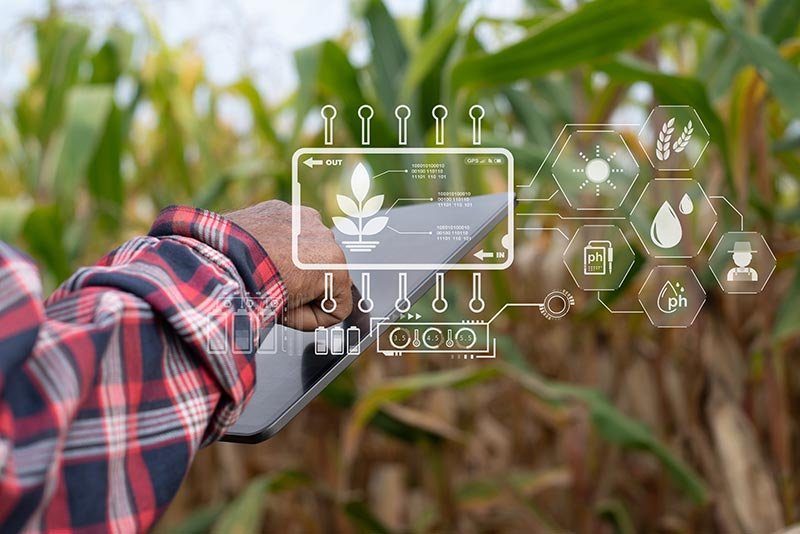
Agritech and sustainability firms cite clearer policy signals on digital agriculture, post-harvest value addition, and ecology-driven livelihoods
Industry leaders across agribusiness and sustainability have welcomed the Union Budget 2026–27, describing it as a forward-looking framework that strengthens farmer incomes, accelerates digital agriculture, and embeds ecological stewardship into India’s long-term growth strategy.
Commenting on the Budget, Amith Agarwal, Co-founder and CEO, StarAgri, said the policy thrust on technology, high-value agriculture, and farmer-centric digital infrastructure marks a decisive step toward knowledge-driven farming.
“This is a progressive Budget for Indian agriculture. Under Bharat VISTAAR, the introduction of a multilingual AI tool within the AgriStack is a major step toward scientific, knowledge-driven information sharing with farmers. By making high-quality agricultural data and intelligence accessible in local languages, farmers will be able to make better decisions across the entire crop cycle—from seeds and fertilisers to crop planning, nutrient management, weather-linked risks, and post-harvest actions,” Agarwal said.
He added that technology will play a defining role in shaping future farm incomes.
“Technology will be the most significant enabler of farmer income in the coming decade. As digital affordability rises, intelligent agriculture—through geotagging, yield prediction, and AI-led advisory—will strengthen the ability of integrated agritech startups like ours to deliver precision services at scale. The Finance Minister’s clear articulation of enhancing farmer income as a core priority is encouraging,” he noted.
Agarwal also highlighted the Budget’s focus on diversification and rural enterprise.
“The thrust on high-value agriculture, including crops such as coconut, cashew, almonds, and pine nuts, will support farmers in shifting from traditional staples to higher-value commodities like lentils and mustard, backed by improved post-harvest value addition. Initiatives such as SHE-Mart, which enable rural women to run retail outlets through access to credit, will further energise local agri-economies. Overall, this Budget strengthens India’s agricultural transformation and supports the nation’s journey toward becoming the world’s largest economy,” he said.
Welcoming the Budget from an environmental and sustainability perspective, Amit Banka, Founder and CEO, WeNaturalists, described it as a defining moment for nature-led development.
“The Union Budget 2026–27 is a landmark declaration that nature and development are no longer in conflict; they are now the twin engines of India’s growth story. What was once dismissed as ‘ecological sensitivity’ has now been elevated to a national Kartavya,” Banka said.
He noted that the government’s emphasis on nature-based infrastructure opens new avenues for conservation-linked livelihoods.
“The commitment to develop ecologically sustainable mountain trails from the Himalayas to the Western Ghats, and turtle trails along coastal nesting sites, is a visionary move. It transforms conservation from a silent struggle into a vibrant, nature-positive profession,” he added.
Banka further highlighted the Budget’s focus on skills, waterways, and climate-aligned infrastructure.
“The government’s thrust on upskilling 10,000 guides and operationalising 20 national waterways—starting with National Waterway-5 in Odisha—creates a significant opportunity for people whose livelihoods are rooted in nature to contribute to the 7 per cent GDP growth momentum. By integrating high-speed rail as growth connectors and establishing rare earth corridors, the Budget moves India from climate rhetoric to a meticulous, auditable reality,” he said.
Concluding his remarks, Banka emphasised the Budget’s inclusive vision.
“For NGOs and enterprises in this ecosystem, the road to Atmanirbharta is now inclusive and resilient. This Budget ensures that as India advances toward becoming a developed economy, it does so by placing its relationship with nature at the very core of its prosperity,” he said.