Thursday, 2 July 2026

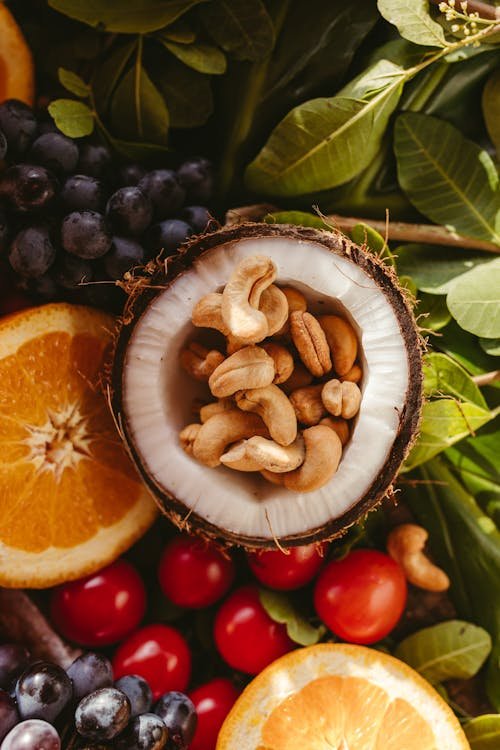
Places high-value crops at the centre of India’s agricultural strategy, recognising their potential to enhance rural livelihoods, strengthen exports, and support sustainable farm incomes.
Union Budget 2026 positions high-value crops at the centre of India’s agriculture-agribusiness strategy, recognising their potential to boost rural incomes, expand value chains, enhance exports, and promote farm diversification. By focusing on coconut, cashew, cocoa, sandalwood, agar, walnuts and almonds, the Budget aims to transform primary cultivation into market-ready, high-margin agribusiness clusters.
Coconut Promotion: Linking Livelihoods to Agribusiness
With over 30 million people dependent on coconut cultivation, the Budget introduces a Coconut Promotion Scheme targeting productivity enhancement, replacement of non-productive trees with high-yield saplings, and improved post-harvest management. By integrating these interventions with processing, grading, packaging, and market linkages, coconut cultivation shifts from subsistence-level farming to a commercially viable agribusiness, creating higher farm-gate incomes and stable employment in rural clusters.
Analytically, this scheme addresses three critical bottlenecks in agribusiness:
Productivity gaps, through modern saplings and agronomic practices.
Post-harvest inefficiencies, reducing losses and improving quality.
Market integration, linking producers to domestic and export markets.
Cashew, Cocoa and Export-Driven Agribusiness
Budget 2026 proposes a dedicated program for cashew and cocoa to promote Aatmanirbharta in high-value tree crops. The program emphasises high-density planting, improved agronomy, mechanisation of post-harvest operations, and the creation of export-ready clusters.
From an agribusiness perspective, this initiative enhances:
Traceability and quality compliance, enabling India to meet stringent international standards.
Value addition, through processing, packaging and branding of cashew and cocoa as premium global products.
Cluster-based growth, where production, processing, logistics, and marketing are co-located to achieve economies of scale and higher margins.
Such integration ensures that farmers are not just primary producers, but participants in profitable value chains with direct exposure to domestic and international markets.
Sandalwood, Agar and Niche Forest Products
For high-value forest crops, Budget 2026 focuses on post-harvest processing, quality assurance, and market linkages, particularly in the Northeast. By professionalising the supply chain for sandalwood and agar, the Budget seeks to unlock premium pricing in domestic and export markets, while creating employment opportunities in processing units, storage, logistics and trade.
This reflects a deliberate strategy of farm-to-market agribusiness integration, ensuring that niche crops generate sustainable income streams and stimulate regional economies.
Diversification Through Tree Crops
High-density cultivation of almonds and cashew is encouraged to diversify farm income and reduce reliance on traditional staples. The approach links production, processing, branding, and export promotion, creating sustainable, high-value agricultural clusters. By adopting cluster-based agribusiness models, farmers can participate in downstream segments such as milling, packaging, and branding, thereby capturing a larger share of final product value.
Strategic Payoff: Farm Productivity Meets Agribusiness
Budget 2026 positions high-value crops as the interface between agriculture and agribusiness, delivering:
Higher productivity through improved planting material and agronomic practices.
Value addition and market access, transforming raw produce into export-grade commodities.
Rural livelihood stabilization, through diversified income sources and integrated value chains.
Global competitiveness, by positioning India as a leading supplier of premium tree crops.
By embedding agribusiness principles into crop policy, the Budget transforms high-value crops from income supplements into engines of rural economic growth, enhancing both the farm economy and India’s global agricultural brand.
— Suchetana Choudhury (suchetana.choudhuri@agrospectrumindia.com)