Saturday, 18 July 2026


A second-generation planter and AI researcher explains how lived plantation wisdom, satellite intelligence, and public–private collaboration are reshaping Indian coffee from the ground up
In an exclusive interview with Agrospectrum, Sooraj Kandathil Babu, Founder & CEO of NeuBiom Labs and a second-generation coffee planter with a deep research background in AI, explains how lived estate experience shaped Canopy, a satellite- and AI-driven crop intelligence platform built for real plantation decisions. He discusses how Canopy converts traditional field intuition into digital twins that strengthen climate resilience, improve quality consistency, and enable traceability and collective bargaining for growers and FPOs. The conversation also highlights why affordable deep tech, public–private collaboration, and long-term data partnerships are essential to stabilising incomes and future-proofing Indian coffee amid increasing climate volatility.
From Estate to Algorithm
You are a second-generation coffee planter building a deep-tech platform rooted in satellite intelligence and AI. What specific pain points from your own plantation experience shaped Canopy’s architecture, and how did you translate traditional field intuition into a scalable digital “crop intelligence” model ?
Most people experience coffee only as a finished product, something ordered at a café or picked off a supermarket shelf. What remains largely invisible is the one-year crop cycle that shapes that cup. When you spend time on plantations, the contrast becomes stark. I have seen two adjacent estates, with similar soil and climate, produce vastly different outcomes, one yielding 15 bags per acre, the other nearly double. The difference is rarely geography; it is almost always practice. How growers observe their farms, when they intervene, and how consistently they follow scientific cultivation principles.
That gap in outcomes was the first pain point that shaped Canopy’s architecture. Traditional plantation wisdom is rich, but it is often unrecorded. We began by digitising this intuition through what we call a plantation journal, a structured cultivation diary that captures day-to-day farm activities. These records are then analysed alongside local weather patterns and satellite-derived plantation health indicators, allowing us to correlate practices with outcomes and provide context-specific advisories rather than generic recommendations.
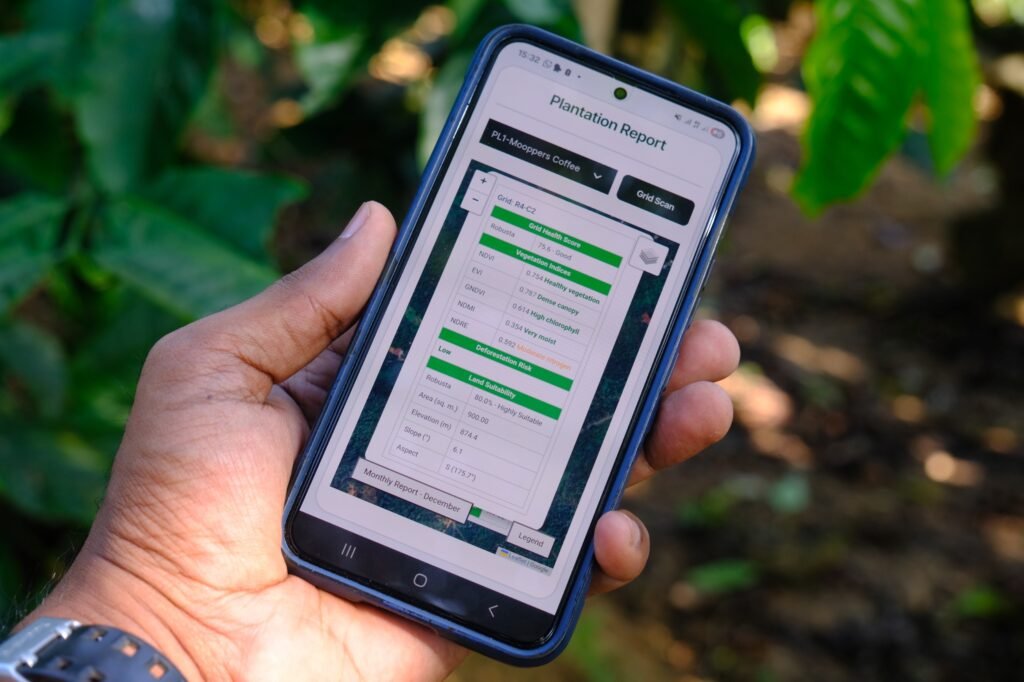
The second challenge is climate resilience. Coffee is a climate-sensitive crop grown predominantly in regions already exposed to significant climate risk. Multiple studies indicate that many current coffee-growing regions could become unsuitable by 2050 if cultivation practices remain unchanged. This makes climate-resilient growing not optional, but essential. Canopy maps how each grower approaches cultivation and aligns those practices with globally recognised sustainable frameworks, translating abstract climate principles into actionable, plot-level guidance.
Quality and market value form the third pillar. Our goal is not to turn every grower into a specialty coffee producer overnight, but to enable clusters of growers to achieve uniform, reliable quality over time. Through Farmer Producer Organisations (FPOs), a standardised package of practices can be deployed across hundreds of farms, improving outturn, grading consistency, and ultimately bargaining power in trade. Canopy supports this with transparent, traceable data that builds credibility across the value chain.
Finally, there is technology adoption itself. Agriculture has long lagged behind other sectors in leveraging data and digital tools, despite being one of the most foundational industries. We believe technology, when applied sensibly and with a low barrier to entry, can only strengthen farming systems. Data-driven agriculture has proven its value globally; our focus is on adapting it to Indian conditions, starting with coffee, and earning trust gradually as growers see tangible benefits on their land.
Canopy is, at its core, an attempt to translate field-level intuition into scalable crop intelligence, bridging the gap between estate wisdom and algorithmic insight, while keeping the grower firmly at the centre of the system.
To add to that, both the founders of NeuBiom Labs come from a strong research background in artificial intelligence and user-centered engineering. My co-founder, Dr. Sooraj Krishna, holds a PhD in AI from Sorbonne University in France, and I am in the final stages of completing my PhD in AI at the University of Würzburg in Germany. In many ways, NeuBiom Labs is the outcome of applying rigorous academic research to the foundational problems we encounter every day on the ground, bridging deep science with real-world agricultural challenges.
The Digital Twin Question
Canopy creates a “digital twin” of each coffee plot. For growers and industry stakeholders, what decisions become materially better with this digital twin, yield forecasting, pest management, climate risk, or input optimisation, and where have you seen the strongest early impact?
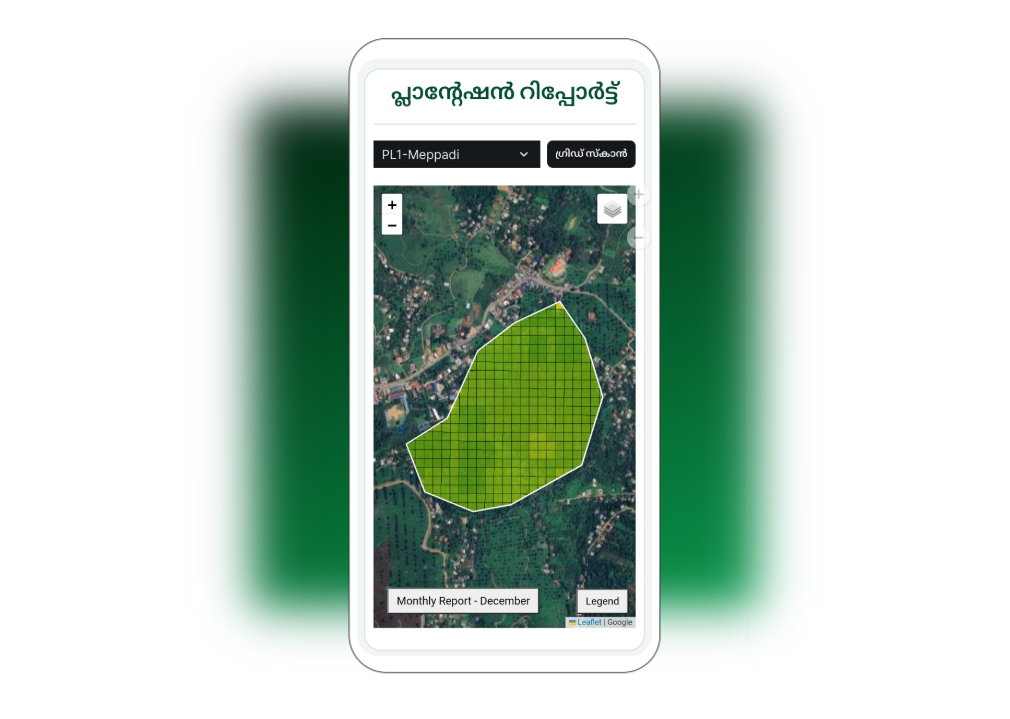
The real value of a digital twin is not in any single metric, but in how it improves decision-making across the crop cycle. For growers, Canopy’s digital twin functions as a living health report of each plot. It brings together local weather patterns, satellite-derived vegetative indices, soil indicators, and on-ground cultivation practices into a single, coherent view of plantation health. This allows growers to clearly understand what is affecting their crop and where intervention is needed. Based on this, the system recommends context-specific practices and provides short-term weather forecasts that help growers time their operations more effectively.
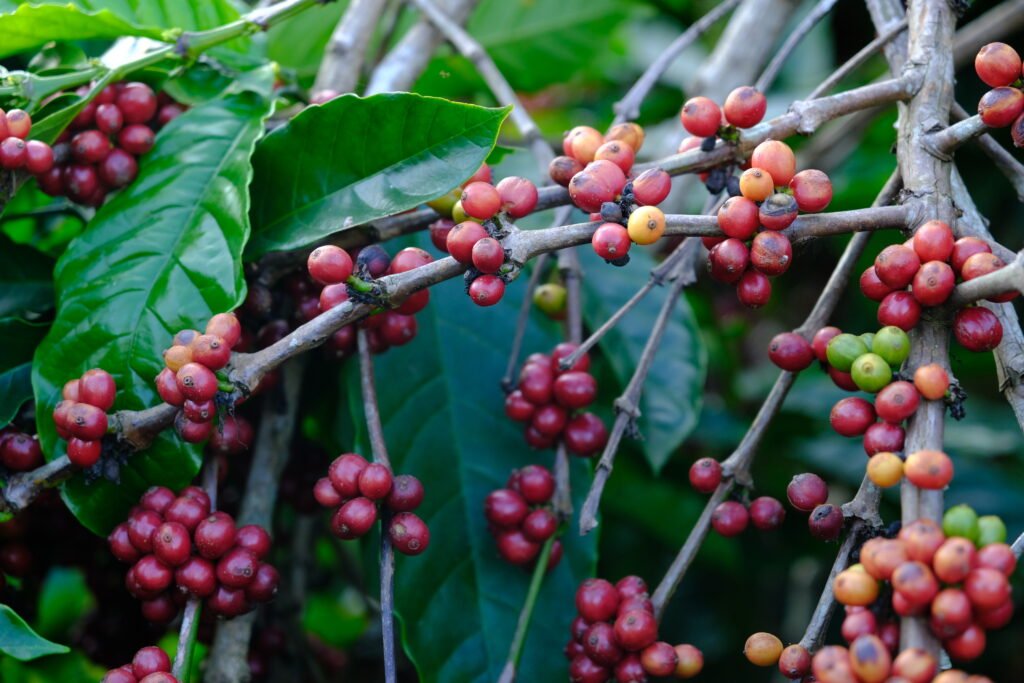
For FPOs and grower collectives, the digital twin operates at a different scale. Instead of managing farms in isolation, FPOs gain a portfolio-level view of member plantations through comparable health and activity scores. This makes it possible to benchmark performance across growers, identify gaps early, and align field activities with organisational goals. For example, an FPO aiming to promote organic or low-input cultivation can push standardised practices across its members and monitor adoption over time. This structured approach significantly improves consistency in quality and outturn, which directly strengthens collective bargaining power in the market.
At this stage, our strongest early impact has been in plantation visibility, practice standardisation, and operational planning for growers and FPOs. Coffee’s annual crop cycle means that advanced outcomes such as yield forecasting, early disease detection, and precise input optimisation require longitudinal data. As we complete full-cycle datasets across a growing number of plantations, these capabilities naturally become more robust and predictive.
Ultimately, the digital twin evolves from a monitoring tool into a decision-confidence layer, supporting not just growers and FPOs, but also future stakeholders across trade, finance, and compliance, once the system is grounded in real, season-long plantation intelligence.
Affordable Deep Tech: The Rs 2,999 Disruption
Enterprise-grade crop intelligence globally is often priced far beyond the reach of smallholders. How did NeuBiom Labs engineer a platform that delivers satellite, AI and hyperlocal insights at Rs 2,999 per crop cycle without compromising data accuracy or depth?
Affordability was not an afterthought for us; it was a design constraint from day one. If we want meaningful outcomes such as early disease detection or reliable yield forecasting, the system has to achieve wide-scale adoption. That simply isn’t possible if enterprise-grade crop intelligence remains priced beyond the reach of small and mid-sized growers.
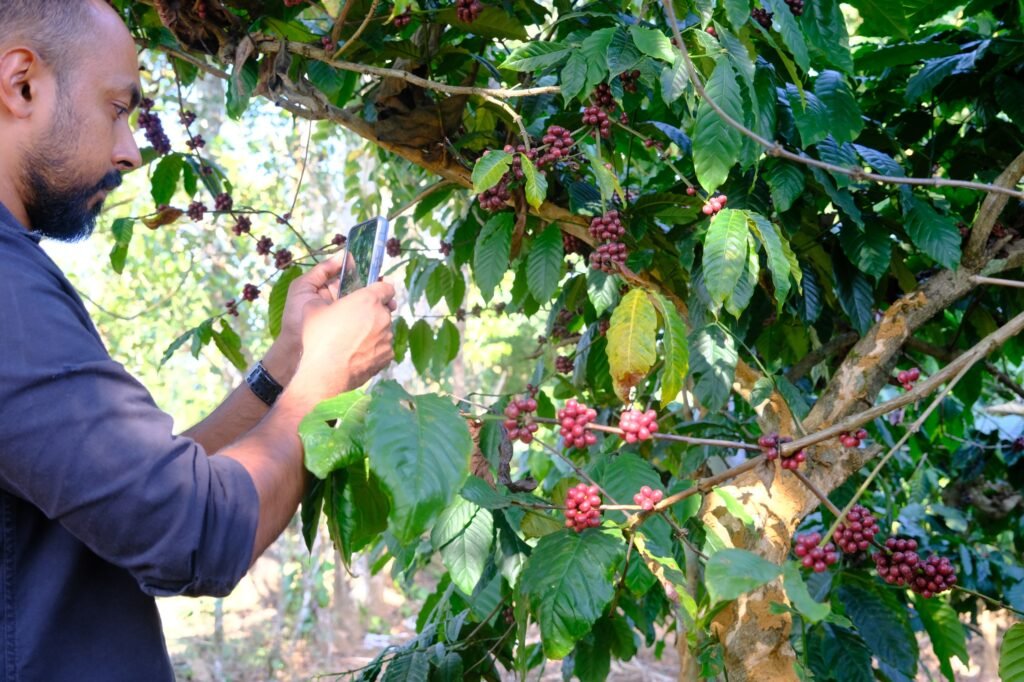
A large part of how we achieve this is through ecosystem leverage. NeuBiom Labs is incubated at the Atal Incubation Center at the Coffee Board of India, and the Agri Business Incubator at Kerala Agriculture University, and we are also part of the Google for Startups India. These institutions provide critical support in the form of infrastructure, cloud credits, research access, and grants, which allow us to subsidise costs during the adoption phase without compromising on data quality or analytical depth.
Equally important is how we’ve engineered the platform itself. We made a conscious decision not to over-engineer the stack. Instead of building complex, expensive systems that look impressive on paper, we focused on crisp, purpose-driven tools that directly serve agronomic decision-making. This keeps compute costs low, workflows efficient, and insights actionable, ensuring the stakeholders pay only for value they can actually use.
User-centred engineering is the third pillar. Over the past year, we co-developed Canopy alongside 23 progressive coffee growers, spending extensive time on plantations to understand how decisions are made in real conditions. This helped us strip away unnecessary complexity and design interfaces and insights that align with how growers think and operate, rather than forcing them to adapt to technology.
Ultimately, the Rs 2,999 pricing is not about undercutting the market, it’s about building trust and momentum. Once growers experience the tangible benefits of data-driven cultivation, we see compounding impact: better practices, improved quality and yield, richer datasets, and increasingly powerful intelligence across seasons. That virtuous cycle is what allows deep tech to remain both affordable and scalable in Indian agriculture.
Climate Volatility and Coffee’s New Risk Curve
Indian coffee faces increasing stress from erratic rainfall, temperature spikes and pest outbreaks. How does Canopy move beyond reactive advisories to predictive risk management, and can it realistically stabilise incomes for small and marginal coffee growers?
True, climate volatility has fundamentally altered the risk curve for coffee in India. Erratic rainfall, temperature spikes, and shifting pest dynamics are no longer exceptions, they are the new normal. Yet, despite these changes, a large proportion of small and marginal growers continue to rely on traditional calendars and inherited practices that were designed for a far more stable climate.
Canopy moves beyond reactive advisories by anchoring decision-making in context. Each plantation is geo-tagged, allowing advisories to be localised rather than regional averages. More importantly, like we discussed before, the system continuously maps the grower’s cultivation practices through a structured plantation journal and correlates these actions with evolving local weather patterns and plantation health indicators. Advisories are generated not just based on “what the weather is,” but on how the grower is farming under those conditions.
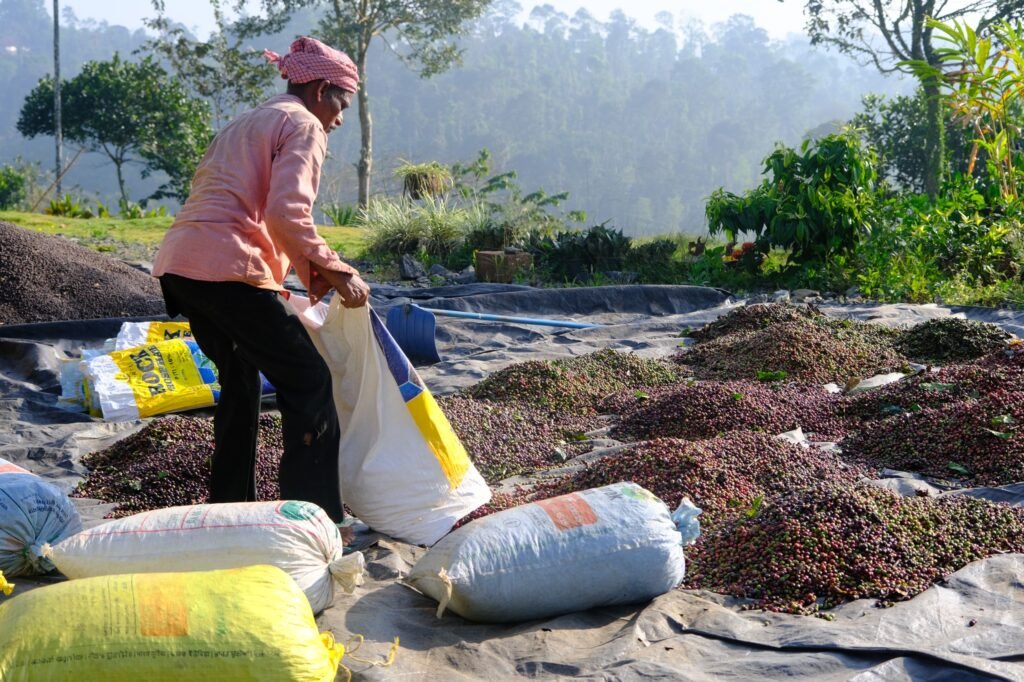
This is where predictive risk management begins. Instead of responding after damage occurs, growers start to see patterns, how certain practices amplify climate stress, while others buffer against it. Our systems are trained on authenticated and certified coffee cultivation practices relevant to Indian conditions, ensuring that recommendations are agronomically sound and locally applicable.
The impact is not instantaneous. Climate resilience is built over a crop cycle, not in a single intervention. But as growers become more aware of ground realities and begin making data-driven decisions, timing operations better, adjusting inputs, and avoiding unnecessary stress on the plant, we see measurable improvements in crop health, consistency, and outturn. Over time, this translates into better quality and more predictable volumes, which directly strengthens growers’ bargaining power.
Income stabilisation, especially for smallholders, becomes far more realistic when this approach is adopted at scale, ideally through FPOs or farmer collectives. At the collective level, risk is no longer borne by isolated individuals. Uniform practices, shared intelligence, and aggregated quality enable more stable market positioning, even in volatile climatic conditions.
NeuBiom Labs or Canopy does not claim to eliminate climate risk. What it does is convert uncertainty into informed action, helping growers shift from reactive survival to proactive resilience, one crop cycle at a time.
From Farm to Federation: Scaling Beyond the Plot
Farmer Producer Organisations, cooperatives and boards need aggregated intelligence, not just farm-level dashboards. How does Canopy translate dispersed plot-level data into decision-grade insights for institutions managing thousands of growers across regions?
We see this challenge very clearly, and addressing it is central not just to Canopy, but to the broader mission of NeuBiom Labs. If you look at a region like Wayanad alone, there are over 60,000 coffee growers. Yet how they cultivate, the practices they follow, the health of their plantations, and their evolving responses to climate stress remain largely undocumented and fragmented. This makes coordinated intervention at an institutional level extremely difficult.
As a side note, this also means, the traditional and indigenous knowledge our seniors developed with their years of experience on the ground are undocumented. These insights exist largely in memory and practice, not in records. If this knowledge is not captured now, an entire generation of experiential wisdom risks being lost. In parallel with building Canopy, we are consciously working to document and structure this lived knowledge, so future growers have a foundation to build on rather than starting from scratch.

Canopy is intentionally designed as a layered intelligence stack, not just a farm dashboard. The mobile app and institutional dashboard are only the visible interfaces. Beneath them sits a core AI layer that includes domain-specific GIS inference engines and a language model fine-tuned exclusively for coffee cultivation. This layer synthesises dispersed plot-level data, activities, health indicators, weather exposure, and spatial patterns, into structured, comparable signals.
As adoption scales, this enables institutions such as FPOs, cooperatives, and boards to move from anecdotal understanding to evidence-backed decision-making. Instead of asking what is happening, they can ask why it is happening, where intervention will have the highest impact, and which practices consistently produce better outcomes. This allows for region-wise benchmarking, optimisation of input distribution, targeted extension efforts, and early identification of systemic risks affecting quality or yield.
More importantly, this intelligence operates upstream. Institutions can intervene at the practice level, well before harvest, by pushing standardised packages, adjusting advisory focus, or aligning growers toward specific quality or sustainability goals. Over time, this can raise average yield per region, improve uniformity of produce, and significantly strengthen market positioning.
What Canopy offers today is the foundation, bringing stakeholders into a shared, data-driven framework for farming. The stack is deliberately built to evolve. As datasets mature across full crop cycles and adoption deepens, the intelligence shifts from descriptive to predictive, and from operational support to strategic planning. In that sense, scaling beyond the plot is not an add-on feature; it is the natural outcome of designing agriculture as a system rather than a collection of isolated farms.
Traceability as a Trade Weapon
With Europe and other premium markets tightening sustainability, deforestation and origin norms, traceability is fast becoming non-negotiable. How does Canopy’s end-to-end tracking position Indian coffee against competitors like Brazil, Vietnam and Colombia in compliance-heavy global markets?
India is currently classified as a low-risk origin under emerging regulations such as the EU Deforestation Regulation (EUDR). However, low risk does not automatically translate into market access, especially in premium and compliance-heavy export markets that are increasingly dominated by large, vertically integrated players. For India’s predominantly smallholder-driven coffee sector, traceability becomes the key enabler to participate on equal footing.
Canopy positions traceability not as a post-harvest paperwork exercise, but as a cultivation-first system. Wide adoption of the Canopy stack allows FPOs to standardise coffee cultivation practices across hundreds of small growers, while ensuring farm-level quality control and transparent activity records. This creates verifiable evidence of how coffee is grown, not just where it comes from.
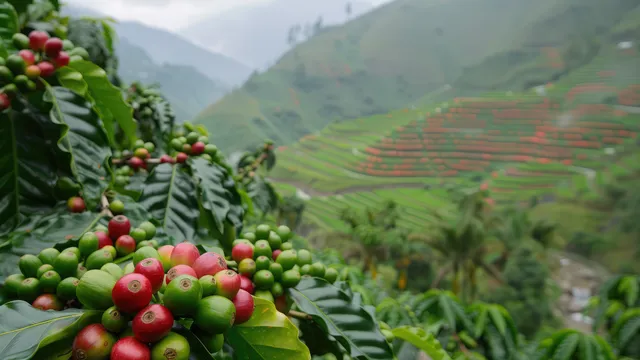
From a global trade perspective, this is critical. Competing origins like Brazil, Vietnam, and Colombia benefit from scale, mechanisation, and consolidated supply chains. India’s strength lies elsewhere, in shade-grown systems, biodiversity-friendly cultivation, and smallholder domination. Canopy translates these inherent advantages into structured, auditable data that buyers and regulators can trust.
By maintaining traceable records from plot-level practices through harvest, the platform will soon support compliance with EUDR and other sustainability frameworks, while simultaneously building credibility for certifications and responsible sourcing claims. Over time, this shifts Indian coffee from being viewed as a fragmented supply to a verified, institutionally backed origin, capable of commanding premium pricing rather than competing purely on volume.
As the Canopy ecosystem matures, its stakeholders naturally expand, from growers and FPOs to exporters, buyers, financiers, and compliance bodies, each drawing value from the same shared source of truth. In that sense, traceability becomes more than a regulatory requirement; it becomes a strategic trade instrument that allows Indian coffee to compete, differentiate, and negotiate from a position of strength in global markets.
Public–Private Synergy in Agri-Tech
Canopy’s launch at the CCRI centenary, with backing from the Coffee Board, AIC-CCRI and global ecosystem partners, signals a rare convergence of science, policy and start-ups. What role should public institutions play in accelerating the adoption of crop intelligence platforms at scale?
The support we’ve received so far has been exceptional and deeply collaborative. Institutions such as Kerala Startup Mission, the Agri Business Incubator at Kerala Agricultural University, the Atal Incubation Center at the Coffee Board, Google for Startups, Wadhwani Foundation, EarthOn Foundation, our academic institutions, and, most importantly, the growers and FPOs we work with, have all contributed meaningfully to Canopy’s evolution. This convergence of policy, science, and entrepreneurship is exactly what agriculture needs at this moment.
At a broader level, public institutions play a pivotal role in accelerating adoption of crop intelligence platforms by acting as trusted intermediaries. For most farmers, especially smallholders, technology adoption is not just a cost decision, it is a trust decision. When awareness and capacity-building programmes are led or endorsed by public institutions, it significantly reduces hesitation and shortens adoption cycles. Messaging around why data-driven cultivation matters, both in the short term for productivity and in the long term for climate resilience and market access, carries far greater credibility when it comes from institutional voices.

Beyond awareness, public institutions can act as scale catalysts. Financial support in the form of grants, pilot subsidies, or outcome-linked incentives for using intelligent farming systems can dramatically accelerate adoption without burdening growers. This is particularly important in early phases, where benefits accrue over a crop cycle rather than immediately.
Central bodies such as the Coffee Board of India and regional agricultural research centres can also serve as nodal intelligence hubs. By aggregating anonymised, region-level insights from platforms like Canopy, they can monitor ground-level deltas, identify systemic risks, refine extension strategies, and feed real-world data back into policy and research.
Ultimately, public institutions don’t need to build technology themselves, but they can create the conditions for it to scale responsibly. By combining trust, standard-setting, financial support, and feedback mechanisms, they can ensure that crop intelligence platforms move from isolated pilots to national agricultural infrastructure.
The Long View: Canopy Beyond Coffee
Is Canopy a coffee-specific solution, or the foundation of a broader plantation intelligence stack? Over the next five years, how do you envision NeuBiom Labs evolving, across crops, geographies, or even into climate-linked finance and sustainability certification ecosystems?
Today, Canopy is intentionally coffee-specific. Coffee is a climate-sensitive, globally traded crop with a long production cycle and complex stakeholder dynamics, which makes it an ideal starting point. But structurally, Canopy is designed as the foundation of a broader plantation intelligence stack, particularly for climate-sensitive cash crops where resilience, quality consistency, and traceability are becoming non-negotiable.
For us, technology is not the end goal; it is the accelerator. The real determinant of success lies in operations, how deeply and effectively we work with growers, FPOs, and institutional stakeholders on the ground. Agriculture does not lend itself well to a simple “build-and-sell” software model. Our belief is that meaningful outcomes emerge only when platforms like Canopy are deployed as long-term partnerships, where data, practices, and incentives evolve together over time.
Over the next five years, we see NeuBiom Labs expanding along three clear dimensions. First is geographic expansion, moving from regional depth to multi-region intelligence, where patterns and risks can be understood at landscape and corridor levels rather than isolated farms.

Second is crop expansion, applying the same intelligence framework to other climate-sensitive plantation crops that share similar characteristics: long gestation periods, smallholder dominance, and exposure to climate and market volatility.
The third dimension is ecosystem integration. As datasets mature across crop cycles, Canopy naturally becomes relevant to adjacent systems, climate-linked finance, sustainability certification, compliance reporting, and institutional risk assessment. When cultivation data is reliable, longitudinal, and traceable, it reduces uncertainty not just for growers, but also for buyers, lenders, insurers, and policymakers.
In that sense, Canopy’s long view is not about becoming a one-size-fits-all platform, but about enabling a shared, data-driven workflow across agriculture. As stakeholders evolve, the stack evolves with them, ensuring that value is created collectively, and that the benefits of intelligence compound across the entire agricultural ecosystem.
— Suchetana Choudhury (suchetana.choudhuri@agrospectrumindia.com)