Sunday, 12 July 2026

A symphony of medicinal plants and timber weaving prosperity into the soil
In the emerald fields of Devri, where teak and sandalwood rise like sentinels of prosperity, a new rhythm of farming is taking root. Farmers who once bent over paddy fields are now turning to medicinal plants and timber crops, guided by the vision of J.A.C.S. Rao, IFS (Retd.), Chief Executive Officer of the Chhattisgarh Tribal Local Health Traditions & Medicinal Plants Board, and encouraged by the political will of Vishnu Deo Sai, Chief Minister of Chhattisgarh. Together, they have championed a model where biodiversity is not only conserved but converted into livelihoods, where health and wealth grow side by side.
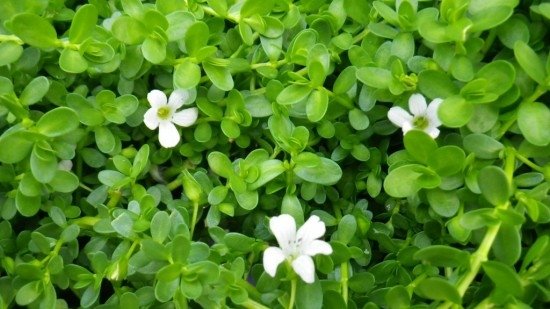
At the heart of this transformation lies Brahmi (Bacopa monnieri), a plant long revered in Ayurveda for its ability to sharpen memory and calm the mind. Under the Chief Minister’s promotion, Brahmi has emerged as a cash crop, a green alternative to rice. Its cultivation is simple yet profound: farmers employ the “plough and throw” technique, scattering shoots across the soil, and within months the fields shimmer with verdant carpets. On one acre, yields can reach two tonnes, translating into an income of over Rs 1.25 lakh annually. For smallholders, this means Rs 10,000–15,000 flowing steadily each month — a livelihood that is dignified, dependable, and far more rewarding than rice. The farmers have championed Brahmi and Bach (Acorus calamus), demonstrating how these plants can transform subsistence into surplus.
Yet Brahmi does not stand alone. It is woven into the grander tapestry of agroforestry, where medicinal plants and timber trees grow side by side, each complementing the other. Sangwan (poplar) rises tall, while teak (Tectona grandis), sandalwood (Santalum album), and mahogany (Swietenia mahagoni) anchor the soil with their promise of high‑value timber. Between their trunks, medicinal crops flourish — sarpagandha (Rauvolfia serpentina) intercropped with stevia (Stevia rebaudiana), Brahmi nestled beneath sandalwood, each plant contributing to a layered economy of health and wealth.
The arithmetic of this system is as elegant as its design. A hundred sandalwood trees, each valued at Rs 100, stand as long‑term assets, while Brahmi provides immediate cash flow. Timber matures over years, medicinal plants yield annually, and together they create a cycle of prosperity that is both resilient and regenerative. Farmers are no longer dependent on a single crop but cultivate landscapes that promise income today and wealth tomorrow.
For J.A.C.S. Rao, the philosophy is clear: medicinal plants are “health and wealth together.” In Devri, this vision is alive — Brahmi offers steady earnings, timber trees promise future fortunes, and intercropped species add diversity and depth. The fields are no longer just farms; they are living banks of biodiversity, where every leaf and trunk carries value.
For Vishnu Deo Sai, the promotion of Brahmi cultivation is more than an agricultural experiment; it is a policy shift. By encouraging farmers to move away from water‑intensive rice and towards medicinal crops, the state is addressing both economic and ecological challenges. Reduced water use, lower carbon footprints, and biodiversity conservation are natural outcomes of this transition.
This is the poetry of agroforestry in Chhattisgarh — a harmony of short‑term and long‑term returns, of medicinal plants and timber, of tradition and innovation. It is a model where farmers become lakhpatis not by chasing monocultures, but by cultivating abundance in layers. And in the fragrance of Brahmi leaves and the shade of sandalwood groves, one sees the future of farming: prosperous, sustainable, and profoundly beautiful.
— Suchetana Choudhury (suchetana.choudhuri@agrospectrumindia.com)