Wednesday, 1 July 2026

Grassroots innovation and integrated farming are reshaping rural Rajasthan, doubling incomes and restoring confidence among smallholders
In Rajasthan’s Rajsamand district, the Samadhan Project is transforming traditional farming through scientific practices, livestock improvement, and market linkages. Farmers like have seen incomes double, productivity rise by 30–40 per cent, and milk yields soar, while women are stepping into leadership roles. By weaving together crop diversification, hi‑tech vegetable cultivation, and organized milk procurement, the initiative addresses chronic inefficiencies of Indian agriculture. These stories reveal how targeted interventions can turn subsistence into prosperity, offering a scalable model for rural transformation across India.
Dawn in the Fields
The first light of dawn spills across the Aravalli hills, painting the fields of Rajasthan in hues of gold and rust. A faint mist clings to the furrows, where wheat stalks sway gently in the morning breeze. The air carries the earthy scent of soil freshly turned, mingled with the low murmur of cattle and the rhythmic splash of water from a distant pump. For generations, these fields have borne witness to toil and resilience, where farmers rose each day with hope in their hearts and uncertainty in their hands. Today, however, a new rhythm is emerging — one shaped by science, innovation, and the quiet determination of smallholders rewriting their destinies.
Seeds of Change in Rajasthan’s Heartland
In the rolling hills and dusty plains of Rajsamand, farming has always been a gamble. Rainfall was uncertain, markets unorganized, and incomes meager. Families survived on wheat, maize, and a few cattle, their lives defined by subsistence rather than prosperity. But in recent years, a quiet revolution has begun to ripple through these villages. The Samadhan Project, with its blend of scientific farming, livestock improvement, and market linkages, is rewriting the story of rural livelihoods.
From Struggle to Security
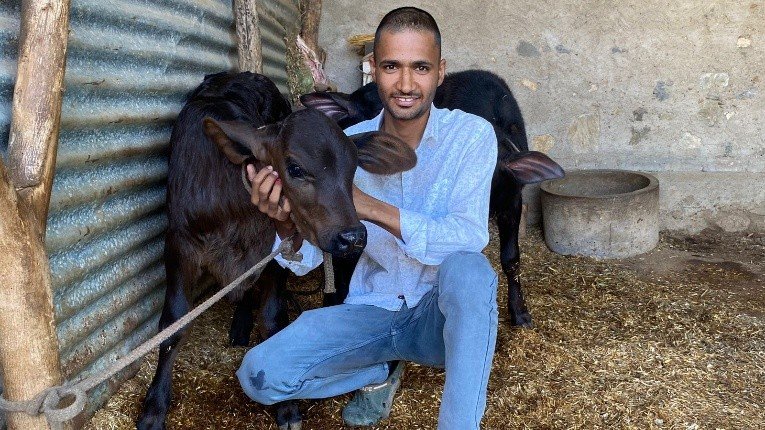
For Shankar Lal Dangi, a 32‑year‑old farmer from Chota Guda, farming once meant scraping by on Rs 6,000–7,000 a month. Milk sales were unorganized, payments irregular. Under Samadhan, he adopted seed treatment, organic fertilisers, and drip irrigation, while joining the Ghatawali Mataji Farmer Producer Organization (FPO). Crop residues became fodder, milk procurement became structured, and his integrated farming model began to thrive. His annual income doubled to Rs 2.33 lakh. “Earlier, it was difficult to manage household expenses through farming alone. Today, income from crops and milk has given us financial security and confidence,” he says, his voice carrying the relief of stability.
“Earlier, it was difficult to manage household expenses through farming alone. Today, income from crops and milk has given us financial security and confidence ” — Shankar Lal Dangi
The Power of Diversification
In Sindesar Kala village, Dinesh Puri Goswami had long relied on maize and wheat, earning just Rs 65,000–75,000 a year. High costs and low returns kept him trapped. Samadhan nudged him toward vegetables, providing kits and technical guidance. Raised‑bed nurseries, pest management, and Napier grass for fodder transformed his farm. Within four months, vegetables alone generated Rs 78,000, while milk income rose to Rs 12,000 a month. Diversification gave him not just higher earnings but resilience. “Modern farming methods and technical guidance have completely changed my approach,” he says, now a farmer who sees opportunity where once there was only struggle.
“Modern farming methods and technical guidance have completely changed my approach to agriculture and livestock management ” — Dinesh Puri Goswami
Innovation on the Trellis
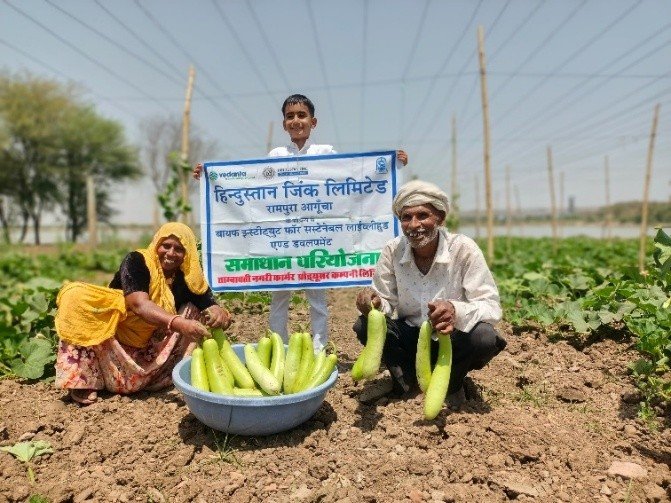
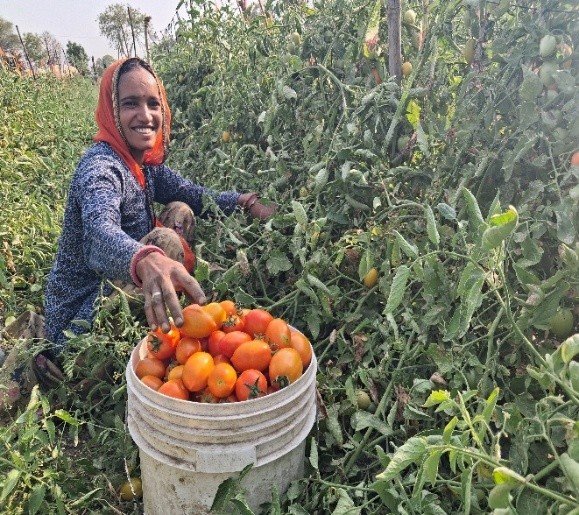
For Ashok Mali of Rampura, vegetables were always a risky bet — low productivity, high costs, uncertain markets. Samadhan introduced trellis farming for bottle gourd, and later hi‑tech tomato cultivation with drip irrigation. The results were dramatic: bottle gourd sales brought in Rs 14,000 a month, tomatoes earned Rs 36,500 in three months. His household finances stabilized, and his confidence soared. “With the support of Samadhan, I learned new farming techniques that increased my income and confidence,” he says, proof that innovation can turn fragile livelihoods into sustainable ones.
“With the support of Samadhan, I learned new farming techniques that increased my income and confidence,” — Ashok Mali
Livestock as a Lifeline
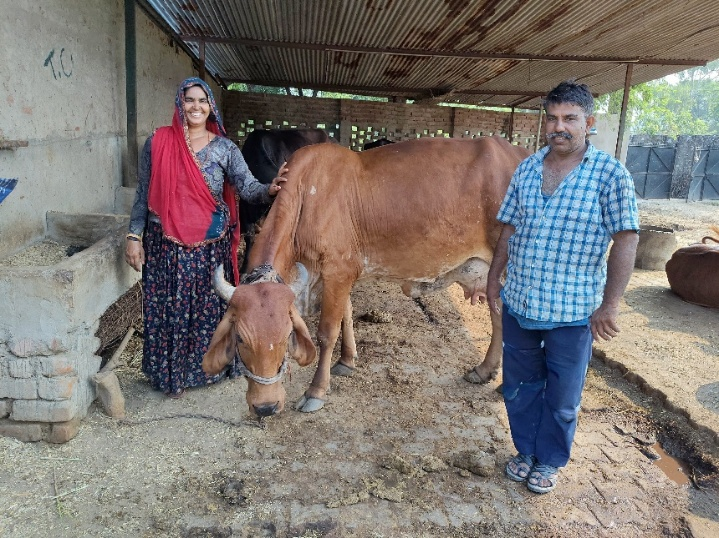
In Kheda Palola, Prahlad Jat owned indigenous cattle with low productivity. Traditional breeding yielded poor calves and limited income. Samadhan introduced artificial insemination with high‑quality semen, mineral supplements, and regular deworming. Milk production surged to 45 litres a day, monthly income reached Rs 68,400, and the sale of improved cattle added further revenue. For Prahlad, livestock became not just a sideline but a pillar of prosperity. “Improved livestock management has completely transformed our income and future,” he says, noting how his children’s education is now secure.
“Improved livestock management has completely transformed our income and future,” — Prahlad Jat
Women at the Forefront
The story of Gendi Bai from Ganeshpura shows how empowerment can begin in the fields. Once confined to low‑yield wheat and maize, she embraced drip irrigation, mulching, and high‑yield tomato and chilli varieties. One bigha of vegetables earned her Rs 90,000, recognition through the ATMA Award, and a cash incentive of Rs 10,000. Her journey is a reminder that modern agriculture is not just about productivity — it is about dignity and agency.
“I once relied only on wheat and maize, struggling to make ends meet. With drip irrigation and high‑yield vegetables, my farm now brings both income and recognition. Earning Rs 90,000 from just one bigha has given me confidence, and the ATMA Award showed that women farmers too can lead change in our villages.” — Gendi Bai
A New Generation of Progressive Farmers
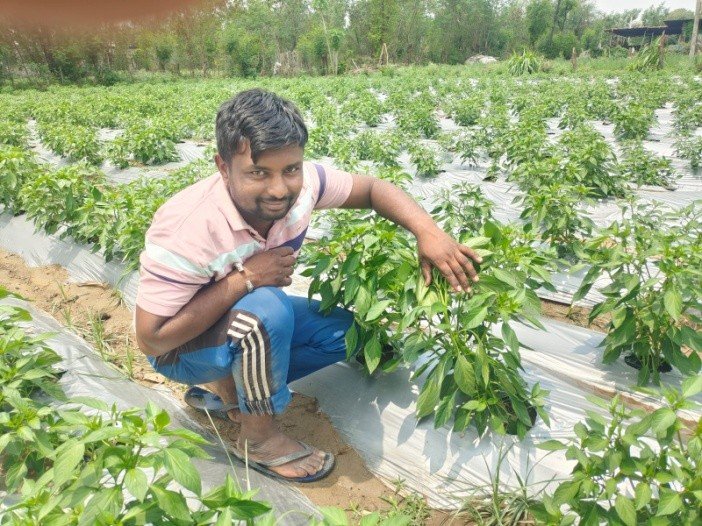
In Bamania Kala, Dhanraj Mali, 32, struggled with rain‑fed crops and an annual income of just Rs 50,000. Samadhan’s extension workers encouraged him to try hi‑tech vegetables. Within five months, chilli and tomato cultivation earned him Rs 1.5 lakh, monthly income rose to Rs 30,000, and improved livestock added further gains. He bought a motorcycle to transport produce and milk, a symbol of his new mobility and status. “Earlier, I cultivated only wheat and maize using traditional methods, which gave me limited income and no stability. After joining the Samadhan Project, I adopted hi‑tech vegetable farming and improved my livestock. Today, I earn regular income, have better mobility, and have even expanded hi‑tech farming on my own land,” he says, now recognized as a progressive farmer in his village.
“Earlier, I cultivated only wheat and maize using traditional methods, which gave me limited income and no stability. After joining the Samadhan Project, I adopted hi-tech vegetable farming and improved my livestock. Today, I earn regular income, have better mobility, and have even expanded hi-tech farming on my own land,” — Dhanraj Mali
Adoption of Scientific Dairy Practices
In Khera Palola village, Jagdish Chandra Gopilal Chaudhary had long managed his dairy through traditional methods. Though his family was stable, productivity was limited, and the prevalence of male calves constrained income growth. Joining Samadhan in 2016, he embraced scientific dairy practices: sex‑sorted semen for artificial insemination, mineral supplementation, deworming, and structured animal health services.
“By adopting scientific dairy practices through the Samadhan Project, my animals are healthier and more productive. The income from dairy has improved our family’s future and helped us invest in our children’s education.” — Jagdish Chandra Gopilal Chaudhary
Nearly 90 per cent of his calves are now female, his herd has grown to 14 cattle, and seven are in milking stage. With buffalo milk fetching Rs 65 per litre and cow milk Rs 40, his annual dairy income has surged, complemented by the sale of high‑quality animals worth over Rs 3 lakh. “By adopting scientific dairy practices through the Samadhan Project, my animals are healthier and more productive. The income from dairy has improved our family’s future and helped us invest in our children’s education,” he says. For Jagdish, dairy has become not just an occupation but a sustainable enterprise.
The Bigger Picture
These stories, woven together, reveal a pattern: integrated farming, diversification, and hi‑tech practices are not isolated experiments but scalable solutions. Incomes are doubling, productivity is rising by 30–40 per cent, and women are stepping into leadership roles. By linking farmers to FPOs, structured procurement, and modern inputs, Samadhan addresses the chronic inefficiencies of Indian agriculture — fragmented markets, low productivity, and subsidy distortions.
For policymakers and agribusiness leaders, the lesson is clear. Rural transformation does not require sweeping national programs alone; it can begin with targeted interventions that combine science, organization, and market access. For farmers like Shankar Lal, Dinesh, Ashok, Prahlad, Gendi Bai, and Dhanraj, the journey from subsistence to prosperity is proof that India’s agricultural future can be built from the ground up, one village at a time.
Twilight on the Horizon
As the sun dips behind the Aravalli ridges, the fields glow amber, and the day’s labors give way to quiet satisfaction. Children chase each other along the bunds, women return from the market with baskets of fresh vegetables, and the lowing of cattle drifts across the village. Where once uncertainty clouded the horizon, now there is a sense of promise — of farms that yield more, of milk that fetches fair prices, of hands that hold not just tools but confidence. In the fading light, Rajasthan’s farmers stand taller, their silhouettes etched against the sky, embodying a new chapter of resilience and prosperity. The story of Samadhan is not just about crops and cattle; it is about hope taking root in the soil, and futures blossoming in the fields.
— Suchetana Choudhury (suchetana.choudhuri@agrospectrumindia.com)