Saturday, 11 July 2026

Experts from science, industry, farmer organisations and the startup ecosystem call for hyperlocal, technology-driven solutions to build a resilient and sustainable agricultural future
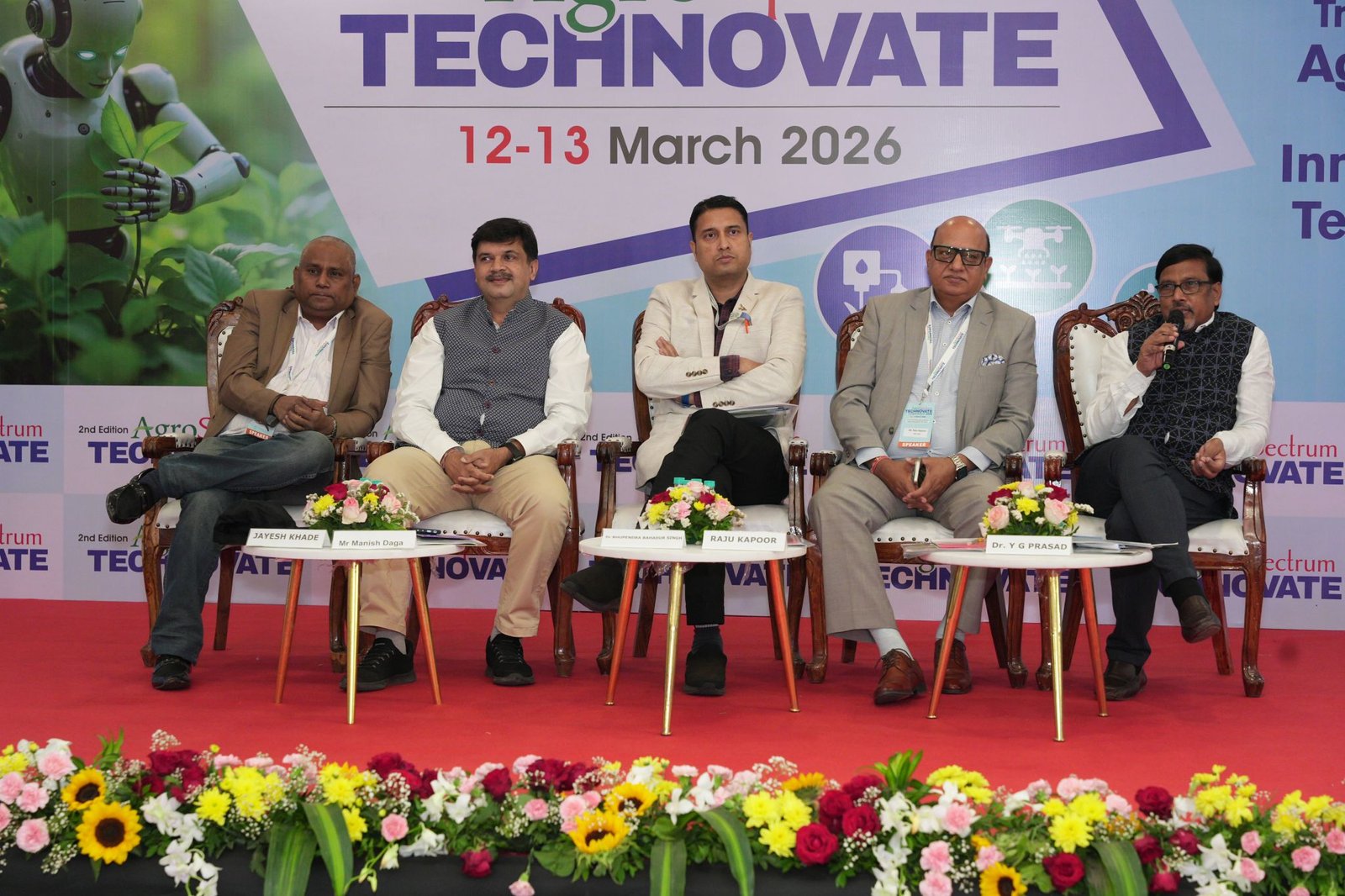
The future of Indian agriculture will be shaped by the intersection of climate science, data-driven innovation, and locally adapted farming practices, according to leading experts who gathered at AgroSpectrum Technovate 2026. The discussions highlighted the urgent need to reimagine farming systems that can simultaneously improve productivity, reduce environmental impact, and strengthen farmer livelihoods in the face of increasing climate volatility.
The session brought together prominent voices from research institutions, industry, farmer organisations and the innovation ecosystem, including Dr Y G Prasad, Former Director, Central Institute for Cotton Research; Dr Bhupendra Bahadur Singh, Scientist – E, IITM CCCR; Raju Kapoor, Director – Public & Industry Affairs, FMC India; Manish Daga, President, All India Cotton FPO Association (AICFA); and Jayesh Khade, Founder, JK Startup Support Incubation Centre. Each speaker offered a distinct perspective on how climate-smart agriculture, technological integration, and farmer-centric innovations can transform the sector.
Setting the context, Dr Y G Prasad emphasised that sustainable agriculture today must be viewed through the lens of greenhouse gas mitigation and carbon-smart farming. Agriculture globally contributes nearly 20 gigatonnes of greenhouse gas emissions, making it both a contributor to climate change and a critical sector for mitigation efforts. According to him, the discourse around agricultural productivity often focuses on the yield gap between India and countries such as Brazil and Australia, but rarely examines the systems and processes that enable higher productivity in those regions. In Australia, he noted, traditional farming practices have been successfully blended with advanced technologies and high levels of mechanisation, creating farming systems that are not only efficient but also capable of achieving carbon-positive outcomes.
Dr Prasad argued that the key to replicating such success in India lies in adopting a hyperlocal approach to agricultural innovation. “Being smart is actually being hyperlocal,” he said, stressing that scientific research must be closely aligned with the specific ecological and socio-economic realities of farming communities. He pointed out that fertilizer consumption in Maharashtra averages around 300 kilograms per hectare, yet productivity in many rainfed regions remains among the lowest. This gap illustrates the need for precision in input use, better data diagnostics, and farming strategies that respond to local soil, climate, and crop conditions.
Expanding on the climate dimension, Dr Bhupendra Bahadur Singh highlighted the increasing unpredictability of weather patterns and their impact on agriculture. Drawing a clear distinction between long-term climate trends and day-to-day weather variability, he remarked, “Climate is what you expect, but weather is what you get.” Agriculture, he explained, is uniquely positioned as both vulnerable to climate change and a contributor to it. Scientific projections indicate that not only will average climate conditions change, but the variability around those averages will increase as well, leading to more frequent and severe extreme weather events in the coming decades.
In response to these challenges, Dr Singh advocated the adoption of climate-smart technologies that can help farmers adapt while reducing environmental impact. Practices such as soil-based carbon sequestration, digital climate advisory services, and mobile applications for farmers are already emerging as key tools in the climate adaptation toolkit. However, he emphasised that the success of these innovations depends heavily on their accessibility and affordability. For large-scale impact, technological solutions must be scalable, cost-effective, and designed with farmers’ real-world constraints in mind.
From the industry perspective, Raju Kapoor discussed how collaborative initiatives are attempting to bring advanced agricultural practices to smallholder farmers. He presented FMC India’s “Utkarsh” initiative as an example of how ecosystem-based approaches can deliver measurable results on the ground. Traditionally, advanced agronomic frameworks such as the ARC approach have been deployed in large commercial farms, but the Utkarsh project attempts to integrate small landholders into a similar ecosystem. The initiative currently operates across a command area of 14,000 hectares, spanning 32 model villages and 62 model plots, with an average model plot size of around 12 hectares.
The project focuses on improving productivity and sustainability in crops such as soybean, paddy, and tomato while addressing the broader economic and social dimensions of farming. Kapoor explained that the program is structured around three pillars—Grow More, Sell More, and Live More—which together aim to increase yields, improve market linkages, and enhance community well-being. The interventions have already delivered encouraging results. Tomato farmers participating in the program have reported higher fruit weight, soybean growers have seen a 20 percent increase in the number of pods per plant, and paddy farmers have observed higher tiller counts. These improvements have translated into significant economic benefits, with farmers experiencing an average increase in income of around Rs 32,000 per acre after adopting Utkarsh practices.
Over the past five years, awareness of the program has expanded dramatically, reaching nearly two million farmers across ten states. Looking ahead, Kapoor said the initiative will increasingly focus on reducing water consumption in agriculture, a priority that is becoming more urgent as climate pressures intensify.
Addressing the farmer organisation perspective, Manish Daga spoke about the growing impact of climate change on crop productivity and farm profitability. He noted that nearly 30 percent of crop losses today can be attributed to climate-related factors, making it imperative to rethink agricultural practices. According to him, the farms that will succeed in the future are those that can achieve higher productivity while minimising waste and resource use. Drawing on the experience of the Cottonguru initiative, he outlined a practical framework for modern cotton cultivation that integrates soil health management, optimal sowing and spacing, fertigation and mulching practices, canopy management, and the use of mechanisation and digital technologies.
Daga stressed that while smart farming begins with a strong foundation in soil and water management, its real potential is realised when discipline, data, and mechanisation are integrated into everyday farm operations. He also highlighted cotton as a particularly important crop in the transition toward sustainable agriculture because it sits at the intersection of soil health, water use efficiency, and farmer profitability. Furthermore, cotton cultivation presents significant opportunities for crop residue management, especially through the production of biochar, which can enhance soil carbon content while addressing environmental concerns related to residue burning. At the same time, he pointed to policy challenges that continue to limit the adoption of mechanisation, including the absence of GST reimbursement on custom hiring services used by farmers.
Jayesh Khade further highlighted the rapidly expanding role of startups and innovation ecosystems in shaping the future of agriculture. He observed that technology is now attracting the highest levels of investment in the startup ecosystem, and agriculture is increasingly becoming a key area of focus for innovation. Through platforms such as the JK Startup Support Incubation Centre, entrepreneurs are developing solutions that address a wide range of challenges across the agricultural value chain, from precision farming tools to digital advisory platforms and market linkage technologies.
Khade emphasised that agri-incubation centres are playing a crucial role in bridging the gap between research, innovation, and real-world farm adoption. By supporting early-stage startups and connecting them with farmers, industry partners, and investors, these incubation ecosystems are accelerating the development and deployment of next-generation agricultural technologies.
The discussions at AgroSpectrum Technovate 2026 ultimately underscored a powerful consensus: the future of agriculture will not be defined by isolated innovations but by integrated ecosystems that combine climate science, data analytics, mechanisation, and farmer-centric design. As climate variability increases and resource pressures intensify, India’s agricultural transformation will depend on its ability to build systems that are environmentally sustainable, economically viable, and technologically scalable. The pathway forward, as the speakers collectively suggested, lies in aligning cutting-edge scientific research with hyperlocal farming realities while fostering collaborative ecosystems that connect farmers, industry, startups, and research institutions.
— Suchetana Choudhury (suchetana.choudhuri@agrospectrumindia.com)