Monday, 6 July 2026

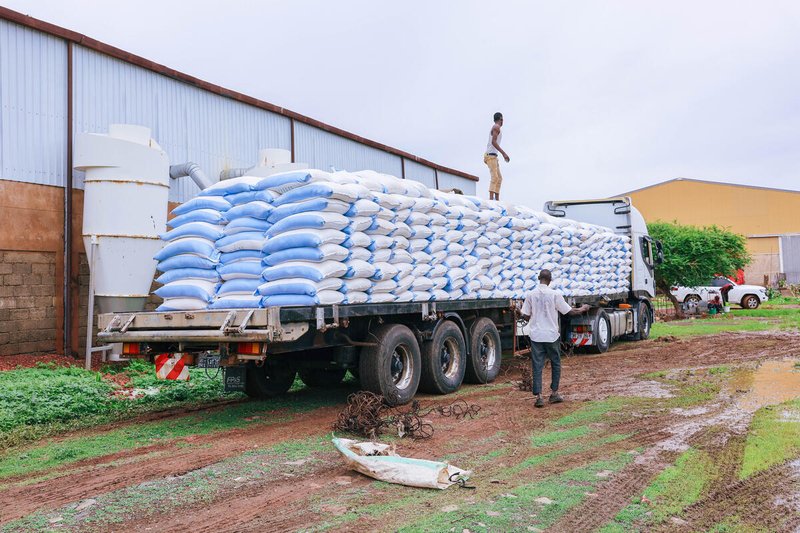
The Food and Agriculture Organization of the United Nations (FAO) has issued its first-ever Global Emergency and Resilience Appeal, seeking $2.5 billion to support over 100 million people across 54 countries and territories in 2026. The new, consolidated framework is designed to tackle rising levels of acute food insecurity with a more coordinated, cost-effective model that links immediate relief to long-term stability—an approach FAO describes as essential at a time of tightening humanitarian budgets.
Unveiled on the sidelines of the 179th FAO Council, the Appeal marks a strategic shift in how food-crisis response is conceived and delivered. FAO Director-General QU Dongyu underscored the urgency of recalibrating global aid. Acute food insecurity, he noted, has tripled since 2016 despite substantial humanitarian financing.
“The current model simply does not keep pace with today’s realities,” he said, arguing that protecting farmers’ ability to produce food is the most effective path to stability. Supporting agricultural livelihoods, he added, is also the clearest expression of what people in crisis settings repeatedly ask for: opportunity, not long-term dependence.
FAO’s new blueprint responds directly to that demand. Although 80 percent of acutely food-insecure people live in rural areas dependent on farming, herding, fishing or forestry, only 5 percent of humanitarian food-sector funding currently supports agricultural livelihoods. The resulting imbalance keeps households trapped in cyclical crises.
The Appeal aims to correct this by prioritizing interventions—such as seed distributions, livestock vaccination, tool kits, infrastructure rehabilitation and cash-for-livelihoods support—that have consistently shown benefit–cost ratios as high as 7:1. Every dollar invested in protecting food production, FAO notes, can avert up to seven dollars in losses and future humanitarian spending.
The 2026 Appeal integrates humanitarian and resilience programming into a single, sequenced framework aligned with the UN’s Global Humanitarian Overview. It reflects FAO’s shift toward anticipatory action, rapid early support, and agrifood-system recovery, especially in long-running emergencies such as Sudan, South Sudan, Afghanistan and the Democratic Republic of the Congo—countries where climate shocks, conflict and market disruptions have intensified hunger.
FAO is requesting:
$1.5 billion for life-saving emergency assistance benefiting 60 million people, focused on protecting core food-production assets and ensuring rapid livelihood recovery.
$1 billion for resilience programmes targeting 43 million people, with investments in climate-smart agrifood systems, biodiversity, water infrastructure, and market access.
$70 million for global public goods, including evidence systems, food-chain threat monitoring, anticipatory action mechanisms and coordination across the humanitarian–development–peace nexus.
Regionally, the Appeal outlines major needs across Asia-Pacific ($521.6 million), the Near East and North Africa ($519.1 million), Eastern Africa ($471.6 million), West and Central Africa ($593.4 million), Southern Africa ($179.6 million), Latin America and the Caribbean ($111.9 million), and Ukraine ($64.7 million).
FAO emphasized that behind every funding figure is a family striving to rebuild its livelihood and dignity. The organization framed the Appeal as a leadership commitment: a call for governments, donors and partners to invest in proven solutions that reduce future humanitarian need. “This Global Appeal reflects the new, faster, leaner and more effective FAO,” the Director-General said.