Monday, 15 June 2026

India’s crop-forecasting infrastructure has taken a major leap forward with the Mahalanobis National Crop Forecast Centre (MNCFC) expanding the reach and analytical depth of its FASAL programme (Forecasting Agricultural output using Space, Agro-meteorology and Land-based observations). The system now generates satellite-based pre-harvest production estimates for 11 major crops across 557 districts in 20 states, making it one of the world’s most comprehensive operational agricultural forecasting frameworks.
According to data shared in the Lok Sabha, FASAL now provides pre-harvest estimates for paddy, wheat, jute, cotton, sugarcane, soybean, tur, gram, mustard, lentil and rabi sorghum. The programme’s footprint spans 20 states—including large agrarian states such as Uttar Pradesh, Madhya Pradesh, Maharashtra, Bihar and Rajasthan—covering 557 districts with varying agro-climatic conditions from the Gangetic plains to the Deccan and coastal belts. This wide coverage strengthens India’s ability to anticipate foodgrain output, design procurement strategies, and plan interventions ahead of harvest cycles.
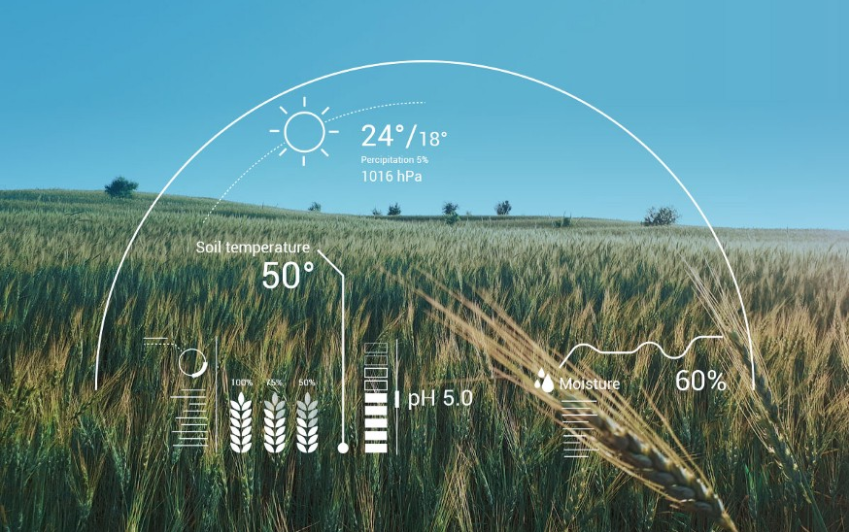
The forecasting process integrates multispectral and microwave satellite data for crop mapping and supplements it with weather information and remote-sensing indices for yield estimation. These data streams feed into weather-based and semi-physical models, developed jointly by the Department of Agriculture and Farmers’ Welfare, MNCFC and the Indian Space Research Organisation (ISRO). ISRO centres also support research initiatives aimed at incorporating additional crops into the programme over time. State agriculture departments provide critical ground-truthing inputs that help train and refine the mapping and yield models, enabling FASAL to maintain operational accuracy at scale.
In a separate update to Parliament, the government reported that drought conditions caused significant crop losses in several states. Around 1.06 lakh hectares of cultivated area in Andhra Pradesh were affected during the 2024–25 kharif season, with an additional 1.28 lakh hectares impacted in rabi 2024–25. During kharif 2023–24, Karnataka recorded damage across 45.56 lakh hectares, followed by 24.75 lakh hectares in Maharashtra and 6.36 lakh hectares in Andhra Pradesh. According to the latest Land Use Statistics 2023–24, the share of net irrigated area to net sown area stands at 59.3 per cent nationally, underscoring the ongoing vulnerability of rainfed regions.
The government also provided an update on milk pricing trends, noting that the average procurement prices for both buffalo and cow milk have steadily increased over the last five years. Based on data from milk unions and federations, buffalo milk procurement prices rose from Rs 39.9 per litre in 2021–22 to Rs 49.2 in 2024–25, while cow milk prices increased from Rs 29.4 to Rs 36.7 during the same period. Milk prices are determined by cooperative and private dairies according to cost structures and market conditions, as dairy pricing is not regulated by the Department of Animal Husbandry and Dairying.
With its expanded forecasting capability, FASAL is emerging as a core component of India’s transition toward data-driven agricultural governance, enabling more accurate production planning, resource allocation and climate-risk management.