Friday, 12 June 2026

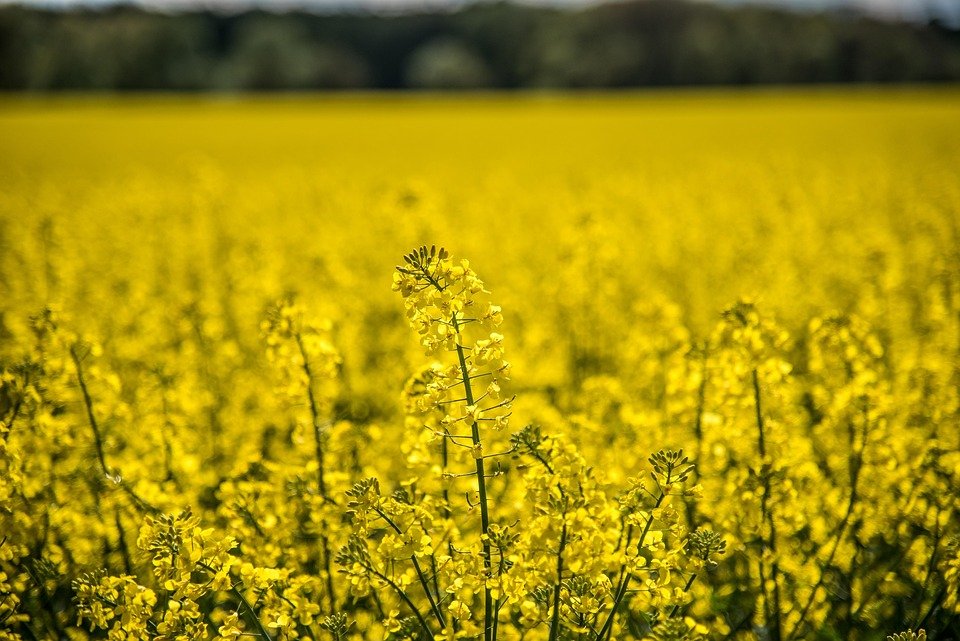
Mustard, soybean and sesamum continue to command strong premiums, while sunflower records one of the sharpest multi-year price increases
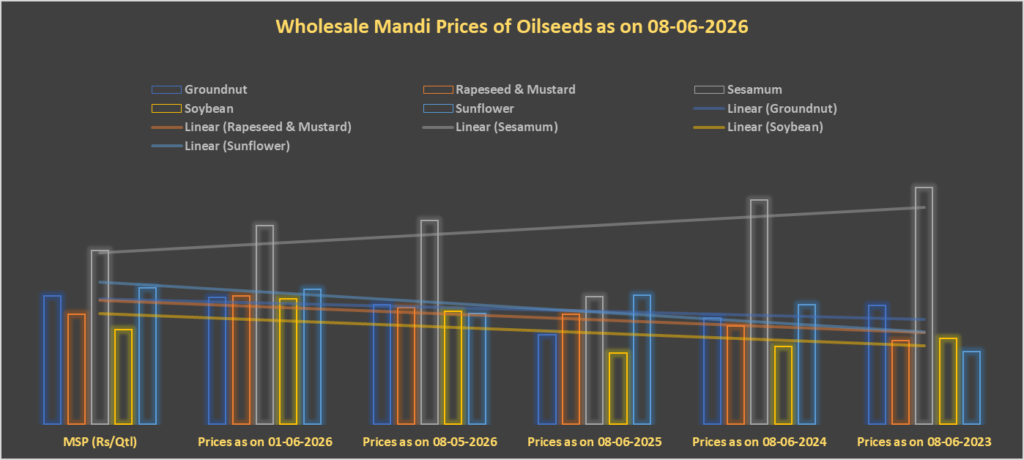
India’s oilseed markets are witnessing a strong upward trend, with wholesale mandi prices of major oilseed crops posting significant gains across monthly, annual and multi-year periods, according to the latest data released by the Department of Agriculture & Farmers Welfare through Agmarknet.
The data, based on mandi wholesale prices as of June 8, 2026, highlights a broad-based strengthening of the oilseed complex, led by soybean, rapeseed & mustard, and groundnut, reflecting improving demand fundamentals, supply-side concerns, and continued focus on domestic edible oil security.
Among the major oilseeds, soybean has emerged as the standout performer, with mandi prices reaching Rs 7,074.51 per quintal, substantially above its MSP of Rs 5,328 per quintal. The commodity has recorded a remarkable 75.3 per cent increase year-on-year, rising from Rs 4,034.51 per quintal in June 2025. Compared to June 2024 and June 2023, soybean prices are higher by 61.5 per cent and 45.5 per cent, respectively, underscoring sustained strength in the oilseed market over the past three years.
Rapeseed and mustard have also maintained a strong upward trajectory. Wholesale prices stood at Rs 7,263.51 per quintal, significantly above the MSP of Rs 6,200 per quintal. Prices have increased by 16.6 per cent over the past year, while recording a robust 54.2 per cent jump over three years, reflecting growing demand for domestically produced edible oils and improved market fundamentals.
Groundnut prices climbed to Rs 7,190.10 per quintal, nearly matching the MSP level of Rs 7,263 per quintal. The crop registered a sharp 42.1 per cent year-on-year increase compared to Rs 5,061.18 per quintal a year ago. However, prices remain moderately higher than levels recorded in 2023 and 2024, indicating a more stable growth pattern relative to soybean and mustard.
The sunflower market has shown mixed signals. While prices at Rs 7,633.54 per quintal remain marginally below the MSP of Rs 7,721 per quintal, the commodity has recorded a strong 21.7 per cent monthly rise from Rs 6,274.69 per quintal in May 2026. Over a three-year period, sunflower prices have nearly doubled, rising 86.8 per cent from Rs 4,087.26 per quintal in June 2023, highlighting long-term structural strength despite short-term fluctuations.
Meanwhile, sesamum continues to command the highest absolute market prices among major oilseeds, trading at Rs 11,248.98 per quintal, comfortably above its MSP of Rs 9,846 per quintal. However, unlike other oilseeds, sesamum has witnessed a 2.4 per cent decline over the past month and remains below the exceptionally high levels seen in 2024 and 2023. Even so, current prices are nearly 56.3 per cent higher than June 2025 levels, indicating continued premium demand.
The latest figures suggest that most major oilseeds are trading either at or above their MSPs, providing favourable market returns to farmers. The trend also reflects broader shifts in India’s edible oil ecosystem, where efforts to reduce import dependence, strengthen domestic oilseed production, and improve processing capacity are increasingly influencing price dynamics.
Market analysts note that rising global vegetable oil prices, weather-related production uncertainties in key producing regions, and growing demand from both food and industrial sectors have contributed to the firming trend across oilseed markets. The sustained strength in soybean and mustard prices, in particular, could encourage higher acreage allocation in the upcoming sowing seasons.
As India continues to pursue self-reliance in edible oils under initiatives such as the National Mission on Edible Oils, the performance of domestic oilseed markets will remain a critical indicator of both farm profitability and the country’s broader agricultural resilience.