Saturday, 18 July 2026

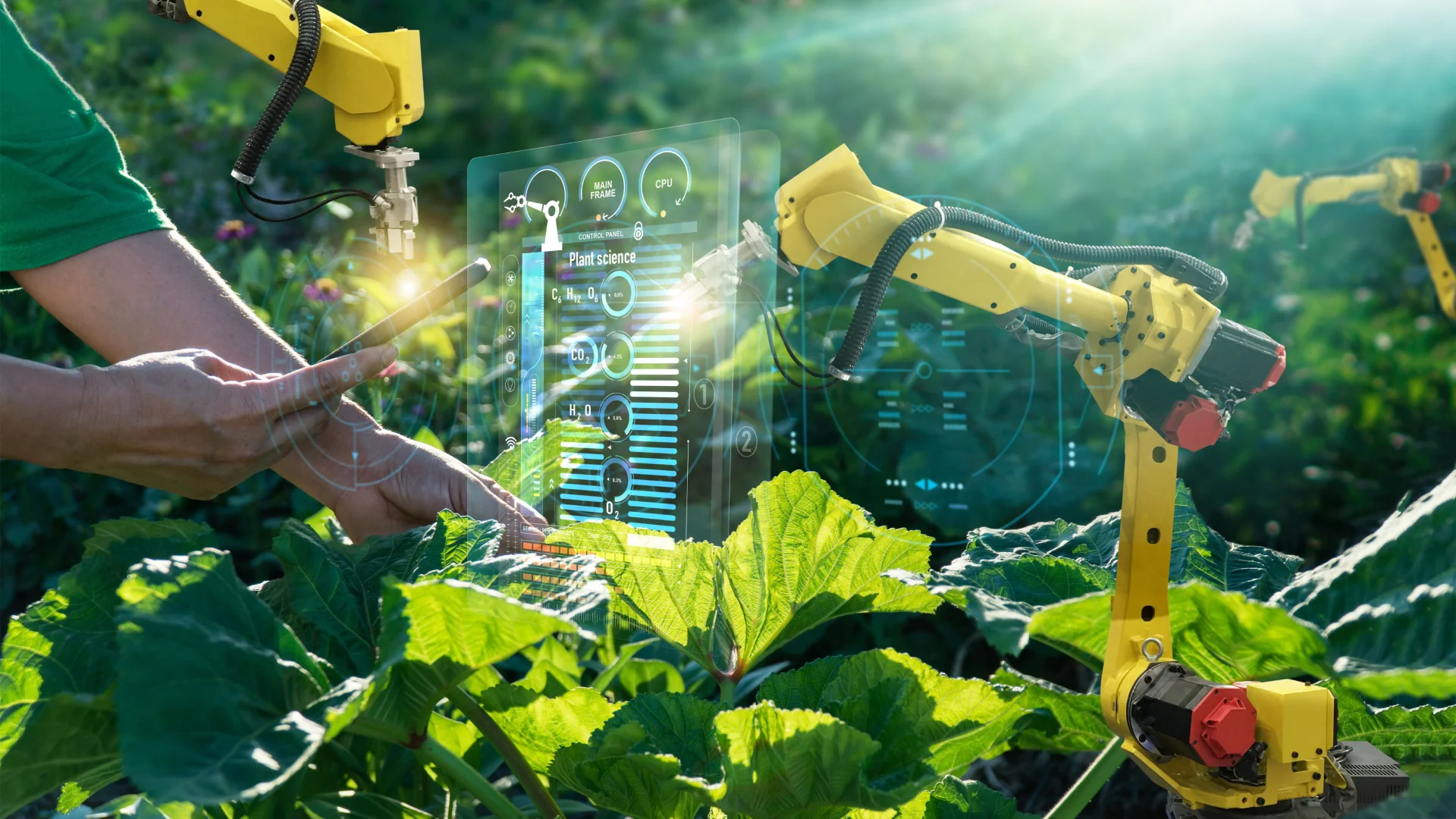
As climate volatility reshapes the fundamentals of food production, a parallel technological revolution is taking root across Indian agriculture, where artificial intelligence is emerging as a critical tool for navigating risk, enhancing resilience, and redefining how farmers respond to an increasingly unpredictable future
Climate change is no longer a distant environmental abstraction for Indian agriculture. It is the operating condition of the system itself. Heatwaves that arrive earlier and linger longer, monsoons that arrive late or dump too much water at once, flash floods followed by dry spells, declining groundwater tables, and shifting pest ecosystems have collectively destabilised the ecological assumptions on which Indian farming was built. For small and marginal farmers, agriculture has always been uncertain. Climate change has not created that uncertainty—it has hardened it into structural volatility. At the same time, a second transformation is unfolding—less visible in the fields, but increasingly decisive in shaping them. Agriculture is being pulled into the global artificial intelligence transition.
The global AI market is projected to reach about $1.8 trillion by 2030, reflecting a surge of capital, computation, and competition around data-driven systems. India’s own AI ecosystem is expanding rapidly at an estimated 40 per cent between 2020 and 2025, with nearly 1,500 agritech start-ups now operating across the rural value chain. Policy estimates suggest that nearly $65 billion in value could be unlocked through just 15 foundational agricultural datasets, underscoring a new reality: in the next phase of agriculture, data is infrastructure. According to Inc42 Datalabs, India’s agritech market is projected to grow from $9 Bn in 2025 to $28 Bn by 2030 at a 25 per cent CAGR, even as the broader agriculture sector expands from $452 Bn to $563 Bn at 4.6 per cent CAGR.
AI as Strategic Resilience Tool
The convergence of climate stress and digital acceleration is pushing AI to the centre of agricultural thinking—not as a marginal productivity tool, but as a strategic instrument for resilience, food security, and risk management. AI systems can now process satellite imagery, soil data, weather patterns, pest behaviour, and market signals in real time. They detect patterns invisible to the human eye, anticipate risks before they materialise, and recommend interventions that are increasingly precise, localised, and time-sensitive.
From irrigation scheduling and crop monitoring to pest surveillance and credit scoring, a data-driven agricultural economy is no longer an abstraction. It is under construction. In this emerging ecosystem, digital platforms are also redefining how agronomic advice is delivered and trusted at scale.
Bayer’s Crop Science leadership sees this shift as fundamentally about trust architecture rather than technology alone. As Simon Wiebusch, Country Divisional Head, Crop Science Division of Bayer for India, Bangladesh & Sri Lanka, notes, FarmRise is becoming “a strong digital foundation for how we engage with farmers at scale,” while technology, he adds, is not about replacing relationships but about “amplifying trust by combining field expertise with digital and AI-driven solutions.”
Yet as digital advisory systems expand, the question is no longer just how data is used, but how deeply it can be embedded into physical farming systems themselves. This is where precision agriculture infrastructure begins to extend beyond advisory platforms into irrigation and nutrient delivery systems.
To read more, click: https://online.anyflip.com/unmb/dshg/mobile/index.html